Bibi Uses “Recognition Plus” to Defy Obama and Block Peace Plan

by James M. Wall      Soldier and mural

Israel never misses a chance to create a new road block for peace. The latest? Recognition Plus.

Of course, Bibi Netanyahu could not put this latest road block over on the U.S. public without the help and support of the people he loves, AIPAC and his media and congressional friends.

I am indebted to Philip Weiss (Mondoweiss) for the heads up on “recognition plus”–a term initially coined by Lara Ferguson, writing in the Americans for Peace Now blog.

The heads up comes from Rob Browne, writing in Daily Kos.

Rob Browne at Dailykos has an excellent piece on the evolution of the Israeli demand for “recognition-plus”– that Palestinians recognize Israel as the Jewish state, even before negotiations over land, refugees etc begin.

This “new and nonsensical” demand (which preemptively nullifies the right of return and valorizes the second-class status of Palestinian Israelis) began to show up two years ago.

And Brown demonstrates, that American groups played a crucial role in installing this language. The Jewish Council for Public Affairs, for instance. And congressional bills sponsored by Rep. Ileana Ros-Lehtinen of Florida and Sen. Mitch McConnell of Kentucky.

Most Americans believe what they see and hear about Bibi’s desire for peace in the Middle East. His June 14 speech was dripping with sincerity and his desire for peace with his Palestinian neighbors.

Those same Americans, and the mainstream media, most likely missed the latest addition to the demands. “Recognition plus” has been added.  This is not Bibi’s term, of course, but as Browne points out, “recognition plus” is a deliberate road block to peace.

Browne points to this section of Netanyahu’s speech, which the American media has ignored:

Palestinian moderates are not yet ready to say the simple words: Israel is the nation-state of the Jewish people, and it will stay that way.

The Palestinian leadership must arise and say: “Enough of this conflict. We recognize the right of the Jewish people to a state of their own in this land, and we are prepared to live beside you in true peace.”

I am yearning for that moment, for when Palestinian leaders say those words to our people and to their people, then a path will be opened to resolving all the problems between our peoples, no matter how complex they may be.

Therefore, a fundamental prerequisite for ending the conflict is a public, binding and unequivocal Palestinian recognition of Israel as the nation state of the Jewish people.

I have already stressed the first principle – recognition. Palestinians must clearly and unambiguously recognize Israel as the state of the Jewish people.

What you are reading in Bibi’s speech is the result of carefully prepared road block, inspired by Hamas’ legislative victory over Israel’s preferred party, Fatah, in the Palestinian legislative elections in January 2006.

Faced with a possible unity government of Fatah and Hamas, Israel once again moved the goal posts down the field. After Hamas won the 2006 election, Israel added a new non-starter demand which it knew Hamas and Fatah would reject.

To the demand that the Palestinians accept the “existence” of the state of Israel, Israel added an adjective to the mix.  The Palestinians had to accept the “existence of the Jewish state of Israel”. Was “Jewish” in the earlier demands. No.

Here is Browne on earlier agreements before recognition plus was introduced by Netanyahu:

In peace agreements between Israel, Egypt, and Jordan, there was official recognition of the State of Israel. The September 1993 letter from PLO Chairman Yasser Arafat to Israeli Prime Minister Yitzhak Rabin stated “The PLO recognizes the right of the State of Israel to exist in peace and security”. None of the parties had to recognize Israel as the official state of the Jewish people, and recognition was not a pre-condition to negotiations.

The 2006 Hamas election victory threatened to bring progress for peace with Israel.  So Israel launched a two track initiative.

Track One: Nullify the Hamas election by jailing more than 40 Hamas legislators and cutting off outside funding to Hamas.

Track Two: Give Hamas a recognition plus (a Jewish state) “poison pill” demand it was certain to refuse.

Recognition was already on the table, thanks to the Road Map agreement. Jewish state was not.

The international Quartet that created the Road Map,  the U.S. (George W. Bush), the European Union, Russia, and the United Nations, had agreed that recognition of Israel would be one of the pre-conditions placed on the Palestinians for the resumption of negotiations.

According to a Quartet statement from January 30, 2006, “all members of a future Palestinian government must be committed to nonviolence, recognition of Israel, and acceptance of previous agreements and obligations, including the Roadmap.”

OK, but still no “recognition of Israel as a Jewish state” was to be found in the Road Map mix. That little tidbit had to be added. Who better to make this happen than Israel’s staunch ally, the United States Congress, working under the direction of AIPAC.

Browne picks up the story:

Later in 2006, two Congressional Bills, H.R. 4681 (sponsored by Rep. Ileana Ros-Lehtinen (R,FL-18)) and S. 2370 (sponsored by Sen. Mitch McConnell (R,KY)) added the concept of “recognition plus” to the equation.

Now, not only was there to be recognition of the state of Israel prior to any resumption of U.S. assistance, but the recongition had to include Israel as a Jewish state.

The final reconciliation bill negotiated between the House and Senate used the Senate bill’s language which required Hamas to have “publicly acknowledged the Jewish state of Israel’s right to exist”.

Thus did the U.S. Congress speak for the American people and recognize Israel as a Jewish state.  The Congress endorsed recognition plus, thereby giving its blessing to the Jewish state of Israel.

Palestinians and Arabs could not agree to Israel’s demand to be recognized as a “Jewish state” for reasons Israel fully understood, as Ghassan Khatib explains:

The first is that such recognition will undermine and further marginalize the position of the non-Jewish minorities in Israel, especially the Palestinian minority, which constitutes 20 percent of the population, but also of what appears to be a significant Christian minority among recent Russian immigrants.

The second problem is that recognizing Israel as a Jewish state will augment the Israeli position against Palestinian refugees’ right of return to the lands and homes from which they were systematically and violently ejected in 1948.

The third problem with the concept of the Jewish state is that it’s seen by many people, including Palestinians and Arabs, to be a racist concept that contradicts the modern notion of democratic political systems based on the equal and basic rights of all citizens of the state, regardless of their ethnic or religious affiliations. (emphasis added)

Lara Friedman writes in The Americans for Peace Now blog, (April 19, 2009) that “the demand for “recognition-plus” is Bibi’s new pretext for not pursuing peace”.

September 9, 1993 — the date that the PLO officially and formally recognized Israel’s right to exist in peace and security, and in return Israel recognized the PLO as the representative of the Palestinian people — is a day that stands out in my memory.

As a US Foreign Service officer serving in Jerusalem during that period, I will never forget the palpable feeling of hope and anticipation that was in the air.

What is entirely absent from my memory is the recollection of any Israeli narrative at the time saying: “Sorry Mr. Arafat, but this recognition isn’t good enough.  What we actually need is your formal endorsement of Israel as a Jewish state.  If you can’t do that, then your recognition of Israel doesn’t count.”

It is absent not because my memory is faulty, but because this narrative simply didn’t exist.  Yitzhak Rabin did not say “thanks, but no thanks;” nor did Israelis.  Everyone understood that the demand of the Palestinians was and had always been: recognize Israel’s right to exist (or some slight variation thereof).

The historic September 9th declaration achieved exactly that.  The demand that the Palestinians “recognize Israel’s right to exist as a Jewish state” – or what hereafter will be known as “recognition-plus” – came much later.

Friedman asks, “Why didn’t Rabin go for “recognition-plus” in 1993?” Her answer:

It is hard to avoid the conclusion that this new condition – raised again last week [in his speech] by Israeli Prime Minister Bibi Netanyahu – is nothing more than a ruse to avoid peace negotiations.  It didn’t come up in 1993 because Rabin, unlike some of his successors, wasn’t looking for such excuses. . .

If he [Bibi] can get the world to buy this new [recognition plus] demand, and then the Palestinians (predictably) refuse to meet it, he can make the case that he is ready to move forward to a peace agreement, but it is the Palestinians who are proving to be unreasonable and intransigent. . . .

Friedman calls recognition plus “a new and nonsensical demand” which “neither Egypt nor Jordan (nor the PLO) was asked to meet”.

To sell this latest road block as something it is not, Bibi Netanyahu depends on the ignorance and indifference of the American public. He relies on his AIPAC, media, and congressional friends to maintain that level of ignorance and indifference.

How’s he doing?  The evidence suggests he is doing pretty well. Have you seen recognition plus discussed in your favorite media outlet? I didn’t think so.

Meanwhile, Bibi uses recognition plus to defy the president of the United States.

Obama can overcome that defiance with a simple request to the prime minister of Israel:”Recognition plus was not in the original agreement, Bibi. Stick with the Road Map.”

Posted in Middle East Politics | 7 Comments

Carter’s Middle East Trip: If its Tuesday, This Must be Gaza

by James M. WallCarter in Gaza

Jimmy Carter’s 10-day trip to the Middle East started in Lebanon, June 7 and ended in Gaza, June 17.

This picture was taken in Gaza, where, among other stops, Carter visited an UNRAW Children’s Center, accompanied by Hamas leader Ismail Haniyeh.

At the Center he interacted with children and delivered an address, the text of which is available here in the Palestine Chronicle.

What are we to make of this latest Carter venture into peace-making in the Middle East?

The answer? The American voters wanted change. They got it. George Bush is gone and Barack Obama is the new president.

The Christian Science Monitor reported on the trip, noting, in particular, the change in relations between the region and the US, following the election of Barack Obama:

Mr. Carter has been shunned in the past by both the Bush administration and Israeli leaders, who criticized his efforts to engage the militant Palestinian group that he says is crucial to any lasting Arab-Israeli peace.

But analysts say Carter’s ties with the more like-minded Obama administration, which has taken a firmer stand with Israel on some issues, may bolster his effectiveness as a regional peace broker.

The Monitor interviewed Alon Liel, a former Israeli Foreign Ministry director general:

There is a big difference between Carter operating under Bush [and] Carter operating under Obama. His efforts had little value during the eight years of the Republicans. They have greater value now. He has access and connections with the leaders of [the] new America.

Ahmed Yousef, a senior adviser to Mr. Haniyeh, also acknowledged Carter’s ties with Obama and his potential to act as a go-between with the US.

“He is close to President Obama and nobody in his type of position understands the conflict with all its problems like he does,” says Mr. Yousef in a phone interview. “I think he will give Obama the information and analysis he needs to address this conflict in a proper way and to restore the image of America in the region after two decades of failed diplomacy.”

In Lebanon, Carter joined with approximately 60 Carter Center observers from 23 nations to monitor the election. The observor team was led by David Carroll, from the Carter Center.

Former Yemeni Prime Minister Abdulkarim al Eryani was co-chairman, with Carter, of the observor team.

Carter’s personal report of  his trip is available on the Carter Center web site. His attention to detail in this era of reduced media space for including details, is valuable.

For example, consider his report on the mechanics and outcome of the election:

702 candidates competed for 128 parliamentary seats in 26 districts. In a “confessional” system more than 65 years old, it was prearranged that seats be divided equally between Christians and Muslims, distributed as follows: Maronite Christians 34; Greek Orthodox 14; Greek Catholic 8; Sunni Muslim 27; Shi’a Muslim 27; Druze 8; Armenian 6; Alawite 2; Protestant 1; other Christians 1.

Two alliances evolved: the March 14 group (Sunnis and others), with Saudi Arabia and U.S. backing, having 70 seats; and the March 8 group (Shi’a and others), with Iran and Syria backing, having 58 seats. Hassan Nasrallah (Hezbollah), Speaker Nabih Berri (Amal – the original Shi’a political party, now aligned with Hezbollah), and General Michel Aoun led March 8 and Saad Hariri led March 14.

Who won the election and why?  Here is Carter’s analysis, which includes his casual acceptance of Hezbollah’s rejection of his presence at a meeting.  There are more important matters to concern us, he seems to be saying, than who likes you and who doesn’t like you, at the moment.

Election experts said this could be the first free and fair election since 1972. Before the election, we met with the major political leaders (Hezbollah decided that I should not join our Center’s team that met with them), while our observer teams were deployed in the 26 electoral districts. 

On Election Day Rosalynn and I visited 28 polling sites. There were many minor infractions of electoral procedures, but in general it was a good election with the results accepted peacefully by both sides. The previous parliamentary alignment of 55 percent for March 14 and 45 percent for March 8 remained unchanged.

The major deciding factors were local in nature, but a friendlier attitude toward Obama and America may have helped March 14. (Although March 8 fell short of expected gains, it actually increased by one seat over the 2005 election result and received about 100,000 more popular votes.)

From Beruit, Carter traveled to Damascus, Syria, where he met with Syrian President Bashar al-Assad, the son of the previous president. Carter first met the younger Assad when he was a college student, during an earlier meeting Carter had with his father.

While in Damascus, Carter also met with Hamas chief Khaled Meshaal, where, Carter reports,  the two men discussed conditions for future Israeli-Palestinian peace talks. After his visit to Gaza, Carter told the media:

“I called on Hamas leaders that I met with in Damascus and I told Hamas leaders in Gaza today to accept these conditions,” said Carter to reporters after meeting with Haniyeh for the first time. “They made several statements, and showed readiness to join the peace [process] and move towards establishing a just and independent Palestinian state.”

On his stop in Israel, Carter was finally able to visit the Knesset, where he also met with Israel’s security cabinet. He then met with Shaul Goldstein, a prominent West Bank settler.

Goldstein’s take on Carter, as reported by the Monitor:

“Nobody in his position ever agreed to meet settlers. People won’t meet settlers,” says Mr. Goldstein, who heads the regional council of the Gush Etzion settlements in the Israeli-occupied West Bank.

“Carter is not the enemy,” he says. “Maybe he’s talking to the enemy. But Carter is not a terrorist, and he’s not part of Hamas. The main goal is a dialogue, not a monologue. It is very important in the future to meet this kind of person.”

Before he went to Gaza, Carter met Saturday with Jerusalem’s Christian leaders at the Greek Orthodox Patriarchate in the Old City. At the meeting were officials from the Council of Religious Institutions in the Holy Land, and representatives from the World Council of Churches, who were visiting at the time in Jerusalem.

Jerusalem Anglican Bishop Suheil S. Dawani, who participated in a May 14-15 Carter Center conference in Atlanta, Towards a New Christian Consensus: Peace with Justice in the Holy Land”, had proposed that the meeting with Carter be arranged in Jerusalem

Yusef Daher, the Inter Church Center Executive, and Canon Naim Ateek, Director of Sabeel, were local hosts for the Carter meeting.

Carter was welcomed to the meeting at the Greek Orthodox Patriarchate by His Beatitude Theophilos III, who told the visiting former U.S. president that he felt he spoke for his colleagues when he said,“ we firmly believe, that there now exists the possibility for the conflict and hatred to be turned into a durable and just peace”.

Bishop Dawani spoke briefly and emphasized in his comments that the Christian institutions in Palestine and Israel:

“are a natural grass roots presence. In their non-sectarian services, they promote respect for other people’s convictions, uphold interfaith dialogue and seek communal harmony.”

Canon Ateek commended President Carter for his affirmation of democracy by his presence at national elections in regions of conflict:

In this process of democratization in governance, there needs to be a built-in shared respect for both the political aspirations as well as the religious convictions of minorities in the electorate. This is especially needed where Christians find themselves in sensitive minority placement among the three faiths.

Carter told the Jerusalem and WCC religious leaders that he had met with religious leaders in Lebanon during the recent election there, and that he had a “prayerful hope” for his visit to Gaza. He also expressed his understanding of, and encouragement for, the important role that the historic Christian Community plays in peace initiatives and interfaith harmony.

Two days after this Jerusalem meeting, as he witnessed the destruction and suffering in Gaza, Carter said he was moved almost to tears by the situation there. He promised to bring a report of the destruction he saw to Obama, as well as to Secretary of State Hillary Rodham Clinton and US Middle East envoy, George Mitchell.

Looking for some hopeful signs in the Middle East?  Take time to read Carter’s full report and his speech in Gaza (links above), and then reflect a moment on the responses he received in Israel and Gaza, and from the Christian leaders in Jerusalem. This is change we can believe in.

The picture above is from the Palestine Chronicle.

Posted in Middle East, Middle East Politics | 3 Comments

Obama Speech and Moussavi Campaign Weaken Zionism’s Iran Narrative

Update: Iran Detaining Election Opponents

In a practice which sounds disturbingly familiar to Middle East election watchers, the Iranian government of Mahmoud Ahmadinejad has “detained” leading supporters of the man who “lost” the election, Mirhossein Moussavi.

It has become increasingly obvious that the election was “stolen” (see earlier update below). Of course it was.

The familiarity comes from a reminder from Helene Cobban that the January 2006 Palestinian legislative election did not result in the ending Israel and the U.S. wanted.  So Israel and Iran took the same action to change the results, arrest the opposition.

There is a difference, however, in the sequence of their actions.  In Palestine, the Palestinian Election Commissioners, with international observers–led by Jimmy Carter–looking over their shoulders, declared the election to be above reproach.

Unlike the election in Iran, where there were no outside observers, and where the religious leader of Iran, Ayatollah Ali Khamenei, holds the power in the country, it was easier just to jiggle the ballot boxes to produce the outcome that resulted in a 67% victory for President Ahmadinejad.

In Chicago we used to refer to that jiggling as “waiting for the river wards to come in”.

The Israeli government, which had no control over the Palestinian 2006 election, had to resort to Plan B to nullify the legitimate results.  Israel arrested the majority of the duly elected Hamas legislators and put them in Israeli jails, where they remain.

And just to make sure Hamas could not govern normally, Israel “persuaded” the U.S. and the European Union to cut off funds going into Palestine, a ban which also continues to this day.

There are more ways than one to nullify the result of an election. Both dictatorships and occupying forces agree that one of the most effective modes of nullification is to arrest the other side.

Iran is still learning.  Using both the river wards and the arrest of opponents is over doing it.  What you should do is jiggle the ballot boxes to achieve a closer race, say 53% to 47%. Then you close down the internet, especially Facebook, and let the opposition protest in the streets.

And, by the way, the power of Ayatollah Ali Khamenei in Iran should put to rest the belief that Ahmadinejad has his finger on the nuclear button, an instrument of mass destruction which is still a long, long way from reality. Ahmadinejad does the bidding of the religious authorities, who have shown no desire to wipe anyone off the face of the earth.

But what is reality when, like Israel,  you have the power to persuade the U.S. Congress and its media minions that Iran is a nuclear arms threat.

And what is reality when, like Iran, you have a comedic figure like Ahmadinejad to stir emotions of fear by denying the Holocaust (also an exercise in reality denial)?

We live in a culture of fear in which a substantial percentage of the American public still believes in the reality of WMDs. Controlling an election outcome is just a walk in the park in comparison to that sales job.

Update 4 p.m. Saturday; A Stolen Election?

According to today’s New York Times, Ahmadinejad won Friday’s election by a large margin.  Moussavi insists he is the winner, and speculation has begun that the election results were falsified.

Juan Cole suggests the election may be a “crime scene”.

I am aware of the difficulties of catching history on the run. Some explanation may emerge for Ahmadinejad’s upset that does not involve fraud. For instance, it is possible that he has gotten the credit for spreading around a lot of oil money in the form of favors to his constituencies, but somehow managed to escape the blame for the resultant high inflation.

But just as a first reaction, this post-election situation looks to me like a crime scene. And here is how I would reconstruct the crime.

As the real numbers started coming into the Interior Ministry late on Friday, it became clear that Mousavi was winning.Mousavi’s spokesman abroad, filmmaker Mohsen Makhbalbaf, alleges that the ministry even contacted Mousavi’s camp and said it would begin preparing the population for this victory.

The ministry must have informed Supreme Leader Ali Khamenei, who has had a feud with Mousavi for over 30 years, who found this outcome unsupportable. And, apparently, he and other top leaders had been so confident of an Ahmadinejad win that they had made no contingency plans for what to do if he looked as though he would lose.

They therefore sent blanket instructions to the Electoral Commission to falsify the vote counts. (For more from Juan Cole, click here)

More updates to come as the story unfolds. . .

by James M. Wall Iran voter cropped

Mahmoud Ahmadinejad’s election four years ago as president of Iran was the gift that kept on giving to the Zionist narrative, the worldview that before the arrival of Barack Obama, dominated U.S. politics and media.

Not, I hasten to add, a gift to the Israeli people, far from it, but a gift to the Zionist zealotry that is driving the Israelis deeper and deeper into a dark future.

What zealotry? The zealotry personified by Israel’s drive-the-Arabs-into-the-desert foreign minister, the far-right Avigdor Lieberman, who resides in one of Israel’s settlements in the West Bank.

Helene Cobban’s blog, Just World News, is my inspiration for believing Mirhossein Moussavi (whose campaign colors are green; see above) will win the Iranian presidency.

Her blog carries a posting from Scott Harrop that gives ten reasons for predicting a Mousavi election.

Harrop’s posting is must reading, here.

Two reasons Harrop offers for a Mousavi victory: the enthusiasm of young voters and the “unprecedented” and “powerful” role women have played in his campaign.

Women have been energized by Musavi’s wife, Zahrah Rahnavard, a politics professor, artist, and former University chancellor.

A close finish, or a Mousavi victory, will run counter to the Zionist narrative peddled to U.S. media which describes Iran’s elections as badly flawed, echoing Israeli foreign ministry talking points.

Harrop also takes note of what he terms Ahmadinejad’s “helpers in the US Congress” who gave up on an attempt to “fast-track a punitive sanctions bill through Congress” prior to the election.

AIPAC had pushed for the bill which would have added further to Almadinejad’s image as Israel’s demon.  The bill was pulled back for “strategic reasons”.

Harrop writes that his prediction of a Mousavi victory could prove incorrect. But the race, for all the reasons he cites, will be close, which should undercut the current president’s bantam rooster cockiness.

It is really quite simple.  Without a cocky Ahmadinejad to kick around, Israel loses its rationale to attack Iran’s nuclear facilities, which are still a long way away from anything but civilian use.

Assume for the moment that Ahmadinegad is defeated for reelection, or wins in a narrow finish. We can credit Zionism and its AIPAC-driven US Congress for a major assist in the outcome.

Israel’s hard-right government needs a “dangerous” Iran to divert attention from Israel’s decades-long plan to prevent the creation of a viable Palestinian state.

Fear of a  nuclear-armed Iran has been central to Zionism’s terror narrative.  This election now reveals the obvious.

Ahmadinejad is no dictator; he is not even a strong president. Regardless of who occupies the president’s office, Iran remains under the tight control of its Islamic religious authorities who want a strong Iran, not a world filled with enemies.

Ahmadinejad’s Holocaust-denying rhetoric was so irresponsible and false that he became a faux symbol of defiance.

The London Independent‘s Robert Fisk does not anticipate any change in Iran’s nuclear plans. They will just be clearer. It is not military arms the country seeks, but a nuclear capacity that burnishes its national pride, a pride in its ability to develop and possess what other major powers, especially Israel, have developed and now possess in abundance.

Fisk writes:

Whatever it is, this election is not about nuclear power. It may be about presidential arrogance and stupidity and fear, or about responsible government or unemployment or the economy. But the West should abandon hope of any real change in Iran’s nuclear strategy.

Mirhossein Mousavi may talk more sense to the Americans – if he wins – but the nuclear facilities will keep functioning. It is all a matter of pride in Iran – where pride is a special quality.

Regardless of which leader occupies the presidency, Iran wants to be a player on the world stage. And, Iran has the potential to be just that. The question will remain, what kind of player will Iran be?

Fortunately, the United States finally has a president who understands this. Barack Obama possesses the political skills to brush aside the Zionist zealotry that for decades has undercut U.S. efforts to bring peace and justice to the Middle East.

As a new president, Barack Obama must drag behind him the media-political AIPAC mentality that has made it so difficult for presidents to negotiate honestly on behalf of both Israel and a future Palestine.

The New York Times’ initial report after the Cairo speech indicates that Obama is up to the task. The Times report on the speech sent shock waves through keepers of the Zionists narrative with these opening lines:

In opening a bold overture to the Islamic world on Thursday, President Obama confronted frictions between Muslims and the West, but he reserved some of his bluntest words for Israel, as he expressed sympathy for the Palestinians and what he called the “daily humiliations, large and small, that come with occupation.”

While Mr. Obama emphasized that America’s bond with Israel was “unbreakable,” he spoke in equally powerful terms of the Palestinian people, describing their plight as “intolerable” after 60 years of statelessness, and twice referring to “Palestine” in a way that put Palestinians on parallel footing with Israelis.

Parallel footing?  With this phrase the president acknowledged Palestine’s equality to Israel, drawing an outraged response in the Jewish World Review where Anne Bayefsky writes:

President Obama’s Cairo speech was nothing short of an earthquake — a distortion of history, an insult to the Jewish people, and an abandonment of very real human-rights victims in the Arab and Muslim worlds.

It is not surprising that Arabs and Muslims in a position to speak were enthusiastic. It is more surprising that American commentators are praising the speech for its political craftiness, rather than decrying its treachery of historic proportions.

This is the Zionist narrative roaring out into the hinterlands with its cry, “the sky is falling!”

It is the same cry that followed the appearances of Meirsheimer, Walt, Carter, Finkelstein, Charles Freeman, and other advocates of peace and justice.  But this time, it is a popular and current president speaking.

The Cairo speech was “treachery of historic proportions? The President of the United States was guilty of giving a speech that was “an earthquake — a distortion of history, an insult to the Jewish people”?

To her credit, Bayefsky does acknowledge that there is such  thing as a different narrative out there. But to her, of course, it is a “fictitious” narrative. She writes further:

This parallelism amounts to the fictitious Arab narrative that the deliberate mass murder of six million Jews for the crime of being Jewish is analogous to a Jewish-driven violation of Palestinian rights.

Tony Karon sees this outrage for what it is. In his blog, Rootless Cosmopolitian, Karon puts it this way:

Those who would be threatened by Palestinians being viewed as equal human beings to Israelis may have reason to be concerned.

That’s because whatever its policy implications — and the jury is very much still out on those — Obama’s Cairo speech marked a profound conceptual shift in official Washington’s discourse on the nature and causes of the Israeli-Palestinian conflict, and of America’s obligations to each side.

Regardless of the final winner in Iran, these recent weeks mark a turning point in the Middle East as a U.S. president shakes off the shackles of the Zionist narrative and becomes a champion of both Israelis and Palestinians.

And this same U.S. president understands that the Iranian election, regardless of the outcome, signals what the New York Times’ Roger Cohen describes as a profound change in U.S. foreign policy in the region:

Radicalism in the Bush White House bred radicalism in Iran, making life easy for Ahmadinejad. President Obama’s outreach, by contrast, has unsettled the regime.

With Lebanon denying an electoral victory to Hezbollah, the oil-driven Iranian economy in a slump, and America seeking reconciliation with Muslims, the world now looks a little different.

Photo above is from Reuters

Posted in Middle East Politics | 1 Comment

Obama Speech Draws Spirited Response From DC To Damascus

by James M. Wall  Obama Cairo cropped

Reactions to Barack Obama’s Cairo speech were largely positive, with one notable caveat.  

Start with the ongoing struggle between two Washington, D.C. lobby groups, AIPAC, and its emerging challenger, J Street

The more moderate challenger’s rise to prominence was timely, just before Obama took off to Cairo where the President’s speech was praised worldwide.  

There remains, however, a dark cloud hovering over Obama’s rhetoric: His plans for Palestine, specifically, his failure to reverse the military assistance program George Bush gave Fatah in its attempt–backed by Israel–to defeat Hamas. 

Obama is in a position to stop favoring Fatah. He has backup at home where that struggle between two sides in the DC Lobby wars, as reported pre-Cairo by the Atlantic.com blog, is starting to tilt away from AIPAC:

AIPAC and J Street–the two major rivals in the Israel lobbying scene–each circulated a letter in Congress in May, both addressed to President Obama, both urging support for Israel and a two-state peace solution with Palestinians. 

AIPAC’s letter went out first, originally dated May 1, with House Majority Leader Steny Hoyer and Minority Whip Eric Cantor as major signers. They quickly had a list of 328 members taking the usual AIPAC hard line.  

J Street followed  with its letter on May 13,  with Reps. Steve Cohen (D) and Charles Boustany (R) at the top of a list of 87.

After the Cairo speech it is entirely possible that the robotic hold AIPAC has over 328 House members could decline. Before Obama’s election, it is hard to imagine that J Street could have found 87 members for its letter. 

The J Street 87 includes prominent members (Judiciary Chariman John Conyers, Ways and Means Chairman Charles Ranglel, Veterans Affairs Chairman Bob Filner, John Dingell, Barbara Lee) as well as a handful of freshmen (14 signers were elected in 2008).

Freshmen members of Congress know they are one AIPAC opponent away from a permanent return trip home.  The 14 Freshmen signers demonstrated courage. Their willingness to sign the J Street letter also offers hope that AIPAC’s fund-raising dominance is slipping. 

The differences between the two letters are highly significant. There was no difference between the two letters on AIPAC’s boiler plate goals: working closely with Israel, gaining a Palestinian promise to end violence, bringing in Arab neighbors to the discussions, and, course,  letting the sides negotiate on their own.

J Street’s letter accepted these goals. But J Street’s letter added new material: Condemning new settlement construction and a call for a buildup of the Palestinian economy and security, before any solution is reached.

Security for Palestinians? Previous AIPAC letters left the impression that its authors could not bring themselves to write the word Palestinians, and certainly they have never included the name that President Obama finally dared speak in Cairo: Palestine

Another major difference between the AIPAC and J Street letters came in the way each group wants to deal with  Israel.

AIPAC suggests that disagreements with Israel be kept private. J Street made no reference to that point.

That was a sticking point for Rep. Barney Frank, who sent his own letter to Obama Tuesday, endorsing all of AIPAC’s goals except for that one.

When Barney Frank starts rewriting AIPAC and sending his own letter, you can feel the techtonic shift rumbling below 

In his private letter to Obama, Frank explained:

Given the fact that we are both democracies where public policy should ultimately set with the support of the people in each country, it would be a mistake to refuse to discuss important differences on how to achieve our mutual goals in a way that the electorates in both countries could understand.

In his Cairo speech, President Obama agreed with Frank:

“America will align our policies with those who pursue peace, and say in public what we say in private to Israelis and Palestinians and Arabs,” Obama said Thursday in his address to the Muslim world–clearly siding against that part of the AIPAC letter.

Support for Obama continued to grow among U.S. religious leaders. More than 50 major religious figures sent a letter of support to President Obama. Churches for Middle East Peace (CMEP) posted the letter and invites additional signatures. 

Many of the leaders also signed a similar statement after the recent Carter Center Human Rights Conference, in Atlanta. 

Writing from Dubai, where he listened to the Obama speech on his way to cover the Iran elections, Nation columnist Robert Dreyfuss was almost estatic over what the speech can mean to the Palestinians. 

For more than 60 years they’ve endured the pain of dislocation. Many wait in refugee camps in the West Bank, Gaza, and neighboring lands for a life of peace and secururity that they have never been able to lead. They endure the daily huiliations–large and small–that come with occupation. 

So let there be no doubt. The situation for the Palestinan people is intolerable. And America will not turn our backs on the legitimate aspiration for dignity, opporrunity, and a state of their own. . . .

. . .He even nodded to Hamas, acknowledging that Hamas has support among the Palestinians, and – amazingly – did not refer to the organization as a “terrorist group.”

Robert Fisk, writing in the London Independent, acknowledged both the brilliance of Obama’s rhetoric and the complex challenge of the task that awaits Obama.

“The situation for the Palestinian people is intolerable,” Obama said, and the US would not turn its back on the “legitimate Palestinian aspiration for a state of their own”. Israel had to take “concrete steps” to give the Palestinians progress in their daily lives as part of a road to peace. Israel needed to acknowledge Palestinian suffering and the Palestinian right to exist.

Wow. Not for a generation has Israel had to take this kind of criticism from a US President. It sounded like the end of the Zionist dream. Did George Bush ever exist?

Ay, there’s the rub. Bush did exist, and the mess he left behind will demand considerable skill to repair.  Fisk concludes:

An intelligent guy, then, Obama. Not exactly Gettysburg. Not exactly Churchill, but not bad. One could only remember Churchill’s observations: “Words are easy and many, while great deeds are difficult and rare.”

Great deeds will be needed to deal with the balancing act Obama is attempting as he reaches out to Hamas even as he allows his own military leaders to train a joint Fatah-Israeli effort against Hamas.

This is a major dark cloud that hovers over Obama’s fine rhetoric. 

That cloud is in Damascus, Syria, where Helena Cobban, former Christian Science Monitor correspondent interviewed Hamas political leader Khaled Meshaal.

Nic336898The interview appeared on Cobban’s blog and was reprinted on the Foreign Policy blog. 

Meshaal found Obama’s speech both respectful of Islam and disappointing in its prescriptions for peace:

The speech was cleverly written in the way it addressed the Muslim world– using phrases from the Holy Kor’an, and referring to some historical events. And also, in the way it showed respect to the Muslim heritage. But I think it’s not enough. What’s needed are deeds, actions on the ground, and a change of policies. 

For example, if the Palestinians today don’t find a real change from the situation of siege in Gaza, there’s no point; the speech by itself doesn’t help them.

What they’re looking for is an end to the siege and an end to occupation . . such as ending Israel’s settlement activity, putting an end to Israel’s confiscation of Palestinian land and its campaign to Judaize Jerusalem; an end to its demolitions of Palestinian homes; and the removal of the 600 checkpoints that are stifling normal life in the West Bank.

Rather than sweet words from President Obama on democratization, we’d rather see the United States start to respect the results of democratic elections that have already been held. And rather than talk about democratization and human rights in the Arab world, we’d rather see the removal of General Dayton, who’s building a police state there in the West Bank.

The Hamas leader is referring, of course, to Lieutenant General Keith Dayton, U.S. Security Coordinator for the Israel-Dayton photo croppedPalestinian Authority, a hold-over from the Bush administration, a U. S. military leader who continues, for the Obama administration, the Bush policy of arming Fatah to fight Hamas. 

It is in the current activities of General Dayton that a dark cloud descends over Obama’s sunny post-Cairo days. 

General Dayton recently praised P.A. [Fatah] security forces as being “founders of a Palestinian state”, a disturbing reminder of failed U.S. policies in Central America and most recently, in Dayton-trained Fatah forces’ failure to militarily overthrow the legitimately elected Hamas government in Gaza.

Khaled Meshaal is most certainly aware of the report on General Dayton recently posted on the Washington-based Israel Policy Forum blog. The report is from Israel National News

The American government has spent tens of millions of dollars outfitting the PA troops, which it calls “special forces,” possibly in order to avoid contradicting the Oslo Accords that limit military activities of the PA. Dayton has been overseeing their training, which takes place in Jordan and at a base built in Jericho with U.S. funds. Weapons for the “special forces” are provided by Arab countries, with Israeli approval.

As the Israel National News describes General Dayton’s understanding of his role, it is that of a military leader who is clearly training one side–Fatah– in an internal Palestinan conflict against Hamas. He refers to Fatah as the “founders of a Palestinian state” in a recent speech he gave to Fatah troops in Tulkarm, a Palestinian city in the northern section of the West Bank. 

The report continues (using Israeli nomenclature–Shechem and Hevron–for the Palestinian cities of Nablus and Hebron, and describing the Wall with the Israeli term, “Judea-Samaria seperation barrier”):

. . . the Obama administration plans to expand the training program for 1,600 troops, most of whom are deployed in large PA-controlled Arab cities, including Jenin, Shechem and Hevron. 

During his visit to Tulkarm, located almost adjacent to the Judea-Samaria seperation barrier and only a few miles east of Netanya, Dayton said:

“If it goes the way the [Obama] administration has asked for, we will accelerate dramatically what we are doing here in terms of training and equipment, and filling in the gaps in between.”

Arming Fatah against Hamas and training Fatah’s troops to fight Hamas contradicts this passage in Obama’s speech.

…Human history has often been a record of nations and tribes subjugating one another to serve their own interests. Yet in this new age, such attitudes are self-defeating. Given our interdependence, any world order that elevates one nation or group of people over another will inevitably fail.

So whatever we think of the past, we must not be prisoners of itOur problems must be dealt with through partnershipThat does not mean we should ignore sources of tension. Indeed, it suggests the opposite: we must face these tensions squarely.

If President Obama wants to face these tensions squarely, he must begin by ending General Dayton’s mission. Partnership means partnership, not partisanship, which favors one side over the other in an internal political struggle. 

Posted in Middle East Politics | 2 Comments

Can Obama Take His Cairo Show on the Road to Jerusalem?

by James M. Wall  market cropped

President Obama has a massive educational task on his hands. In his long-awaited Cairo speech, he addressed a world audience of more than 1.2 billion Muslims, an estimated 22% of the world’s population, second only to Christianity, which has an estimated 33% of the world’s inhabitants.

Obama chose a university campus in Cairo, Egypt to give his address, a city historically identified as a major center of Arab culture. Complicating his task is the fact that  only 12% of the world’s Muslim population is Arab.

Beirut journalist Rami Khouri notes that while The Speech will no doubt inspire, its true impact will finally be judged by how it affects Muslims who live in Gaza, Jenin, Ramallah, Beruit or Riyadh.  Can the leader of what is currently the world’s major superpower take his Cairo show on the road to Jerusalem?

Khouri is editor at large of the Beirut-based Daily Star, published throughout the Middle East with the International Herald Tribune.  He points Obama to three significant issues he must act upon and suggests a focus for his actions:

. . .  the Arab-Israeli conflict, the “resistance front” headed by Syria, Iran, Hizbullah and Hamas, and the lack of democratic, rule-of-law-based governance systems in most Arab countries. . . .

. . . As he wanders in Arab-Islamic lands this week, he should be guided less by the ghastly images of the 9/11 attacks, and more by his two seminal experiences in Chicago as a community organizer and a law professor. Law and rights, not terror and revenge, should be the lenses through which he encounters the Arab-Islamic world this week.

It will be his existential awareness of “law and rights” that will provide him with the “lenses” through which his experience as a community organizer and law professor will allow him to see the Middle East in all its Niebuhrian complexity. 

 He did not preach to south Chicagoans about the depth and wealth of African-American culture or the power of Christianity and Islam; he worked for housing loans, quality education, safe streets and other policy issues that affirm the equal rights of all Americans, and that matter to men and women who live in south Chicago.

Public speeches are not good platforms for policy-making. They are suitable for articulating one’s values, though. No offense, but nobody really cares about Obama’s ancestors or youth years, or his views on other religions. What we care about — and what he should explain clearly on this trip — is whether the United States government believes that habeas corpus and the 4th Geneva Convention, for example, apply with equal force to Arabs as to Israelis.

This weekend, Lebanon’s parliamentary election, carefully watched, by the way, by a team of monitors lead by former President Jimmy Carter, could very well produce an even larger victory for Hezbollah than it has achieved in previous elections.  

This would present President Obama with an immediate challenge: Will the United States government slavishly follow Israel’s script, branding Hezbollah and Hamas as “terrorist” organizations? 

Tony Karon is a South African-born Jewish journalist now writing for Time magazine. On his own blog, Rootless Cosmopolitan, Karon echoes Rami Khouri with this perceptive advance observation on the Obama speech:

The problem, of course, is that the breakdown between the U.S. and “the Muslim world” is not a misunderstanding of values, or a communication failure; it’s entirely about U.S. actions and policies, rather than the rhetoric in which they’re wrapped. People in Muslim countries understand American values, or the values America professes to uphold, and many are passionately attached to some of those same values.

What they expect of America is that it apply its own values when dealing with the Middle East. They would like very much, for example, the U.S. to act on that basis of Lincoln’s “self evident truth” that Palestinian men and women were created equal to Israeli men and women — an approach Obama’s own Administration has yet to demonstrate, as my friend Rami Khouri notes.

Karon also worries that the Obama White House has yet to move away from the Bush embrace of Israel’s failed policy of isolating Hamas.

Then, there are the worrying signs that he appears to have endorsed a renewed offensive by Palestinian Authority security forces against Hamas. That would be an unmitigated disaster, although the Israelis would love it — by ramping up their own assassination efforts against Hamas operatives in the West Bank, they seem to be trying to goad Hamas into relaunching its suspended rocket offensive in Gaza, knowing that a new security clash will take peace discussions entirely off the agenda.

And the problem here, of course, is that Obama’s key Arab partners — President Mahmoud Abbas and Egypt’s President Hosni Mubarak — for their own domestic political reasons (neither has a democratic mandate, and both would lose free elections to their Islamist challengers), share Israel’s animus towards Hamas, and have been content until now to tacitly back its efforts to destroy the organization.

That’s not likely to happen, of course, but it leaves us contemplating a situation in which Obama is trying to build a “peace process” based on the fatally flawed foundations of a decrepit Arab (and Palestinian) political order largely at odds with its own citizenry.

Karon also points to a major article in the New York Review of Books, by Middle East analysts Hussein Agha and Robert Malley, that finds that for Obama, the starting point  . . . 

. . . .  should be recognition of some uncomfortable, brutal realities. These include the depth of inherited anti-American animus; of cynicism toward old plans and tired formulas; of popular estrangement from the regional leaders on whom Washington has come to depend; and of popular attraction to militant activists, militant behavior, and a radical worldview.

The consequence is that some well-worn recipes cannot work. Claiming eagerness to end the Arab–Israeli conflict or reach a two-state solution has become stale by dint of sterile repetition. President Bush did so, possibly more passionately and fervently than any predecessor. Yet few listened because few believed in what he said, least of all the Palestinians who were his supposed audience.

Agha and Malley conclude 

The broader point is this: a window exists, short and subject to abrupt closure, during which President Obama can radically upset Palestinian, Arab, and Muslim preconceptions and make it possible for his future plan, whatever and whenever it might be, to get a fair hearing—for American professions of seriousness to be taken seriously.

Is Obama serious? We have to believe he is.  The important thing is, can he demonstrate his seriousness to the child in Jenin and the young woman shopping in in the Old City market in Jerusalem. Can he reassure the mother in Tel Aviv that she has not been abandoned by Israel’s long time American ally?  

Not to put too much of a burden on Barack Obama, but lets face it, if he can’t do it, who could? 

Posted in Middle East Politics | 3 Comments

The Narrow Visions of Dick Cheney and Benny Morris

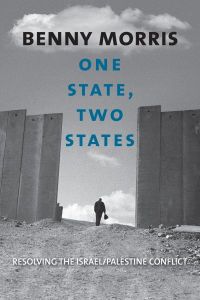
by James M. Wall                    Morris cover                        
This is a quick visit into the thinking of two men, Dick Cheney and Benny Morris, one an American, the other an Israeli.  Both have formulas they have developed to deal with “others”. 

You would have thought Cheney, defeated in 2008, could no longer find audiences eager to listen to his message.  You would have thought wrong.  

Cheney has emerged from his bunker and is once again taking his show on the road. 

He preaches to a public which gave him an approval rating of 29% in November, 2008.  His most recent favorable ratings are up to 37%. He still faces a 55% unfavorable rating. 

Since Dick Cheney came out, blinking into the sunlight, he has been officially designated by both Leno and Letterman as the “former president”, which, of course, accurately describes the man who also answers to Darth Vader. 

There is no fresh message from the “former president”. He still pushes his mantra: “Torture until you find an excuse to bomb”. You may want to ask, how did that formula work out during Cheney’s reign? Don’t ask. 

It was when I read Howard Fineman’s current (May 25) Newsweek column, that I realized Dick Cheney is not really Darth Vader. Fineman reports that he was present when he heard Cheney speak at a recent New York dinner in Manhattan,

Cheney was not on the program to speak, but as he listened to Nicholas Burns, a former State Department official in Cheney’s own Bush Administration, his face grew even grimmer than usual.  Burns was praising the merits of diplomacy in dealing with Iran.

Asked if he wished to respond, Cheney rose to his feet and began to speak

in his fatefully avuncular I’ve-been-there-and-you-haven’t tone. Diplomacy, he said, works only if the countries share the same objectives. Here [referring to Iran] they don’t. The Iranians are merely stalling for time to build the bomb. . . There will be no progress unless the Iranians “believe the threat of military force is on the table”.

This is not Darth Vader speaking.  This is the legless, diabolical, inventor, Dr. Arliss Loveless, from the movie Wild, Wild West. 

Kenneth Branagh, was the original Dr. Loveless, acting with an atrocious Southern accent, sounding like a native of Wyoming trying to be Southern. 

In the movie, Loveless is confined to a wheel chair, a victim of the late Great War Between the States. He is also a genius, who has built a machine with which he intends to conquer the world.  

Standing in his way are two warriors, Captain James West (Will Smith) and U.S. Marshall Artemus Gordon (Kevin Klein).

The original 1999 Wild, Wild, West received a host of bad reviews. I liked the film; it is rich metaphorically. Remember Obama’s inauguration? Remember Cheney arriving and departing in a wheel chair?

In my Wild, Wild West, 2009, Obama has the Will Smith role. Biden is in the Klein role as Obama’s faithful, charming, witty, sidekick.

In the original film, the mighty machine of futuristic destruction invented  by Dr. Loveless, lumbers across the desert sands, killing and destroying all in its path. 

Dick Cheney is a perfect Dr. Loveless, the man sitting in the driver’s seat, propelling the machine forward. All those “others” who do not “share his objectives” must face his wrath.

Many brave men and women have died in wars under leaders like Dick Cheney. Our military forces do their duty, proceeding forward as instructed. Many of the wars they fought were thrust upon our troops; they met their challenge. Others, like the one orchestrated by Cheney and his merry band of neocons, were launched under a cloud of lies.

Dick Cheney is not a lone gun fighter in the absolutist camp of fighting against those “others” who do not share “our objectives”.  He has counterparts in other nations.

Meet Benny Morris. 

Morris, an Israeli historian, has just written a new book informing the world of his own unique view of how to define “those who share our objectives”.  For Morris, “sharing our objectives” means “sharing our values”.  

In both cases, the meaning of “objectives” and “values” are defined by those with the biggest war machines.

On page 187 in Benny Morris’ book, One State, Two States, we find this appalling presentation of the Israeli-Palestinian conflict. (Thanks to Phillip Weiss for pointing to this passage.)

The mindset and basic values of Israeli Jewish society and Palestinian Muslim society are so different and mutually exclusive as to render a vision of binational statehood tenable only in the most disconnected and unrealistic of minds. The value placed on human life and the rule of (secular) law is completely different–as exhibited, in Israel itself, in the vast hiatus between Jewish and Arab perpetration of crimes and lethal road traffic violations.

Arabs, to put it simply, proportionally commit far more crimes (and not only ones connected to property) and commit far more lethal traffic violations than do Jews. In large measure, this is a function of different value systems (such as the respect accorded to human life and the rule of law). Benny Morris, One State, Two States: Resolving the Israel/Palestine Conflict, Yale University Press.

Morris is no raving wingnut.  He is conservative, to be sure, but he has academic credentials. He also has soul mates in the current right wing of the Israeli government, most notably, Foreign Minister Avigdor Lieberman. 

review of the Morris book written by Jeffrey Goldberg for the New York Times, is surprisingly affirming. Goldberg allows Morris’ views on the “difference in values” between Israeli Jews and Muslim Palestinians, to go unchallenged.

In his review, Goldberg repeats Morris’ racist and utterly indefensible language, words which few of his New York Times readers would have  ever read, except in the Times‘ review. Goldberg offers not the slightest acknowledgement that the language is racist.

What in the name of the gods of responsible journalism was the editor of the Times Sunday book review section, Sam Tanenhaus, a self-described conservative, thinking when he allowed this comment to appear in print without refutation?

Tannehaus has edited the Sunday Book Review section since 2004. Much of that time he has been writng a biography of William F. Buckley.   It is hard to imagine Buckley letting Morris’ racist language into print. 

Adam Horowitz, writing for Mondoweiss.com, is harshly critical of Goldberg’s review. 

In One State, Two States, [Morris] argues that this most enduring of conflicts is primarily cultural, not political. Between Arabs and Israelis, “the value placed on human life and the rule of (secular) law is completely different,” he writes, “as exhibited, in Israel itself, in the vast hiatus between Jewish and Arab perpetration of crimes and lethal road traffic violations.” But might the differences also be explained by higher rates of poverty among Arab Israelis?

Horowitch reacts to Goldberg’s vacuous reference to “poverty” with a dismissive, “Huh?”

He then points, in dismay, to more of what Goldberg found to be of value in the Morris book which

. . . regurgitates the “generous offer” canard yet again, and includes Morris’s infamous claim that Israel should have gone farther in forcing Palestinians off the land during the Nakba. About this call for ethnic cleansing, Goldberg simply says Morris sometimes comes to “inflammatory conclusions.”

In his Mondoweiss posting, Horowitz chastises the Times for both Goldberg’s review of Morris’ book, and for a second review in the same issue, which is a “celebration of Amos Oz, written by Liesl Schillinger”.  The reviews are separate, but, as Horowitz points out, they compliment each other by presenting “a biased narrative of the conflict”.

Horowitz helpfully reminds us of the iconic role Amos Oz plays for American liberal supporters of Israel. He is the Israeli author who makes them proud.

Schillinger’s review of Amos Oz provided an interesting, if unintentional, companion to Goldberg’s review. Oz is routinely celebrated in the liberal American press as the great Israeli humanist, the conscious of a nation. Schillinger’s review focused on Oz’s insistence on “imagining the other” which Oz feels is the “antidote to fanaticism and hatred.” He is presented both as a cosmopolitan author, and a kibbutznik pioneer.

You can imagine he may feel out of sorts in Lieberman’s Israel; he harkens back to the Israel liberals in the US used to love. It feels like the seemingly annual celebration of Oz in either the Times or New Yorker is perhaps meant to help liberals remember why they supported Israel in the first place.

As an historian, Morris has been all over Israel’s political map. Before Oslo, Morris moved from being a champion of Israel’s founding, to a debunker of the Zionist myth. His own research exposed Prime Minister Ben Gurion’s ethnic cleansing plan against the Palestinians. 

After Oslo, Morris shifted again. He was angry because Yasir Arafat turned down Israel’s “generous offer”, an offer Arafat had to refuse because he knew it could never lead to a viable Palestinian state.  

Morris and Goldberg refer to Palestinians as “Muslims”, ignoring the presence of Christians in Gaza and the West Bank. (Memo to Morris and Goldberg: Behind that “security” wall wrapped around Bethlehem you will find the birthplace of Jesus.  You get there by walking down a stairway in the Christian Church of the Nativity.)

This ignorance of the Palestinian narrative leads to a slanted, and inaccurate Goldberg reference to Muhammad Dahlan, whom Goldberg describes as “a former chief of one of the Palestinian Authority’s multifarious secret police organizations, and once a tacit ally of the C.I.A.

Dahlan was, in fact, Mahmoud Abbas’ longtime Fatah security chief. And, he was much more than just a “tacit ally” of the CIA. Dahlan’s forces were trained by the CIA to overthrow Hamas after the U.S. and Israel scuttled a unity government Fatah and Hamas had agreed to form.

I wrote a column in the Christian Century on Abrams and Fatah. The column was reprinted here in the Middle East Times. For a longer treatment, see this article in a 2008 issue of  Vanity Fair

Fatah was set up to fight Hamas by George Bush’s Deputy National-Security Adviser Elliott Abrams, a veteran neocon bureaucrat. Abrams  believed the U.S. should recruit indigenous “strong men” to lead forces loyal to the U.S. against elected governments. 

This tactic did not work for Abrams and Ronald Reagan in Central America. It also did not work in Gaza. Abrams and his “strong men” lost both times. His Central American adventure almost landed him in an American jail. He was spared incarceration when he was later pardoned by President George H.W. Bush. 

Dick Cheney, Benny Morris, and Elliott Abrams share the sin of exclusivity, the belief that the “other” must share “our” objectives and “our” values; otherwise they will feel “our swords”. Am I my brother’s keeper?, is not a question for the tribe alone. It embraces all “others” as well.  

Exclusivity is the narrow vision of the jungle; democracies can do better. 

Posted in Media, Middle East Politics | 3 Comments

Between Netanyahu and Obama, The NYT Picks Fear of Amalek

By James M. Wall        Trees outside wall cropped

Prime Minister Bibi Netanyahu  came to Washington with one thing on his mind: Attack Iran. 

President Obama was not buying it.  His focus was on a two-state solution for Israel and the Palestinians.

How did the venerable New York Times report the high-level meeting? Bibi’s spin was the winner, going away.  

When the New York Times reports a story, it becomes the gospel which the rest of the nation’s media follows with the fervor of a congregation listening to an evangelical preacher with the literal biblical truth clutched in his hand.

David Bromwich begins his Huffington Post column with this scathing exposure of the Times’ biased coverage, a blatant pro-Israeli spin that recalls the days when Judith Miller was feeding the Bush-Cheney WMD line to a frightened American public.

The New York Times assigned to the story a campaign-trail reporter, Sheryl Gay Stolberg, whose political perceptions are bland and whose knowledge of Israeli-American relations is an antiseptic zero.

At the newspaper of record, a thing like that does not happen by accident. They took the most anxiously awaited meeting with a foreign leader of President Obama’s term thus far, and buried it on page 12.

The coverage of a major event, which the same newspaper had greeted only the day before by running an oversize attack-Iran op-ed by Jeffrey Goldberg, has officially now shrunk to the scale of a smaller op-ed.

The story of the meeting, which the Times buried on page 12, made no reference to Obama’s post-meeting statement in which the President stated firmly:

We also had an extensive discussion about the possibilities of restarting serious negotiations on the issue of Israel and the Palestinians.  I have said before and I will repeat again that it is I believe in the interest not only of the Palestinians, but also the Israelis and the United States and the international community to achieve a two-state solution in which Israelis and Palestinians are living side by side in peace and security.

Instead, the Times refined its coverage in a next-day correction which focused again on Netanyahu’s bottom-line hard line demand, a repeat of Israel’s insistence that the Palestinians must recognize Israel as a “Jewish state”, otherwise no talks will be possible. 

In a union negotiation that would be a deal-breaker, as, for example, the corporation agrees to talk with the union provided the union agrees to give up all health coverage in its contract. 

The correction, which sounds like AIPAC had made its call to the Times, provides a fascinating look at media manipulation, a nuance wrapped within a nuance that is not a nuance but a blatant spin.

A Correction: An article on Tuesday about a meeting between President Obama and Prime Minister Benjamin Netanyahu of Israel paraphrased incorrectly from Mr. Netanyahu’s remarks about the prospects for negotiations with Palestinians.

Mr. Netanyahu said, “If we resume negotiations, as we plan to do, then I think the Palestinians will have to recognize Israel as a Jewish state.” He did not say that Israel was prepared to resume negotiations only if the Palestinians recognized Israel as a Jewish state.

Got that duped reader?  The NYT reworded Bibi’s phrase. It failed however, to offer a factual correction. The original story said the two men held a “two hour meeting”. In fact, the meeting lasted four hours.” This suggests that the story went on line prior to the meeting and was based on pre-meeting briefings from Israel’s spin doctors.

 Is it possible to write a story before it happens?  It is if you know the outcome you favor going in.

According to the correction, Bibi

did not say that Israel was prepared to resume negotiations only if the Palestinians recognized Israel as a Jewish state.” What he did say was, “If we resume negotiations, as we plan to do, then I think the Palestinians will have to recognize Israel as a Jewish state.” 

Where is the correction in that?  Help me out here. Is AIPAC trying to gild the lilly a bit? Health care is still off the table. 

Why should the Palestinians or the United States, or the EU, or the UN, or Grovers’ Corners in New Hampshire, or God, recognize Israel as a Jewish state?  What’s with this adjective thing? Israel can call itself what it wants. But don’t demand that the Palestinian negotiators call it a Jewish state.  

The rest of us would prefer to call Israel what it is, a secular democracy which includes a population of 1.5 million non-Jewish Palestinian Arabs, a majority of whom are Muslims. 

Of course, ever the diplomatic balancer, and still under the influence of pro-Israel advisors like Dennis Ross, President Obama gave the Times the opening the paper seized to run with Iran over the two-state angle. Richard Silverstein shares this unhappy news in his Tikun Olam site:

The president seems to have adopted an articulation favored by Iran envoy Dennis Ross and the Israelis, by which Iran will be given until the end of the year to accede to demands that it renounce its nuclear program.  If it does not do so, then in the next phase the U.S. will advocate harsher penalties and sanctions.  The final phase, of course, will be military action.

Obama should have known the NY Times would be prepared to use what it needed to undermine his stern words about making the two-state solution a priority. Rahm Emanuel could have told  him that. So could David Alexrod.

Indeed, the media choice between Bibi and Barack was a set up from the start. The Bromwich column explains how it played out. 

Links to the original Times story, and the column by the Times latest Zionist columnist, Jeffrey Goldberg, are in David Bromwich’s story referenced above. Bromwich, Stolberg, and Goldberg (who now sits in Bill Kristol’s Times chair) should be read in full, and carefully. (Kristol lasted a year at the Times; he now writes a column once a month for the Washington Post.)

When you read the links from Bromwich, Stolberg and Goldberg, keep in mind that the version of “truth” the Times would have you embrace is, for most Americans, the “gospel truth”. 

Are you ready for this? The Times‘ Jeffrey Goldberg’s column describes Bibi as Israel’s modern-day Amalek.

Amalek has long been a trump card in Israel’s spin arsenal.  It is rarely used in speaking to a notoriously biblically-ignorant American public. But it resonates with conservative religious Israelis, an influential minority in a population where the majority is secular.

That minority currently runs Israel’s foreign ministry and is the driving force behind the settler movement which continues to capture Palestinian land with expanded (and far from frozen) settlement growth. 

Read Exodus 17:16  before you continue with this petinent section of Goldberg’s defense of Netanyahu’s obsession with Iran.  And think back, Pilgrim; before there was an Iran, Saddam Hussein was the Amalek who worried Israel’s right wing leaders.

Did Amalekite-driven Israeli conservatives, and their U.S. neo con backers, influence the Bush administration to attack Iraq in 2003?  As my late friend Richard John Neuhaus might have said, “there are those who would say so, though I would never say such a thing”. 

Here is the heart of  Goldberg’s defense of Bibi Netanyahu’s current thinking, tracing the biblical rationale for Israel’s fears from Exodus to the present moment:

Nevertheless, the prime minister’s preoccupation with the Iranian nuclear program seems sincere and deeply felt. I recently asked one of his advisers to gauge for me the depth of Mr. Netanyahu’s anxiety about Iran. His answer: “Think Amalek.”

“Amalek,” in essence, is Hebrew for “existential threat.” Tradition holds that the Amalekites are the undying enemy of the Jews. They appear in Deuteronomy, attacking the rear columns of the Israelites on their escape from Egypt. The rabbis teach that successive generations of Jews have been forced to confront the Amalekites: Nebuchadnezzar, the Crusaders, Torquemada, Hitler and Stalin are all manifestations of Amalek’s malevolent spirit.

If Iran’s nuclear program is, metaphorically, Amalek’s arsenal, then an Israeli prime minister is bound by Jewish history to seek its destruction, regardless of what his allies think.

President Obama might want to place a call to his old pastor Jeremiah Wright, and ask him about Amalek. Dr. Wright has graduate degrees in religion and a distinguished career as a pastor in the United Church of Christ.  I suspect he has a different reading on using Amalek in this 21st century foreign policy conflict.

(The photo above  was taken by Connie Baker next to the Wall surrounding Bethlehem. In the distance you will see illegal Israeli settlements built on Palestinian land.) 

Posted in Media | 1 Comment

Obama Is The “tough-loving, truth-telling friend” Israel Needs

by James M. Wall                 Obama Bibi photo

Early in my writing career, I received a personal note from a well-known writer which so boosted my morale that fifty years later, his note remains deeply embedded in my memory bank. What I had written prompted this response: “I wish I had written that”. 

I cannot remember what prompted such praise. I seriously doubt that my words were that special. Nevertheless, I was happy to read them.

The purpose of this blog is to point to the wisdom, research, creative thinking and well crafted writing of many people.  I try to include as many links to these writers as possible. I have long ago decided that there are far better and much wiser writers out there than the author of this blog.

Now, instead of saying “I wish I had written that”, I spend my time telling others what the wiser ones are writing and saying.

I want to start with a conference I attended last week at the Carter Center, in Atlanta, Georgia, under the auspices of the Human Rights Program, of the Center.  This opening paragraph from the Carter Center’s press release reports the results of the conference, the details of which I will return to in future postings.

National Christian leaders meeting at The Carter Center on May 14-15 sent the following letter to President Barack Obama following two days of discussions on the Israeli/Palestinian conflict.  Citing a growing sense of despair in the Holy Land, the letter conveys to the President support for his efforts to push for a two-state solution and calls for an immediate opening of the Gaza borders.

There were more than 40 participants sitting around a large table in the Center’s conference room which overlooks beautiful grounds and a small lake. It was a group of leaders who were diverse in their makeup and deeply involved in the topic at hand: Towards a New Christian Consensus: Peace with Justice in the Holy Land.

Christian church leaders, and experts from the Jewish and Muslim communities revealed that for all their diversity, they believe this is a crisis moment for both the Palestinians and the Israelis. These leaders want the President to know they are prepared to call upon their religious communities to confront that crisis.

The group around the table represented constituencies in the U.S. and in Palestine, which share this awareness of crisis. The group included, just to suggest the diverse nature of the group, the Rev. Dr. William Shaw,  president of National Baptist Convention, Inc.; the Rev Mark S. Hanson,  presiding  bishop, Evangelical Lutheran Church in America; Warren Clark, executive director, Churches for Middle East Peace; the Rev. Gradye Parsons, General Assembly Stated Clerk for the Presbyterian Church U.S.A.; the Rev. Canon John L. Peterson, Canon for Global Justice and Reconciliation, Washington National Cathedral; Lynne Hybels, Advocate for Global Engagement, Willow Creek Community Church, South Barrington, Illinois; and Jim Wallis, editor of Sojourners.

Conference attendees and speakers are movers and shakers in the national Christian community. There is no better sign that change is coming on this major issue of peace and justice, than to realize that it would have been unthinkable twenty years ago for such a diverse and influential religious group to engage in such candid talk on peace and justice on this topic.

I know this for a fact.  I began covering national and regional church meetings in the 1960s. In those days the topic was not even on the religious radar screen.

Now it is. Which is why it was an occasion to rejoice when at the end of the Carter Center two-day gathering, conference attendees sent a letter to President Obama, which essentially, said, as one participant noted, “we’ve got your back, Mr. President”:

Our pledge to you is to continue to build constituencies that will advocate for a just political settlement to the Israeli-Palestinian conflict.  We request that you call upon Prime Minister Netanyahu to embrace the principle of a two-state solution.  As members of your administration have already suggested, we share a concern about how Israeli settlements make that solution less and less possible. 

Furthermore, we are concerned that a way be found immediately to open the Gaza borders in a manner that respects both humanitarian and security concerns.  

(For the entire statement, return to the story from the Carter Center, and while you are there, pause to give thanks for the names who signed the letter to President Obama and for the religious bodies they represent. When you reach my name, you don’t need to give thanks, just keep reading this blog. You are my constituents.)

There are other signs of change.

Israeli Prime Minister Bibi Netanyahu came to Washington this week to face a new sheriff in town. The Prime Minister knows he still has the U.S. Congress in his pocket, but he also knows that Obama is enormously popular with the American public. And he knows Obama is skilled as a negotiator with individuals and groups (and countries) with different ideologies and agendas.

What sort of man is this president with whom Bibi is meeting? Few offer an answer as perceptive as this from Tony Karon:

Against expectations, Barack Obama may not be turning out to be the kind of indulgent enabler Israel’s leaders want, but instead the kind of tough-loving, truth-telling friend Israel needs: the friend that forces you to recognise that your pathological behaviour cannot continue, for your own good and for the good of those around you.

Having been so unconditionally coddled during the Bush years, Israel’s political establishment has been shocked by Mr Obama’s apparent fair-minded pragmatism.

No sooner had it begun to digest his insistence on a solution to the conflict (two independent states living side by side) not shared by the Israeli government, than it learnt to its consternation that Mr Obama has ended the practice of clearing every US statement on the Middle East with the Israelis beforehand.

It had hardly absorbed the shock of Washington publicly declaring that it expects Israel – like other non-signatory nuclear powers – to sign the Nuclear Non-Proliferation Treaty, than it was directly warned by Mr Obama to refrain from launching any military action against Iran without consulting Washington.

Got that, Mr. Prime Minister? Two states are paramount; U.S. statements will not be (officially) cleared in Tel Aviv; we expect you to sign the Nuclear Non-Proliferation Treaty; no more of this “Israel does not have nukes” charade; and, by the way, no attacks on Iran.

Bibi will resist, as he did after his Monday meeting with the President.  But Israel’s new leader is smart enough to know that he needs to maintain a good relationship with his U.S. backers.  But, as Karon notes, he can expect no more Bush-Cheney coddling. 

Even the New York Times ran an advance story on Netanyahu’s visit which quoted, favorably, from not-so-usual-suspects Israeli peace negotiator Daniel Levy (who spoke at the Carter Center Conference last week), Ali Abunimah, a Palestinian-American journalist from Chicago, and (drum roll, please), Charles Freeman, recently the victim of a vicious series of AIPAC-inspired attacks.

Speaking of Freeman, you can read more on his experiences in this blog, and in a longer treatment of Freeman Affair I wrote for Link, published by Americans for Middle East Understanding (AMEU), now available both in print and on line. Link’s archives offer a rich tapestry of the long struggle waged for peace and justice in the Middle East under the leadership of longtime Link editor, John Mahoney. 

Along with the fiction that there are no nukes in Israel, a fiction the media and U.S. political leaders know to be untrue even as they promote it, there is the fiction that AIPAC has nothing to do with the all those pro-Israel Congressional resolutions and press releases. That curtain has been lifted, as Al Kamen notes in the Washington Post:

House Majority Leader Steny H. Hoyer (D-Md.) and Minority Whip Eric Cantor (R-Va.) sent out a “Dear Colleague” e-mail Tuesday asking for signatures “to the attached letter to President Obama regarding the Middle East peace process.”

The letter says the usual stuff, emphasizing that Washington “must be both a trusted mediator and a devoted friend to Israel” and noting: “Israel will be taking the greatest risks in any peace agreement.”

Curiously, when we opened the attachment, we noticed it was named “AIPAC Letter Hoyer Cantor May 2009.pdf.”

Seems as though someone forgot to change the name or something. AIPAC? The American Israel Public Affairs Committee? Is that how this stuff works?

Yes, Virginia, AIPAC writes those resolutions and even handles the press releases.  

Finally, even newly-minted Democrat Arlen Specter is starting to feel shaky with his exposure as one-sided on the Middle East. This news item appeared the day Netanyahu came to Washington:

(WASHINGTON, D.C., 5/18/09) – The Council on American-Islamic Relations (CAIR) announced today that Sen. Arlen Specter (D-PA) has canceled a scheduled appearance at an “anti-Islam” conference in Washington, D.C., hosted by a right-wing think tank headed by Daniel Pipes, who is regarded by many Muslims as one of the nation’s leading Islamophobes.

CAIR reports that Specter, who was to give the opening address at the conference, cited a “scheduling conflict” for his decision to withdraw from the event. As late as today, media schedules listed Specter as a speaker at the conference.

The false premise of the conference, called “Libel Lawfare: Silencing Criticism of Radical Islam,” is that American Muslims are involved in a concerted effort to suppress free speech by misusing the American legal system.

Photo above is from Getty.

Posted in Middle East Politics, Religion and politics | 4 Comments

EFCA Could Lose: We Need Frances Perkins Today

photo_perkinsby James M. Wall

Your reading assignment for today combines New Deal history with a current news story. 

The book is by Kirstin Downey, The Woman Behind the New Deal: The Life of Frances Perkins, FDR’s Secretary of Labor and His Moral Conscience (Nan A. Talese, Doubleday, 2009). 

The current news story? The Employee Free Choice Act (EFCA) is in danger. Democratic senators are wobbly. We need a Frances Perkins for today who will push Congress to do the right thing. 

The original Frances Perkins chaired New York State’s Industrial Commission under two successive governors, Al Smith and Franklin Roosevelt. When Roosevelt was elected president in 1932, Perkins became his Secretary of Labor, the first woman to serve in a president’s cabinet.  

Before his inauguration, Roosevelt invited Frances Perkins for an interview in his New York City residence on East 65th Street. Kirstin Downey, the author of this stirring biography, describes their historic 1933 meeting on “a chilly February night”. 

She clutched a scrap of paper with hastily written notes. Finally ushered into his study, the woman brushed aside her nervousness and spoke confidently.  They bantered casually for a while, as was their style, then she turned serious, her dark, luminous eyes holding his gaze.

He wanted her to take an assignment but she had decided she wouldn’t accept it unless he allowed her to do it her own way.  She held up the piece of paper in her hand, and he motioned for her to continue.

She ticked off the items: a forty-hour workweek, a minimum wage, worker’s compensation, unemployment compensation, a federal law banning child labor, direct federal aid for unemployment relief, Social Security, a revitalized public employment service, and health insurance.  She watched his eyes to make sure he was paying attention and understood the implications of each demand.

She braced for his response, knowing that he often chose political expedience over idealism and was capable of callousness, even cruelty.

The scope of her list was breathtaking. She was proposing a fundamental radical restructuring of American society, with enactment of historical social welfare and labor laws.

Franklin Roosevelt would soon be sworn in as the nation’s thirty-second president. 

He would inherit the worst economic crisis in the nation’s history.  An era of rampant speculation had come to an end. The stock market had collapsed, rendering investments valueless. Banks were shutting down, stripping people of their lifetime savings. About a third of workers were unemployed,; wages were falling; tens of thousands were homeless.  Real estate prices had plummeted, and millions of homeowners faced foreclosures.

Roosevelt was about to give “this plain, matronly woman” a cabinet assignment that would place her at the heart of the nation’s economic crisis.

No one was more qualified for the job. She knew as much about labor law and administration as anyone in the country. He had known her for more than twenty years, the last four in Albany, where she had worked at his side. He trusted her and knew she would never betray him.

But a woman in the cabinet? A woman with plans that included the eight-hour work day, a standard plank of the Socialist Party?

Why Not? Frances Perkins was ready.

She had campaigned in New York politics for reform before she could vote.  It was not until August 18, 1920, when the 19th amendment was ratified that Frances Perkins and every other woman in America were given their constitutional right to vote. 

Candidate Roosevelt had promised a balanced budget. Frances Perkins was proposing a budget-busting budget which gave direct aid to the unemployed.  The president-elect knew her appointment would “expose him to criticism and ridicule”.  

He said he would back her.

Perkins had worked with reformers like Florence Kelley, the founder of the National Consumers League, who had “spent her life laboring for workplace reforms”. Kelley’s victories had been “few and hard won”.  One battle she lost was the abolition of child labor, a reform vigorously resisted by the National Association of Manufacturers.

One of Perkins’ proudest moments was when the Congress finally voted to abolish child labor. Kelley was not around to see the victory. She died at age 74 in February, 1932.

Mary Dewson, who had risen high in Democratic party circles, had worked with Kelley and Perkins in the League before Perkins entered New York politics.

Dewson knew how to push Democratic party buttons. She, with Perkins’ blessing,  started a campaign to persuade FDR to give her the cabinet post and then to persuade the Congress to confirm her over strong resistance, including the opposition of union leaders who wanted one of their own male leaders for the job.

Endorsement letters and petitions flowed into Washington.  One letter arrived in December, 1932: 

I need not recite any of her qualifications, but it is a wonderful coincidence that the woman best equipped for the post should have sat in the previous cabinet of the President of the United States.

It was signed by Jane Addams, mailed from Chicago’s Hull House, with whom Perkins once worked in her initial vocation as a social worker.

Kirstin Downey first heard of Frances Perkins in 1988, when she worked as a business reporter and later wrote a column, On the Job,  for the Washington Post.  

Downey received a call one day from a man who complained that he was locked in his office at the end of each working day while his boss counted the day’s receipts. He wondered if Downey agreed that this practice was unsafe in case of a fire: “Even a rat has an escape hole”.

Calling around to her sources, she reached Judson McLaury, a staff historian with the Labor Department. She asked McLaury about famous workplace fires.

He casually asked Downey if she knew that a young social worker, Frances Perkins, had actually witnessed the famous 1911 Triangle Shirtwaist fire disaster, in Lower Manhattan. This information launched Downey on a decade-long detective project

In the Triangle Shirtwaist fire, in which 146 young women died, most of the victims were Jewish and Italian immigrants, who were locked in their building. Flameable cloth was tossed about on every floor.

The fire destroyed the 12-story building near Washington Park. Perkins was having lunch with friends across the park when the fire began. She raced over and saw what was clearly a “crowded firetrap” go up in flames. 

As she approached, Frances saw people beginning to plummet to the ground., “One by one the people would fall off,” she said. “They couldn’t hang on any longer–the grip gives way.” Then, just as he arrived at the base of the building, Frances saw a worker deliberately jump to her death. Then another. And another. 

Two year earlier, workers had pleaded for help from their crowded and dangerous work conditions. They “had been rebuffed, even persecuted, for complaining about their work conditions.”

Until that experience, Frances Perkins assumed her life would follow the pattern of most women in her social group,”doing volunteer social work while living comfortably and well. Now she began to suspect that much more might be needed of her. Workplaces needed to be made safer and more humane, but she had already lost her innocence about the ease with which those changes might occur, and she realized a lifelong commitment was needed.”

It is without doubt that the Triangle fire was a turning point. It reoriented her life. Journalist Will Irwin, a close friend, summed it up: “What Frances Perkins saw that day started her on her career.”

Perkins’ life had already been shaped by her earlier experiences. 

Her parents were devoted Congregationalists and instilled in Perkins an earnest desire to “live for God and do something.” At Mount Holyoke College, she began to understand just what that meant. . . 

After graduation from Mount Holyoke in 1902, Perkins accepted a series of teaching positions and volunteered her time at settlement houses, where she learned first hand the dangerous conditions of factory work and the desperation of workers unable to collect their promised wages or secure medical care for workplace injuries. . .

Because of Frances Perkins’ work with the New Deal, labor unions and social legislation have made enormous strides.  Kristin Downey notes that “it is a great historic irony that Frances is now virtually unknown.”

Factory and office occupancy codes, fire escapes and other fire-prevention mechanisms are her legacy. About 44 million people collect Social Security checks each month; millions receive unemployment and worker’s compensation or the minimum wage; others get to go home after an eight-hour day because of the Fair Labor Standards Act. Very few know the name of the woman responsible for their benefits.

None of these advances were made without a struggle.  Labor unions and their Democratic party allies have not always worked in the best interests of their members. Well-funded and politically connected corporate America constantly sets up barriers to keep workers from making even further advances. 

Most recently, the Congress has danced around a final agreement to pass the Employee Free Choice Act, which is expected to be voted on by this current Congress. Corporate lobbyists are playing word games that imply what is at stake is “the secret ballot”, which Frances Perkins, were she still with us, would have exposed as a the same word-game bogus tactic she encountered when she fought to implement the basic reforms of the New Deal. 

The EFCA is written to make it easier for working men and women to organize unions without being intimidated or threatened by their employers. Corporate America has never been comfortable sharing power with the workers. The same National Association of Manufacturers that fought Frances Perkins is still around, still working to “defeat bad labor policy”. 

Frances Perkins was 85 when she died in 1965. Her first two successors were men, both miserable failures in the office. (Eleanor Roosevelt wrote to Truman, complaining that he should have named a woman to replace Perkins.) Harold Ickes, who had served with Perkins in the Roosevelt cabinet, had retired and was writing a newspaper column when he finally realized what a good job Perkins had done. (Ickes’ son was more recently a key advisor in Hillary Clinton’s 2008 campaign.)

When Miss Perkins was Secretary of Labor, she was hounded and harassed with sadistic delight. There was a consistent demand that President Roosevelt replace her [with] a strong he-man. Well, we have two strong he-men–John Steelman and Lewis Schwellenbach–running the labor policies of the Government. . . I wonder if our labor affairs would not be in more competent hands if only Secretary Perkins was back on the job.”

In July, 1945, Perkins attended the International Labor (ILO) conference in Paris, where “she was greeted with cheers by the delegates from other nations, who gave her a standing ovation”.  Upon her return home, Perkins asked President Truman to appoint her as a member of the Social Security Board. Instead, he offered to name her to the Civil Service Commission.

She protested, saying her preference was the Social Security Board. Truman called her and said he understood “why  you would like that, and I see why”.

It’s right up your line and you were responsible for the Act entirely. . . But we’re in a kind of a jam, you know.  We have to take care of many people and many things, and Oscar Ewing wants it.  He’s been a great supporter of the Democratic Party, and a great contributor.” 

Will this present Congress, with its own loyalty to many “great supporters” and “great contributors”  pass the EFCA?  For the answer to that question, you will have to ask Democrats like Arlen Specter, Diane FeinsteinBlanche LincolnMark PryorJim WebbMichael BennetMark Udall and Ben Nelson, all of whom either oppose EFCA or are wobbling around for a greatly weakened compromise. 

Posted in Religion and politics | 4 Comments

The Pope Skips Gaza: “I was in prison and you visited me not”

by James M. Wall                tower2

A friend writes from Bethlehem:         

His Holiness will arrive in Jordan at the end of this week, then cross the river to Israel-Palestine and spend a few more days here.

Sad to say, he will not visit Gaza.

It would have been a huge encouragement for the people of the region especially the Christians in Gaza, and provided a good “media op” to highlight the devastation and on-going problems inside the prison that is Gaza. 

To be fair to Pope Benedict XVI, he does not have total control over his May 8-14 travel itinerary which begins in Amman, where he plans to visit a mosque. From Jordan, the Pope will cross the Jordan River into the Occupied Palestinian Territories and Israel.

On the Israeli side of the river he will be met by Israeli President Shimon Peres, who will serve as his constant companion and guide before he returns to Rome.

My Bethlehem friend reports that the 82-year-old Pontiff’s visit has provided some surface improvements for the town where Jesus was born.

Bethlehem has never looked so good! The municipality has received funding to spruce up the city. New street lamps have been installed that have not worked since the beginning of the Intifada in 2002.  Storefronts all along Manger Street have had the posters of [Palestinian] martyrs removed and have been repainted. The curbs have been painted with black and white or red and white striping denoting parking or no parking areas (not that anyone pays attention to that!)

On the day the pope comes no one will be allowed out on the streets anyway. This will be purely a media event. The local police will once again be posted on the roofs of buildings and line the streets with weapons aimed high searching for anyone who dares to even look out their windows.

Unfortunately the local Christians to whom the pope, or “al Baba” as he is referred to here, will not be allowed to participate in the events. Dignitaries, politicians, clerical hierarchy and even Jewish ministers of state will accompany the pope, but for “security” reasons the local Christians will be sidelined.

On his pilgrimage the Pope will visit the D’heisha Refugee Camp in Bethlehem and, of course, he will pay a ceremonial visit to the Church of the Nativity. Word from a source in Jerusalem is that “the Israelis moved  the refugee camp visit from the Aida Camp to D’heisha, because they don’t want the Wall and a Guard tower to be in the tv images that get transmitted.”  

But the Pope will not visit Gaza, easily the world’s largest refugee camp, now under the control of Hamas, where Gaza officials would no doubt have been more than delighted to welcome the Pope.  

In Gaza he not only would have seen the aftermath of Israel’s most recent 22-day invasion, and experienced the suffering of a people confined behind prison walls, but Hamas officials could have taken him to the site in Gaza where Samson rebelled against his captors by pulling down the walls of the temple of Dagon (Judges 13-16).

The Pope’s visit to Bethlehem will require him to enter and depart the city through an oppressive checkpoint used by all residents and visitors, even Popes. Unless that is, Israeli authorities decide to open the city’s ancient entrance gate, closed since the Israeli “security” wall was built surrounding the town where Jesus was born. The gate normally swings opens only for two Easter processionals.

However, the Pope enters the city,  he will not escape another ugly reality:  At intervals along the wall are those carefully placed guard towers (like the one pictured above), where armed soldiers keep watch over the inhabitants, by night, and by day. 

 Donald Macintyre describes what else the Pope will not see when he enters and leaves Bethlehem.

It is 5:45 am, just a few minutes before sunrise, when the bottleneck at the entrance to the narrow, fenced-in checkpoint path in Bethlehem is at its worst. There is scuffling when the tempers of the men, many of whom have been up since 3am, begin to fray as they compete to squeeze into the alley to queue for a lengthy series of Israeli security checks of their IDs, work permits, and biometric palm prints. . . .

Though he will enter the nativity city through the wall at this same Gilo checkpoint during his five-day trip to the Holy Land next week, this is a scene that Pope Benedict will not see. By the time he arrives around 8am, the thousands of workers will have long gone; the food vendors will have packed up their barrows, along with the coffee urns, sesame loaves and tins of tuna – up to 75p cheaper than in Israel – that the men sometimes stop to buy for lunch. . . .

At the time of the last Papal visit in 2000, there were around 140,000 West Bankers working in Jerusalem. But since the beginning of the second intifada only 26,000 have permits to do so.

The National Catholic Reporter’s John L. Allen Jr. is travelling on the papal plane to cover Benedict XVI’s visit. Before leaving for Rome this week, he wrote in his pre-trip analysis that Benedict’s trip

represents the first opportunity to “road test” the prospects for collaboration between the United States and the Vatican with regard to a critical shared objective – peace in the Middle East. That’s an especially live prospect given the likelihood that Benedict and Obama will meet in person shortly afterwards, on the occasion of the G-8 summit in Italy in July.

This storyline may be particularly beguiling in view of a notable coincidence: Benedict’s trip to the Holy Land wraps up on May 15, just two days before Obama’s much-ballyhooed May 17 commencement address at the University of Notre Dame.


Posted in Middle East, Religion and politics | 4 Comments