“The Arab World Is On Fire”

by James M. Wall

Uri Avnery, veteran and venerable Israeli peace activist, captured the moment:

What is happening now in Egypt will change our lives.

As usual, nobody foresaw it. The much-feted Mossad was taken by surprise, as was the CIA and all the other celebrated services of this kind. Yet there should have been no surprise at all – except about the incredible force of the eruption. . . .

The turmoil in Egypt was caused by economic factors: the rising cost of living, the poverty, the unemployment, the hopelessness of the educated young. But let there be no mistake: the underlying causes are far more profound.They can be summed up in one word: Palestine. In Arab culture, nothing is more important than honor. People can suffer deprivation, but they will not stand humiliation.

In Egypt, as the life-changing events unfolded, courageous Western journalists were on the scene, under attack from President Mubarak’s forces in his last desperate attempt to hold on to power.  They came there because they knew the revolution that began in Tunisia had reached Egypt.

These journalists were not in Gaza during Israel’s attack on a trapped civilian population in December, 2008. They were not there because Israel barred them from entering Gaza. More importantly, they were not there because their editors, conditioned to faithfully follow Israel’s narrative, did not send them there.

The Israeli control over its narrative finally, and definitively, imploded in Cairo in 2011, because of the courage and determination of the Egyptian people in Tahrir Square, where what happened, in Uri Avnery’s words, “will change our lives”.

Among the journalists who risked their lives in Tahrir Square was New York Times columnist  Nicholas Kristof, who concluded his Friday column:

Whatever Mr. Mubarak is planning, it does feel as if something has changed, as if the Egyptian people have awoken. When I needed to leave Tahrir Square today, several Egyptians guided me out for almost an hour through a special route so that I would not be arrested or assaulted — despite considerable risk to themselves. One of my guides was a young woman, Leila, who told me: “We are all afraid, inside of us. But now we have broken that fear.”

The lion-hearted Egyptians I met on Tahrir Square are risking their lives to stand up for democracy and liberty, and they deserve our strongest support — and, frankly, they should inspire us as well. A quick lesson in colloquial Egyptian Arabic: Innaharda, ehna kullina Misryeen! Today, we are all Egyptians!

Kristof eloquently describes what is now fully exposed as a brutal dictatorship, whose collapse sends a warning to the shaky thrones of the Middle East, from Tel Aviv to Damascus, Amman, and Riyadh in the Levant, and in the Arab states in the Maghreb of North Africa.

Who are the ehna (the we) that Kristof calls to be Egyptians (Misryeen) innaharda (literally, in the light of this day)?

We encompass the kullina (all of us) who are called to support the bravery, the fortitude, the remarkable restraint, and the demand for freedom expressed in Cairo’s Tahrir Square this past week.

And, most importantly, the ehna are the kullina who must now join those Misryeen and demand “enough and no more”.

The revolution came suddenly, at least it did for those who were not paying attention. It started in Tunisia, as Noam Chomsky wrote in In These Times:

“The Arab world is on fire,” al-Jazeera reported on January 27, while throughout the region, Western allies “are quickly losing their influence.”

The shock wave was set in motion by the dramatic uprising in Tunisia that drove out a Western-backed dictator, with reverberations especially in Egypt, where demonstrators overwhelmed a dictator’s brutal police.

What say the ruling powers about this “fire” as the largest domino in the region prepares to fall? The Christian Science Monitor reports this reaction in Israel and within the Palestinian Authority leadership:

Both Israel and the Palestinian Authority officials fear the empowerment of the Muslim Brotherhood in Egypt might prompt Cairo to ease access to Gaza, and help Hamas consolidate its rule there.

Egypt has the keys to Gaza’s only border not controlled by Israel. That leaves President Mubarak’s successor, whoever it may be, with the option to open up the stifled territory of 1.5 million to trade and civilian traffic, or to continue the restrictions that weigh on the economy and the Islamic militant government there.

The US is struggling to find its footing. Marc Lynch, an associate professor of political science and international affairs at George Washington University, writes on his Foreign Policy blog that President Obama must walk a delicate line between the US’s long alliance with Egyptian rulers and the passionate protests that are overturning the establishment.

What do the protestors expect from Obama? Lynch writes:

Their protest has a dynamic and energy of its own, and while they certainly want Obama to take their side forcefully and unequivocally they don’t need it.

What they do need, if they think about it, is for Obama to help broker an endgame from the top down — to impose restraints on the Egyptian military’s use of violence to repress protests, to force it to get the internet and mobile phones back online, to convince the military and others within the regime’s inner circle to ease Mubarak out of power, and to try to ensure that whatever replaces Mubarak commits to a rapid and smooth transition to civilian, democratic rule. And that’s what the administration is doing.

The administration’s public statements and private actions have to be understood as not only offering moral and rhetorical support to the protestors, or as throwing bones to the Washington echo chamber, but as working pragmatically to deliver a positive ending to a still extremely tense and fluid situation.

Israeli leaders are largely silent, after initially demanding, unsuccessfully, Obama’s full support for Mubarak.

Israel relied on Mubarak to police Gaza’s southern border, thereby tainting Egypt as a partner in the crimes Israel has committed against Gaza.

Israel’s generated fear of the Muslim Brotherhood, as usual, is exaggerated. The government that succeeds Mubarak’s dictatorship may not be as strongly influenced by the Brotherhood as Israel has warned.

Hannah Allam writes from Cairo for McClatchy Newspapers, that even the Muslim Brotherhood was behind the curve, when the fire started:

The Muslim Brotherhood, long relegated to the fringes of Egyptian politics, is playing a growing role in the popular revolt against President Hosni Mubarak, but is still defining its goals for the country, according to political analysts familiar with the Islamist movement.

Under the one-party regime that Mubarak ran for three decades, the mostly mainstream Brotherhood was officially outlawed but generally tolerated. Still, it went on to become Egypt’s best-organized political movement, claiming 400,000 members.

That would be 400,000 Brotherhood members in a population of 83 million Egyptians. Long demonized by the US and Israel as a fundamentalist party akin to Al Qaeda and the Taliban, the Brotherhood has its fundamentalist element (as do the Republicans, with their “Tea Party”), but the Brotherhood, and the rest of the Egyptian population, have the potential to create a Middle Eastern democracy more along the lines of a secular Turkey, than one that would follow the Taliban model.

Hannah Allam spoke with Alaa al Aswany, an acclaimed Egyptian novelist, about the role of the Brotherhood in any future Egyptian government. Aswany supports the anti-government protesters. His response:

“The role and influence of the Brother Muslims have been exaggerated intentionally by the Egyptian regime for years, just to send the message to the West that either you accept the dictatorship in Egypt or prepare for another Taliban or Hamas in power. This is not true at all.”

Rami G. Khouri, Editor-at-large of The Daily Star, and Director of the Issam Fares Institute for Public Policy and International Affairs at the American University of Beirut, in Beirut, Lebanon, is a reliable Palestinian scholar on Arab affairs. He urges patience.

On February 4, he wrote:

The process at hand now in Tunisia and Egypt will continue to ripple throughout the entire Arab world, as ordinary citizens realize that they must seize and protect their birthrights of freedom and dignity. . . .

The Americans needed 300 years to transition from slavery to civil rights and women’s rights. Self-determination is a slow process that needs time. The Arab world is only now starting to engage in this exhilarating process, a full century after the false and rickety statehood that drunken retreating European colonialists left behind as they fled back to their imperial heartlands.

It takes time and energy to re-legitimize an entire national governance system and power structure that have been criminalized, privatized, monopolized and militarized by small groups of petty autocrats and thieving families. . . . .

Make no mistake about it, we are witnessing an epic, historic moment of the birth of concepts that have long been denied to ordinary Arabs: the right to define ourselves and our governments, to assert our national values, to shape our governance systems, and to engage with each other and the rest of the world as free human beings, with rights that will not be denied forever.
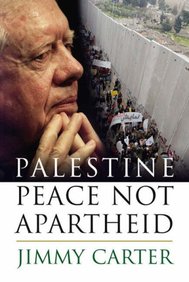
Former US President Jimmy Carter delivered a peace treaty (some would say, forced a peace treaty) on Israel and Egypt in 1979. Both nations responded by building up their respective military forces with US funds, at the expense of their own public. Israel, for its part, showed its gratitude to Carter by immediately violating its Camp David agreement, expanding its settlements in occupied Palestinian land.

Since leaving office in 1981, Carter has become increasingly vocal in his anger over this betrayal. Israel responded, with the support of its American media, political and business allies, by attacking Carter.  The latest attack–a law suit against Carter’s book, Palestine: Peace Not Apartheid–was launched by six citizens of Israel, two of whom hold dual citizenship as Americans.

Jason Ditz, writing for Anti-War.com, treated the bogus law suit with the disrespect it deserves:

In a move that calls back to the attempt by Texas cattlemen to sue Oprah Winfrey for “defamation of beef.,” an Israeli lawyer has filed a class-action lawsuit against former President Jimmy Carter, seeking $5 million in damages because his book “Palestine: Peace Not Apartheid” allegedly defamed Israel.

Attorney Nitsana Darshan-Leitner insisted that Carter’s book violated New York State’s Consumer Protection Laws by asserting things, largely that Israel was not inherently reasonable and Syria was not inherently unreasonable, that “even a child” knows is untrue.

The Washington Post, consistent with its adherence to the Israeli narrative, greeted the lawsuit with a seriousness it did not deserve. In the Post’s Political Bookworm column, Stephen Lowman wrote, ironically, during the Tahrir protests:

From the outset, Carter’s book was criticized in some quarters for being one-sided. For instance, in his [2005] review for The Washington Post, Jeffrey Goldberg wrote:

Palestine: Peace Not Apartheid is being marketed as a work of history, but an honest book would, when assessing the reasons why the conflict festers, blame not only the settlements but also take substantial note of the fact that the Arabs who surround Israel have launched numerous wars against it, all meant to snuff it out of existence.”

This too, for Carter, will pass. Meanwhile, the 1979 peace treaty Carter orchestrated with Israel and Egypt, has been exploited and manipulated through suppression of the Egyptian population, and the humiliation and brutalization of the Palestinian people. That could not last. The Tahrir Square uprising demonstrated why this is so.  We are all Misryeen today.

The picture above from the New York Times, was taken Friday, February 4, in Tahrir Square by John Moore of Getty Images.

Posted in Media, Middle East Politics | 16 Comments

Benevolent US Father Exposed; Favors Prodigal Son Over Elder Brother

by James M. Wall

The Al Jazeera collection of  secret documents from US, Israeli and Palestinian peace negotiators, paints a highly negative picture of the three participants.

We will need a biblical parable to help explain how these three governments fell so far so fast.

The homiletical interpretation of the parable is my own, though I confess the idea came by way of Kathleen Christison’s essay in Counterpunch, in which she wrote:

“A London Guardian editorial captures the essence of US policy as it has been pursued since the first days of the Obama administration and indeed, since the first days of Israel 63 years ago:  The Americans’ neutrality, the Guardian writes pointedly, “consists of bullying the weak and holding the hand of the strong”.

Israel is the spoiled strong bully in the parable, the prodigal younger son. The US is the indulgent father who favors the prodigal for reasons known only to him. This indulgence has increased as the father holds the hand of the strong son, through the past three presidential administrations.

The Palestinian Authority is the elder brother, the son who knew he was not loved by his father but still did what he was told to do. He stayed on the farm. Now that the prodigal has returned, in my reading of this version of the parable, he must endure his daily humiliation of bread and water while the prodigal eats his fill of fatted calves.

The elder brother has been reduced to a pathetic stance of begging the prodigal son for enough crumbs from the table to keep his family from starving. What is the elder brother’s reward? His every begging act is made public through secret papers which reveal a cravenness no father ever wants his family to see. Like Noah of old, his nakedness is exposed to his family.

The Papers, however, are not easily refuted.  They provide facts that verify what observers of the peace process, including many Palestinians, assumed all along to be true.

Kathleen Christison is a retired CIA analyst and author of the book, Perceptions of Palestine. She has studied the documents. Writing on the Counterpunch web site, she finds “excessive US complicity in Israeli expansionism”. She also finds a “desperate acquiescence” by Palestinian leaders who offered compromises to Israel “that verge on total capitulation”. As for US involvement, she writes:

“The pressure one US administration after another has exerted on Palestinian negotiators to make these concessions and accommodate all Israel’s demands shows US conduct throughout almost two decades of negotiations to be perhaps the most cynical, and indeed the most shameful, of the three parties.”

Christison found that at one point in 2008, during talks that included then-Israeli Prime Minister Ehud Olmert and US Secretary of State Condoleezza Rice, chief Palestinian negotiator Saeb Erekat and his negotiating team, offered Israel “the 1967 borders, the Palestinians’ right of return, and Israeli settlements on a silver platter,”

“The Palestinians would have agreed to let Israel keep all settlements in East Jerusalem except Har Homa; allowed Israel to annex more settlements in the West Bank (altogether totaling over 400,000 settlers); agreed to an inequitable territorial swap in return for giving Israel prime West Bank real estate, and settled for the return of only 5,000 Palestinian refugees (out of more than four million) over a five-year period.”

The papers reveal that Israel rejected the offer, which Israeli negotiators said “does not meet our demands.” This sounds very much like a negotiating team determined not to reach any agreement. It also sounds like a prodigal son who has come to love his sheltered life as the neighborhood bully.

The Palestine Papers are a collection of almost 1,700 documents, obtained from unknown, possibly Palestinian, sources. They cover a decade of “peace process” maneuvering during the Bush, Clinton and Obama administrations.

Ali Abunimah spent the past few weeks in Doha, examining the Palestine Papers leaked to Al Jazeera, He wrote Saturday on his US based Electronic Intifada:

“We are in the middle of a political earthquake in the Arab world and the ground has still not stopped shaking. To make predictions when events are so fluid is risky, but there is no doubt that the uprising in Egypt — however it ends — will have a dramatic impact across the region and within Palestine.

If the Mubarak regime falls, and is replaced by one less tied to Israel and the United States, Israel will be a big loser.

As Aluf Benn commented in the Israeli daily Haaretz, “The fading power of Egyptian President Hosni Mubarak’s government leaves Israel in a state of strategic distress. Without Mubarak, Israel is left with almost no friends in the Middle East; last year, Israel saw its alliance with Turkey collapse” (“Without Egypt, Israel will be left with no friends in Mideast,” 29 January 2011).

Indeed, Benn observes, “Israel is left with two strategic allies in the region: Jordan and the Palestinian Authority.” But what Benn does not say is that these two “allies” will not be immune either.

. . . . The Palestine Papers underscore the extent to which the split between the US-backed Palestinian Authority in Ramallah headed by Mahmoud Abbas and his Fatah faction, on the one hand, and Hamas in the Gaza Strip, on the other — was a policy decision of regional powers: the United States, Egypt and Israel. This policy included Egypt’s strict enforcement of the siege of Gaza.”

John Barry, of Newsweek’s Washington bureau, wrote a “behind the scenes” report for the web site, Daily Beast, on developments in Egypt.

“At a meeting on Friday afternoon, Obama and his top officials, including Clinton, Vice President Joe Biden, and National Security Adviser Tom Donilon among them, concluded that the time had come for Obama to talk directly to Mubarak. And Mubarak’s address to the Egyptian people had given Obama the opening he wanted. The White House organized the call.

It was an intervention that dramatically—and publicly—escalated the American involvement in the Egyptian crisis. In an address from the White House, Obama outlined what he had told Mubarak, putting the administration unequivocally behind the demonstrators’ demands.

‘The people of Egypt have rights that are universal.’

Obama said in his speech. “And the United States will stand up for them everywhere.” The president also warned both sides against violence but his message was clear: “When President Mubarak addressed the Egyptian people tonight, he pledged a better democracy and greater economic opportunity. I just spoke to him after his speech, and I told him he has a responsibility to give meaning to those words, to take concrete steps and actions that deliver on that promise.”

And, said Obama, “we are committed to working with the Egyptian government and the Egyptian people—all quarters—to achieve” those goals.

It was a breath-taking pledge, with Obama coming close to making the U.S. the guarantor that Mubarak will act. In Egypt, his reference to “all quarters” will be taken to suggest that the U.S. will even reach out to the Muslim Brotherhood, an unprecedented step.

In the last week, the administration has come a long way.”

We are very much in the middle of what Ali Abunimah describes as “a political earthquake in the Arab world.” How President Obama deals with this “earthquake” is clearly the most challenging foreign policy danger, or perhaps, the most important foreign policy opportunity, of his presidency.

He made an excellent beginning in his dealings with the Egyptian crisis, especially with what many will interpret as his willingness to talk to all parties in Egypt, including the Muslim Brotherhood.  Does that suggest Secretary of State Clinton will now be instructed to bring Hamas  into discussions with a badly wounded Fatah?

Wall Writings Alert Mailing List Information:

As Wall Writings prepares to enter its fourth year on line (April 24, 2008 was the launch date) our Wall Writings Alert mailing list continues to grow with new readers who receive our alert emails.

Other readers receive an alert, not from Wall Writings, but from helpful readers who forward the alert to their own mailing lists.  Sabeel has been an especially valuable ally in forwarding the alerts to its readers, for which we are most grateful.

However, we can not expect Sabeel, nor other web sites and groups, to forward all of our postings. If you receive alerts only from Sabeel, or another web site or group, and would like to receive additional alerts on the full range of Wall Writings postings, send an email to jameswall8@gmail.com and write on the subject line, “Please add me”. Thank you for your continued support.   Jim Wall

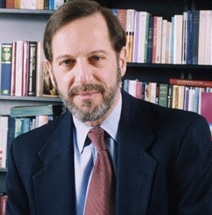
The picture at top of  Egyptian young people in Cairo was taken by Matthew Cassel.  It is from Electronic Intifada. The picture above of Ali Abunimah is also from Electronic Intifada.

Posted in Middle East, Religious Faith | 5 Comments

Medvedev’s Palestine-Jordan Trip Promoted Religion And Independence

by James M. Wall

When Russian President Dmitri A. Medvedev arrived in Jericho, Palestine, last week, he was received by an honor guard and by Palestinian Authority President Mahmoud Abbas.

Medvedev came to Palestine to reaffirm his country’s support for a Palestinian state with its capital in East Jerusalem.

The Soviet Union endorsed the creation of a Palestinian state in 1988. Medvedev’s reaffirmation of that endorsement adds Russia to a list of more than 120 nations which have called for the establishment of a Palestinian state. Recent Latin American countries joining the list are Chile, Ecuador, Bolivia, Brazil, Argentina, and Uruguay. Spain is expected to be next.

Medvedev’s Palestinian hosts in Jericho were quick to point out that this was the first time such a high-profile international figure had gone to Palestine without also going to Israel.

Medvedev did not go to Israel, ostensibly because of a strike by Israeli Foreign Ministry officials. That official excuse was issued by the office of Foreign Minister Avigdor Lieberman, but the FM is well known for his ability to insult leaders of other nations, the larger the better.

Unfazed by Israel’s refusal to arrange a visit, Medvedev kept his appointments in both Palestine and Jordan, an action that could not have pleased Lieberman, who initially refused to grant a visa for the Russian president to enter Palestine. That bit of petulance did not prevail. A visa was finally produced.

The diplomatic foot-dragging highlighted Israel’s control over Palestine’s borders, a further reminder that Palestine is still not an independent nation.

Are you listening, you friends of Israel in the US Congress and in the churches of America? The President of Russia knows something you are unable to grasp. To live free is a God-given gift; not to be free is something quite evil.

Israeli Foreign Minister Lieberman knows all about freedom, both having it and not having it.  His family came to Israel as immigrants from the former Communist-controlled Soviet Union. The Liebermans originally lived in Kishinev, Soviet Union (now Moldova). FM Lieberman now resides in an illegal Israeli settlement on the West Bank.

President Medvedev was traveling in Palestine and Jordan with a large media contingent, which of course, is important to foreign visits like this. Taking advantage of his proximity to the Jordan River while visiting a Muslim country, Medvedev traveled to a national and religious park which honors the traditional site of John’s baptism of Jesus.

He had to have known that there is also a traditional baptism site on the Israeli-controlled western side of the river. That site is now surrounded by land mines and barbed wire. It is closed to the public.

A shirt-sleeved Medvedev (above) dipped his hands into the Jordan River in a traditional Christian gesture. Medvedev is a member of the Russian Orthodox Church, which estimates it has a membership in excess of 80 million members living in Russia.

There are around 25 million Muslims in Russia today, a dramatic increase of 40 per cent since 1989. Russian officials estimate that by 2020, with the continued growth rate, Muslims will account for one-fifth of the entire population.

This, however, was a day to honor Medvedev’s own religious community. His pilgrimage to the banks of the Jordan River came on the Russian Orthodox Day of Epiphany, January 19. Western churches celebrate Epiphany on January 6, to recall the visit of the Wise Men to the Christ child. Both the Russian and the Serbian Orthodox Churches celebrate the January 19 Epiphany as the beginning of the earthly ministry of Jesus.

During his visit to Palestine, specifically to Jericho, just across the border, Medvedev and Palestinian President Abbas participated in the formal opening of the Jericho Museum, built by Russia on land returned to Russia in June 2008.  The museum was built on 105 dunams (25.6 acres) of land once owned by a Russian Tsar and abandoned during the socialist revolution. The property was returned to Russia via the Imperial Orthodox Palestine Society.

Also on Epiphany Day, President Medvedev met with Jordan’s King Abdullah. According to the Jordan Times, the two men “discussed steps to enhance cooperation in the field of nuclear energy, through Russia’s investment in the Jordan’s nuclear program, as well as the transport, water and agriculture sectors”.

The two leaders “signed a memorandum of understanding to boost cooperation in the fields of oil exploration and energy.” The Russian news agency RIA Novosti, reported that the memorandum “allowed for the exploration of the Jordanian vast oil fields by Russian firms”.

They also agreed to support Palestinian independence, bringing additional diplomatic pressure on an early February meeting of the international Quartet of Middle East mediators (Russia, the US, the UN and the EU). The Quartet is working to revise peace talks between Israel and Palestine.

What, exactly, did the American public know about this flurry of activity in Palestine and Jordan? Very little, even if you read a New York Times‘ story written from, and with the perspective of,  the Israeli side of that looming, freedom-stifling wall that separates Palestine from the Western world.

The Times‘ story had nothing to say about either religion or independence. It reported, instead that Medvedev’s visit “lifted the spirits” of the Palestinian people, sounding very much like a dutiful visit by a hospital chaplain I once heard about who kept a list of his daily rounds. At the top of the list was the category of “brief, but helpful visits”.

And just in case we might have forgotten that the natives still have to be restrained, the Times ended its story on Medvedev’s visit this way:

In Gaza, a Palestinian was killed on Tuesday and two militants were wounded in a skirmish along the border with Israel, according to a Palestinian medical official. The Palestinian who was killed was identified as Amjad al-Za’aneen, 17.

The Israeli military said that Palestinians detonated an explosive device near a force patrolling the border fence in the morning, and that soon after, the soldiers spotted two Palestinians handling a trigger system and opened fire.

Got that, you who serve in the hallowed halls of Congress and you who worship in American Christian churches? The story read: “The Palestinian who was killed was identified as Amjad al-Za’aneen, 17.”

Did 17-year-old Amjad leave behind a grieving family?  The New York Times does not say. Could he have been, though the Times still does not say, a teenager who dreamed of studying medicine? Farewell, Amjad.  At least the president of Russia believes you should have been allowed to live free in your own country.

The picture of President Medvedev by the Jordan River, is from the Russian news agency, RIA Novosti. The picture of Medvedev and President Abbas is by Mohamad Torokman, of Reuters.

Posted in Media, Middle East Politics, Politics and Elections, Religion and politics | 8 Comments

Obama Needs His Own White House “Viziers With Moral Imaginations”

by James M. Wall

When President Obama spoke in Tucson Wednesday night, he called on Americans to

. . . expand our moral imaginations, to listen to each other more carefully, to sharpen our instincts for empathy, and remind ourselves of all the ways our hopes and dreams are bound together.

Commenting on the speech that remembered the victims of the Tucson murders, Paul Krugman wrote in the New York Times that the President’s words

spoke to our desire for reconciliation. . . .But the truth is that we are a deeply divided nation and are likely to remain one for a long time. By all means, let’s listen to each other more carefully; but what we’ll discover, I fear, is how far apart we are.

Krugman pointed to the nation’s differences on how best to order its economy. He makes a cogent and valid point. It is a point that applies as well to another “great divide”, one that confronts the President as he and his advisors address the serious and volatile standoff between Israel and Palestine.

The Peace Talks ended when Israel refused to agree to a 90 day halt of settlement construction. The two opposing sides have gone their own way. Israel continued to expand its grip on Palestinian land and people; the Palestinians looked for, and found, new friends in Europe and Latin America. At last count, 110 United Nations members have recognized Palestine as a state.

In Washington, the President reshaped his White House team to deal with the problems looming ahead in the second half of his term. Signs of hope for peace in that reshaping have thus far been anything but encouraging.

For a leader who speaks eloquently about looking forward, President Obama still looks to the past, stacking his peace squad with personnel from previous Clinton and Bush administrations. There are very few signs of the “moral imagination” the President called for in Tucson.

What the President needs are new Middle East White House viziers with “moral imaginations”. The Nizámu’l Mulk (d 1092 CE) wrote an entry for the Medieval Sourcebook on the topic, On the Courtiers and Familars of Kings. In that entry he described a vizier:

Whenever the question is one appertaining to kingship, or campaigning, or raiding, or administration, or supplies, or gifts, or war and peace, or the army, or the king’s subjects, and the like matters, then such question had better be decided with the aid of the vizier and the great experts in these faculties, and the elders of experience, in order that affairs may follow their proper course.

To put it in more modern terms, a vizier must know the territory, not just of one side in dispute, but of all those affected by the king’s decisions. He or she must know the terrain, the culture, the customs, the religion, the history, and the emotional make-up of the people who are affected by the president’s actions.

A new set of viziers on this issue should not only know “about” Palestinian culture, but be “of” it as well, in order to match the Zionist passions of Obama’s current planners for peace.

The Arab world knows about viziers. Wikipedia explains: “The vizier was the highest official in Ancient Egypt to serve the king, or pharaoh during the Old, Middle, and New Kingdoms.”

Barack Obama is not without candidates who could have served his administration as modern day viziers who bring with them an understanding of both the words and the music of the Palestinian perspective.

The President had known Edward Said, a prominent Palestinian-American scholar. Said taught Obama in 1981 when the President was an undergraduate student at Columbia.

David Remnick’s biography of Obama, The Bridge, contains a reference to a time in Obama’s college years that can only be seen as an historic missed opportunity. Obama and Said were together for an entire quarter in the same classroom. Said was a 46-year old professor; Obama a 20 year old undergraduate already showing intense intellectual curiosity. Remnick writes:

Obama’s academic emphasis was on political science–particularly foreign policy, social issues, political theory, and American history–but he also took a course in modern fiction with Edward Said.  Best known for his advocacy of the Palestinian cause and for his academic excoriation of the Eurocentric “Orientalism” practiced by Western authors and scholars, Said had done important work in literary criticism and theory.

And yet, Said’s theoretical approach in the course left Obama cold. “My whole thing, and Barack had a similar view, was that we would rather read Shakespeare’s plays than the criticism” [a fellow student] said.

Said’s major book, Orientalism, was published in 1978, three years before Obama took Said’s course in literary criticism.  Obama, a bright young political science student, was already demonstrating an intense curiosity in intellectual matters.

There is no indication, however that his curiosity extended into asking his professor about Said’s thesis that the western academic mindset treated what was for Said a pejorative term,  the “Orient”, as the “other” which was separate and inherently “inferior” to the more enlightened and advanced West.

Obama’s life experience up to that point in his life demonstrated to him that the circumstances of his birth placed him in both the white, and the “other”, community. He has written and spoken eloquently of his own awareness of living in those two worlds. Said’s “orientalism”  was there to be explored at Columbia. It appears, however,  to have been a connection he failed to explore.

However, when Obama taught in the Law School at the University of Chicago, he became friends with Rashid Khalidi, the Palestinian-American scholar who is now the Edward Said Professor of Arab Studies and Director of the Middle East Institute at Columbia University. (Pictured here).

Obama and Khalidi were close enough so that when Khalidi was being honored before he left Chicago for New York, State Senator Barack Obama was the main speaker at Khalidi’s going away dinner.

That dinner later emerged as a campaign issue during Obama’s primary struggle with Hillary Clinton, when Obama’s relationships at the University of Chicago were first used to paint him as a political radical. Khalidi was linked in that “radical attack” on Obama with Professor Bill Ayers, a former Weatherman, and the Rev. Jeremiah Wright, Obama’s outspoken United Church of Christ Chicago pastor.

When Obama became president of the United States. he unfortunately did not turn to his colleague Rashid Khalidi for counsel on the Middle East. Instead, he continued the practice of his two presidential predecessors, Bill Clinton and George W. Bush, and surrounded himself not with viziers, but with courtiers.

Nizámu’l Mulk gives a definition in that same Medieval Sourcebook on the subject, On the Courtiers and Familars of Kings which includes this 11th century definition of a courtier:

The courtier should be essentially honourable and of excellent character, of cheerful disposition and irreproachable in respect of his religion, discreet and a clean liver. He should be able to tell a story and repeat a narrative either humorous or grave, and he should remember news.
He should also be consistently a carrier of pleasant tidings and the announcer of felicitous happenings. He should also have acquaintance of backgammon and chess, and if he can play a musical instrument and can handle a weapon, it is all the better.

Courtiers, the President has in abundance. They are the usual suspects, veterans of previous Middle East negotiations, competing with one another to sell their version of how to end the conflict. And all are members of the pro-Israel Washington courtier team.

When the signal sets off the alarm that a “vizier” is slipping into the White House, the intruder is removed. The courtiers know how to protect their turf.

For an example of the protective instincts of the Obama White House courtiers, see L’Affaire Freeman, an essay I wrote for Link magazine’s July-August 2009 issue.

The essay describes the successful fight to prevent Charles W. (Chas) Freeman from joining the Obama team. The fight began February 19, 2009. and ended March 11, 2009. when Freeman, as I wrote

gave up his appointment to chair President Barack Obama’s National Intelligence Council (N.I.C)—the same Council that provided President George W. Bush with the flawed intelligence he used to rationalize a decision he had already made to invade Iraq. . .

The work of the N.I.C. is very important to American foreign policy, but because of the nature of its intelligence gathering assignment, it is not a high profile position. It is, rather, one of those groups in government that works behind the scenes to provide guidance to the president and his foreign policy team. The Council serves as a clearing station for intelligence collected by 16 U.S. intelligence-gathering agencies.

By winning that 2009 battle over the appointment of Freeman, the President’s courtiers cut him off from a potential vizier who threatened to undermine Israel’s power base in the White House.

As the White House restarts its peace efforts with a reshaped White House team. Who they gonna call? Who do you think? The Ghost Busters, of course.

Laura Rozen wrote, January 13, in her Politico blog:

With U.S. Middle East peace efforts at an impasse, the Obama administration has sought new ideas from outside experts on how to advance the peace process.

One task force has been convened by Stephen Hadley and  Sandy Berger (pictured here), former national security advisers to Presidents Clinton and George W. Bush, respectively, to offer recommendations on the Middle East peace process to the National Security Council.

A second effort, led by Martin Indyk, vice president of foreign policy studies at the Brookings Institution, held meetings this week with senior NSC Middle East/Iran adviser Dennis Ross, Palestinian negotiator Maen Erekat and Israel’s ambassador to the U.S., Michael Oren, among others.

Take a closer look. One task force has been convened by Sandy Berger and Stephen Hadley, veterans of the Clinton and Bush White House administrations, which means they are drawn from 16 years of negotiations run by two administrations which were strongly pro-Israel.

The second task force is led by Martin Indyk, former US ambassador to Israel. He is meeting with Obama’s current Middle East/Iran adviser Dennis Ross. Both Indyk and Ross are well-known old Washington hands with strong affection for Israel.  Indyk has also met with Israel’s ambassador to the US, Michael Oren, who has taught in the US, and, oh yes, Palestinian negotiator Maen Erekat, someone who is not expected to advise.

Nathan Guttman wrote in the US-based Jewish publication, Forward:

The Israeli-Palestinian peace process may be near collapse, but the Washington turf wars surrounding it are still going strong, according to sources involved in the negotiations.

The administration’s top Middle East hands — special envoy George Mitchell and White House adviser Dennis Ross — are increasingly at loggerheads, these sources say.

Mitchell has worked, unsuccessfully, for two years to resolve the conflict as Obama’s point man in the region.  Dennis Ross, is described by Guttman, as one of the administration’s “top Middle East hands”.

Whatever differences there may be in the turf wars within this group of courtiers, with the exception of Mitchell, they all share a vigorous partiality to Israel.

It is still not too late for Obama to ask Rashid Khalidi for recommendations for Palestinian and other Arab academics, who might bring a semblance of balance to the strong pro-Israel set of advisors that still battle for Obama’s favor at the negotiations table.

If Obama really wants to bring hope to the Palestinian people, he could start by including some Palestinian viziers in his future peace strategy. It would be a signal that change has finally come to the Obama White House.

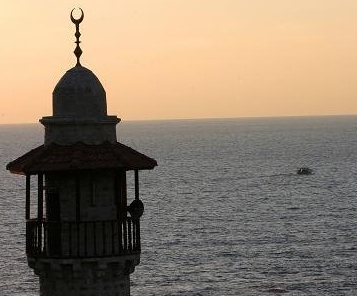
The picture above of the mosque, is on the coast of the Mediterranean Sea on the Gaza coast. It is from the Palestinian Ma’an News Service.

Posted in Media, Middle East Politics | 7 Comments

Two Timeless And Relevant Films: “Nashville” and “The Apostle”

by James M. Wall

In Tony Judt’s final book, The Memory Chalet, he wrote as a historian looking back on his own life. Judt, who finished his final work a few months before his death, defined the task of the historian this way:

of all the cliches about “History,” the one that most appealed to me was the assertion that we are but philosophers teaching with examples.

If we take “examples” to be stories, parables, myths, art forms, or legends, the way is open to all of us to be philosophers who teach. As a confirmed cinephile, I am emboldened to take Judt’s lead and offer the occasional movie to convey what for me is important for others to consider.

Nashville is a film that became relevant this past week because of the mass killings in Arizona.

This 1975 film by Robert Altman has retained its position on the shelf of the memory because it is a cinematic work of art that evokes an American period of tumult when political conflict exploded into violence.

The film deals with many interacting lonely souls, a characteristic Altman story. In the film Altman follows a group of individuals who for a variety of reasons, have arrived together in the city of Nashville, Tennessee. They gather in the “country music capital” at a significant moment in American political history.

The film places these lonely souls on a stage, or in the audience, during a performance at Nashville’s Parthenon. They are there to hear a presidential candidate speak.

More importantly, they are there to see and hear several prominent country music singers, one of whom, a young woman, is shot by a gunman in the audience.

The closing moments of Nashville captures the confusion, the horror and the grief, of such an event. This is not a film “about” country music. It is a film “of” America.

A review by New York Times critic, Vincent Canby, appeared on June 12, 1975.

Nashville . . . . is a panoramic film with dozens of characters, set against the country-and-western music industry in Nashville. It’s a satire, a comedy, a melodrama, a musical. Its music is terrifically important—funny, moving, and almost nonstop. . . .

There are so many story lines in Nashville that one is more or less coerced into dealing in abstractions. Nashville is about the quality of a segment of Middle American life. It’s about ambition, sentimentality, politics, emotional confusion, empty goals, and very big business in a society whose citizens are firmly convinced that the use of deodorants is next to godliness.

Nashville doesn’t make easy fun of these people. It doesn’t patronize them. Along with their foolishness, it sees their gallantry. . . .

At the end of the film Barbara Harris, as a perpetually disheveled, very unlikely aspirant to country-and-western stardom, almost tears the screen to bits with a gospel version of a song heard earlier (“It Don’t Worry Me”) that concludes the narrative in a manner that is almost magical.

A second film which fulfills Tony Judt’s call for history teaching by example, is The Apostle. In a crucial moment in this film, a traveling Pentecostal evangelist and a local citizen confront one another in the dusty church yard of a small southern Louisiana town.

Before The Apostle was released in September, 1997, I arranged a theatrical screening for a national church conference in Florida. Jack Valenti, the head of the Motion Picture Association (MPAA), helped line up the theater for us.

Jack had been working with the National Council of Churches and the National Association of Theater Owners, to build bridges between the film industry and the church community.

This particular relationship inside a small corner of the God-Mammon dialogue, had earlier played an important role in the creation of the MPAA’s film rating program. I heard Valenti say on several occasions that the system could not have survived in its early years, “without the involvement of the churches”.

The rating system was created in 1968 largely by the personal drive of Valenti, and with the support and participation of both the NCCC and the Catholic Office of Bishops. Now that 43 years have passed, the rating system is such an accepted part of the movie industry, that few people outside of those of us involved in the struggle to create and sustain the system, still connect the churches with the MPAA.

The documentary, This Film is Not Yet Rated, is a badly flawed work about the formation of the system. The documentary deals with what the film-makers want us to believe is the “uncovering” of the power of a rating system conducted in “secret”. The film’s creators claimed to be “shocked, shocked” by what their research discovered.

They had turned up the shocking news that there are “clergy on the movie ratings appeal panel”.

That shocking connection was true, but it was not new.  The connection was established by Valenti when the system was created because he was convinced the system could not survive without public support. He reasoned, correctly, as it turned out, that one way to assure transparency for the system was to involve Protestant and Catholic leaders in the creation and ongoing monitoring of the system.

The monitoring continues until this day. I know this, because I serve as the NCCC Protestant representative on the appeals panel, along with a colleague from the Catholic Bishops’ film office.

Which brings me to that Florida clergy screening. To put that event in context, those in attendance were all from “high steeple churches” within one of our national mainline denominations. Naturally, the film’s distributors thought the film would appeal to an audience of ministers. They were only half right.

It did not help that the film focused on a traveling pentecostal preacher with a dark past, a man who really believed that he had “the power of the Holy Ghost to bring others to Jesus”.

In an early scene, the preacher comes across a car crash.  When he rushes up to the car, he finds the driver close to death.  The preacher talks quietly to the young man, urging him to “accept Jesus” before he dies. A state trooper arrives. The preacher ignores  him. When the trooper persists, Duvall kicks him away, looking like an aggravated mule.

This was a man on a mission; he will not move until he “knows” the dying man is with the angels.

Beyond the subject matter of Penecostalism, there was the usual problem with showing a secular film in the context of a religious gathering. In spite of the many efforts of some pastors, a few religious critics and professors and the Broadcasting and Film Commission of the NCCC, to the established religious communities,  movies are for entertainment and escape.

The screening of The Apostle to this particular conference clergy audience, was less than an overwhelming success. I led the discussion that followed the showing of the film. While, there were some fellow cinephiles who accepted the power and wisdom of Robert Duvall’s performance as the traveling Pentecostal preacher, most did not.

The Apostle was produced, directed, and written by Robert Duvall, who also was the lead performer in the film. One clip of the film depicts a central encounter in the film which is as as relevant today as it was in 1997.

Since the encounter between Duvall and the character played by Billy Bob Thornton involved a bulldozer preparing to destroy a church, the encounter takes on a special significance for anyone who has been paying attention to the current and systematic destruction of Palestinian homes by Israeli army bulldozers.

Toward the end of The Apostle, Duvall is celebrating an anniversary of the little church he had established in southern Louisiana. Thornton drives up in a his bulldozer, bringing with him a backup group of rough-looking supporters.

They had come on a mission: They will tear down the church building. The racial tension is obvious. Most in the congregation behind Duvall are African Americans.

The role that Duvall plays is of a devout Pentecostal preacher from New Boston, Texas, Eulis “Sonny” Dewey. Some plot twists force Sonny to leave his family and travel to the predominantly black town of Bayou Boutte, La.

A reviewer for Variety wrote:

Beautifully detailed and deftly structured, every scene in “The Apostle” logically leads to the next one, each elaborating on the central theme of religious redemption. As a writer, Duvall never allows viewers to think that they know everything there is to know about E.F. Perhaps even more remarkably, he doesn’t violate the character by summing him up: Almost every scene discloses another dimension of the preacher’s complex personality. . . .

Nashville and The Apostle are films that demand contemporary reflection. One, though set in the American south, may also evoke awareness of the brutality of military occupation in Palestine. The other is pertinent to last weekend’s dark day in Arizona. Both are teaching moments in a time of unresolved conflict, confusion and public anguish.

Posted in Movies | 1 Comment

“A Family in Gaza”: Two Years Later

by James M. Wall

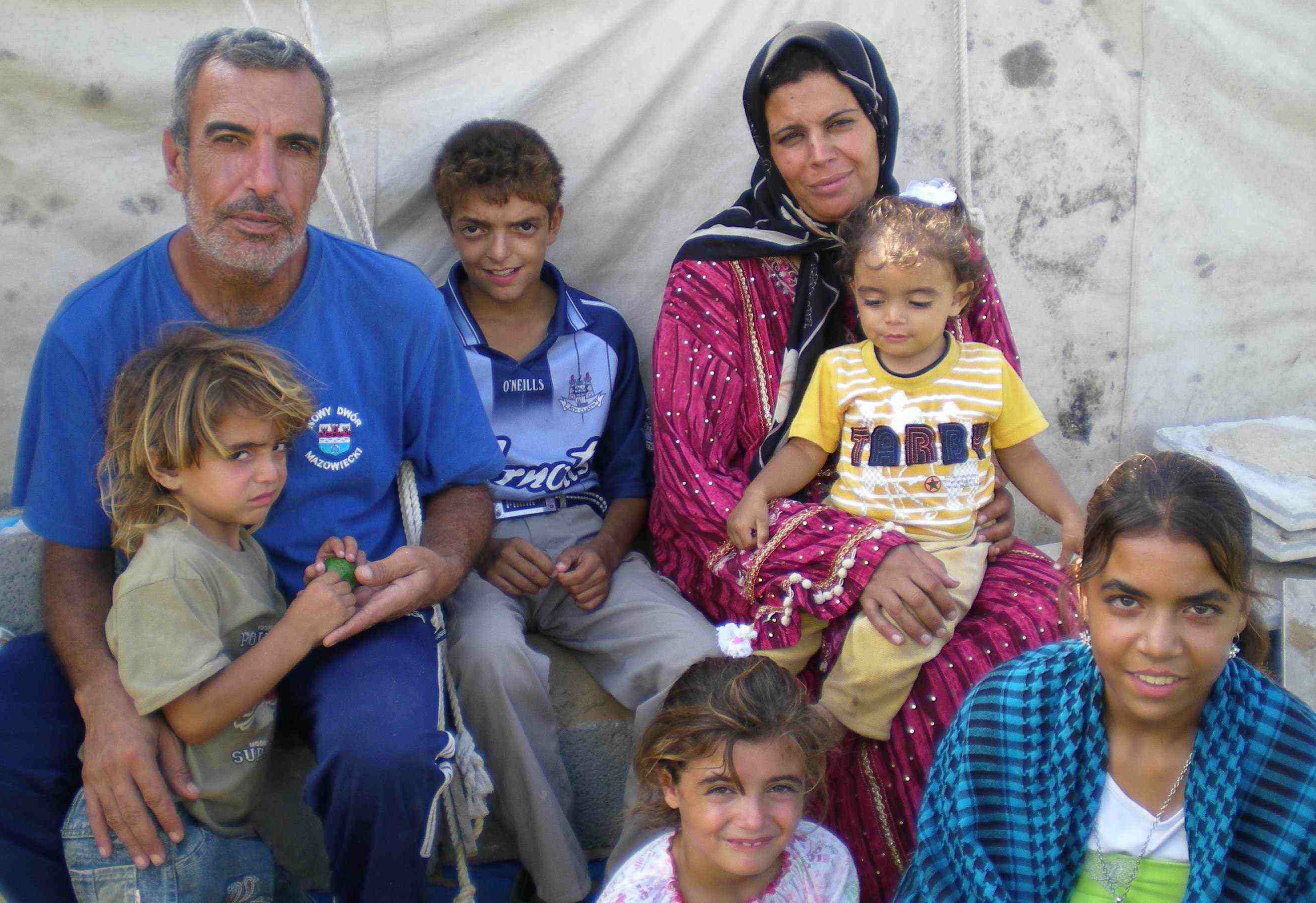
A Family in Gaza is a short film made and distributed by Jen Marlowe. It tells the true story of what happened to one family in Gaza, two years ago.

Given its theme, it is a remarkably low-keyed film, narrated calmly by Wafaa and Kamal, the parents of the Awajah family of the title. Their young son was among the 1400 Gazans who were killed during Israel’s 23-day assault on Gaza which began December 27, 2008.

I shared the video with friends and family. Here is one response:

It is a beautiful video, a mythology-shattering piece both compelling and painful. Watching it brought to mind a hasbara tactic that infuriates me, the mythology surrounding incitement, specifically, the assertion by Israel that Palestinian educators and parents teach their children to hate and that is what drives Palestinian violence.

While there are undoubtedly issues with both Palestinian and Israeli textbooks, this tactic is simply noxious. Throughout the telling, the father of this family reflects on how this experience and fear have been ingrained in his children’s blood – this is of course the greatest source of incitement, the killing and traumatizing of civilians, the subjugation of generations, the demolitions of homes and land, and the killing, always the killing.

Until now, I had not seen nor heard this tactic adequately exposed.

The December, 2008 assault and invasion of Gaza was said to have been planned well in advance to coincide with the final days of the George Bush administration. Or maybe the timing was just a coincidence.

The  assault, you might conclude from that speculation, was a parting gift to President Bush, whose administration spent eight years repeating the mantra: “Israel has a right to defend itself”.

As a further insult to the Gazan people, and no doubt, as a conciliatory nod to an untested new US president, the attacks on Gaza ended the day before President Obama’s inauguration.

What is certain is that neither incoming President Obama nor outgoing President Bush raised any objections to the intense 23 day bombardment of Gazan families, homes, schools, mosques, churches, and hospitals.

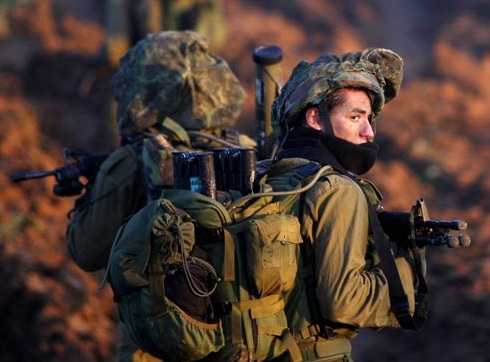
A week after the air assault began, Israel launched its ground invasion. Soldiers like the one above, marched into Gaza, following tanks that smashed homes along the way.

In A Family in Gaza, Wafaa Awajah recalls the night of January 4 when Omsiyat, Wafaa’s 12-year-old daughter, screamed in the night, “Mother, there are Jewish soldiers outside the door”.

To bring up the full 22 minute film, click here. Click on the triangle after it appears in the lower left corner of the screen. It loads slowly, so be patient.

An investigation team, appointed by the United Nations, and chaired by Jewish Judge Richard Goldstone, issued a report on what happened in Gaza during the Israeli land and air assault. Pro-Israeli supporters condemned the Goldstone Report. The US House of Representatives’ gave its official response on November 4, 2009. Democracy Now reported the House story:

The House has approved a non-binding measure denouncing a UN inquiry for accusing Israel of committing war crimes in its assault on the Gaza Strip. The inquiry, headed by South African jurist Richard Goldstone, also accused Hamas of war crimes and urged both sides to investigate the charges or face international prosecution.

But the House measure dismissed the Goldstone report as “irredeemably biased and unworthy of further consideration or legitimacy.” It also calls on the Obama administration to “strongly and unequivocally oppose” discussion of the report’s findings in any international setting. The resolution passed by a margin of 344-to-46.

That 344-46 vote, it should be remembered, was cast by a House still under the control of the Democratic party. And while you are remembering, consider: Gaza had no air defenses, no tanks, and no army.

After viewing A Family in Gaza, I wrote to Jen Marlowe, the Seattle-based director who made the film. I asked her to tell me how I might encourage others to secure DVD copies to show to any audience they can reach.

I also think it is a film that should be sent to every member in the US Senate and House, with a polite note that would ask: “Did you approve the use of US funds and military equipment for this 23 day attack on Gaza? And do you believe we are safer now that 1400 people, more than 300 of whom were children have been killed?”

Marlowe is distributing the film through her own company, Saddle Back films. She sent me information on how to order DVD copies. I had thought a two minute clip or trailer would be helpful.  She wrote back:

I don’t have a trailer or a short clip–I am actually trying to encourage as many people as possible to watch the full film online, since it is short–and many have been writing to request dvds, so I’m not worried that watching it online is inhibiting the purchase of DVDs.

DVDs are available on a sliding scale from $10-$50.

$10: discounted price for an individual DVD (for those who need a discount)
$15 regular price for an individual DVD
$30: discounted price for an institutional/educational DVD (for those who need a discount)
$50 regular price for an institutional/educational DVD (or for a public screening)

Her note adds that proceeds from all DVD sales will go to the Awajah family in Gaza. Make checks out to “donkeysaddle projects” and include a note to indicate the number of DVDs you want, and whether they are individual or institutional DVDs. Include the address to which they should be sent.

Mail checks to: Jen Marlowe, 926 N. 72nd Street, Seattle, WA 98103. In the info line write “For A Family in Gaza”.

Email Marlowe at donkeysaddle@gmail.com, to let her know your check is truly in the mail and tell her what number and type DVDs you are ordering.

Marlowe is a trusting soul. She writes me that she is traveling and expects to see the Awajah family in person soon. She will deliver whatever proceeds she knows are on their way, “even if I have not yet physically received the checks”.

What I find encouraging in my cinematic encounter with Jen Marlowe and the Awajah family, is that I believe this film can encourage that vast network of people around the world who are frustrated and angry over the failure of their governments to respond to this needless one-sided conflict between Israel and the Palestinian people.

How dare we be discouraged when we are confronted by the courage of this family in Gaza which continues to love its children and plan for their future?

It is a future, of course, that remains uncertain and dangerous because recent Wikileak reports reveal that Israel has not only continued its own institutional terrorism campaign against the Gazan people, but it has also continued to report its plan to the US government.

The Reuters news agency reported January 5:

Israel told U.S. officials in 2008 it would keep Gaza’s economy “on the brink of collapse” while avoiding a humanitarian crisis, according to U.S. diplomatic cables published by the Norwegian daily Aftenposten.

Three cables cited by the  newspaper, which has said it has all 250,000 U.S. cables leaked to WikiLeaks, showed that Israel kept the U.S. Embassy in Tel Aviv briefed on its internationally criticized blockade of the Gaza Strip.

“As part of their overall embargo plan against Gaza, Israeli officials have confirmed to (U.S. embassy economic officers) on multiple occasions that they intend to keep the Gazan economy on the brink of collapse without quite pushing it over the edge,” one of the cables read.

Israel wanted the coastal territory’s economy “functioning at the lowest level possible consistent with avoiding a humanitarian crisis,” according to the November 3, 2008 cable.

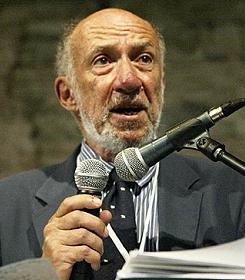
Jewish American Professor Richard Falk reports in Aljazeera that economic terrorism may not be enough for Israel. There is talk among top officials that a second Israeli invasion is ready to launch. In the month prior to the 2008 invasion, Falk, then on special assignment for the UN, was blocked from entering Israel. Last week, Falk wrote in Aljazeera:

It is dismaying that during this dark anniversary period two years after the launch of the deadly attacks on the people of Gaza – code-named Operation Cast Lead by the Israelis – that there should be warnings of a new massive attack on the beleaguered people of Gaza.

The influential Israeli journalist, Ron Ren-Yishai, writes on December 29, 2010, of the likely prospect of a new major IDF attack, quoting senior Israeli military officers as saying “It’s not a question of if, but rather of when,” a view that that is shared, according to Ren-Yishai, by “government ministers, Knesset members and municipal heads in the Gaza region”.

Falks adds that the Israeli Chief of Staff, Lt. General Gabi Ashkenazi, was recently quoted as saying that, “as long as Gilad Shalit (an Israeli soldier held by Hamas) is still in captivity, the mission is not complete”. He adds with what Falk describes as unconscious irony, “we have not lost our right of self-defence”.

Meanwhile, Ecuador has joined a growing number of nations that have officially recognized Palestine as a state. Israel’s YNet news has the story:

Ecuador formally recognized Palestine as an independent state on Friday, following the lead of its neighbors Bolivia, Brazil, Argentina and Uruguay earlier this month.

President Rafael Correa signed “the Ecuadoran government’s official recognition of Palestine as a free and independent state with 1967 borders,” the Foreign Ministry said in a statement.

The border mention refers to the territorial limits of the Palestinian territory before the 1967 Arab-Israeli war.

Ecuador’s decision, the ministry statement said, “vindicates the valid and legitimate desire of the Palestinian people for a free and independent state” and will be a key contribution to a negotiated peaceful coexistence in the Middle East.

YNet also brings the good news that:

Next week, Peru will host the Summit of South American-Arab Countries (ASPA), a bi-regional convention established by Brazilian President Luiz Inácio Lula da Silva in 2005, in which the 22 member-States of the League of Arab States and the 12 countries of South America gather to discuss political and economic cooperation.

Officials in Jerusalem have expressed concern that the “domino effect” will reach its peak at the summit, during which the South American countries are expected to draft a joint document declaring their recognition of a Palestinian state in the 1967 borders.

Such upbeat news calls for some music. Michael Heart has one song and Bob Dylan has another:.

Heart is a Syrian-American songwriter/singer.

His song is entitled, “We will not go down tonight (Song for Gaza). Heart’s video, with lyrics included, may be seen and heard by clicking here.

Bob Dylan is a Jewish American songwriter/singer.

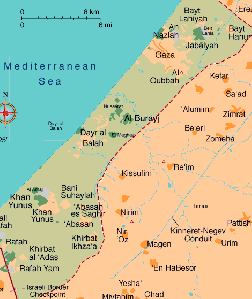
The map of Gaza, above, is from the webpage:

http://www.infoplease.com/atlas/country/gazastrip.html.


Posted in Middle East Politics, Movies | 5 Comments

The Long Struggle for Peace, Which Began with Carter, Starts Over in 2011

by James M. Wall

On May 17, 1977, four months after Jimmy Carter was sworn in as US president, Israeli voters elected a right wing government for the first time in modern political history.

Menachen Begin, a former Israeli underground “terrorist” leader, became prime minister.

It was clear to President Carter that Begin had no interest in what the rest of the world referred to as a fair and just “peace” in the region. Carter quickly discovered that Begin was not going to be a “partner for peace”.

Begin did not want peace; he wanted absolute control over the West Bank and Gaza. Every Israeli leader since 1977 has played Begin’s game of deceit and duplicity. It started overtly with Begin. His predecessors had the same goal. They were less overt, however, than Begin and his successors.

In his effort to halt Israel’s expansionistic greed, Carter fought Israel’s allies in the US, AIPAC and the US Congress. Carter’s opponents in the Georgia legislature had not prepared him for this depth of conflict, but it helped. Some of his Georgia opponents were self-righteous racists.

Carter was the last American president to wage a vigorous political war with both Israel and its US allies. He fought alone, which as President Obama has discovered, is a lonesome struggle. Through persistence and with the help of an Arab ally, Egypt’s Anwar Sadat, Carter forced Begin to a Camp David agreement which led to a peaceful resolution between Israel and Egypt.

What he was unable to do was to force Begin to keep his promises to halt settlement construction in the West Bank. Truth-telling was not a priority for Menachem Begin.

Carter left the White House in 1981. His White House successors offered only token opposition to succeeding Israeli governments, each of which continued Begin’s expansionist program into Palestinian territories.

In 2008, the American public chose a young president who promised change. Barack Obama immediately ran into an even stronger pro-Israel opposition in the US, and an even more rigid right-wing government in Israel, than the ones Carter encountered.

Two years into his first term, the Middle East record on Obama is not a good one. He has failed to halt the wars in Iraq and Afghanistan, and he has been unable to stem Netanyahu’s penchant for war over peace talks. Could the next two years bring any improvement?

A new biography of Barack Obama offers some surprising hints that we have not yet seen President Obama when he is angry and pushed into a corner.

The book, The Bridge, was written by New Yorker editor David Remnick, a former Washington Post Moscow bureau chief.  Remnick covers Obama’s background, not his future.

Remnick’s close study of the president, and his apparent reporter’s admiration for the task facing any president, may have produced in Remnick an understanding of what Obama faces, and some possible clues that offer some hope.

Remnick was completing work on The Bridge, when he wrote a New Yorker Comment in March, 2010. Toward the end of his Comment, he posed this editorial question, which he answers with the wisdom of someone who knows his subject well:

Does there exist a Netanyahu 2.0, a Nixon Goes to China figure who will act with an awareness that demographic realities—the growth not only of the Palestinian population in the territories but also of the Arab and right-wing Jewish populations in Israel proper—make the status quo untenable as well as unjust?

Without the creation of a viable contiguous Palestinian state, comprising a land area equivalent to all of the West Bank and Gaza (allowing for land swaps), and with East Jerusalem as its capital, it is impossible to imagine a Jewish and democratic future for Israel. There is nothing the Israeli leadership could do to make the current fantasy of an indifferent American leadership become a reality faster than to get lost in the stubborn fantasy of sustaining the status quo.

Facts on the ground  that emerged during 2010 strongly suggest that Netanyahu 2.0 is yet to appear. As a matter of fact, if there were a move to produce a more peaceful Netanyahu, it is most likely that an even more extreme right-wing government would ascend to power in Tel Aviv.

Remnick’s book (a paperback edition is due out January 11) offers the reader some solid reading, well-researched into Obama’s past. The book helps explain how, in spite of all the negative attacks from both the liberal left and the far right conservative right against him, Barack Obama is prepared by experience and education to wade into the swamp of modern day international conflicts.

What the book cannot tell us is how Obama will cope with Israel’s alliance of adversaries in Israel and in the US, an alliance rooted in absolutism.
Obama has gone through two wasted years trying to placate Israel. He has suffered Hamlet’s “slings and arrows of outrageous fortune”, from a government and its enablers, without receiving a single small gesture of cooperation.

In a background that ranges from the playgrounds of Hawaii to the gang-dominated streets of Chicago, Obama did not encounter the depth of resistance he has received from Israel and its American allies. Again, as with Hamlet, the initial question brings a second question: Will Obama “take arms against a sea of troubles, and by opposing, end them?”

Obama’s most recent action in his dealings with Israel followed the humiliating bribe his secretary of state offered to Bibi Netanyahu. After Israel rejected the offer, Obama took the bribe off the table.

Ha’aretz reported on Monday, January 3, that Netanyahu told the Knesset’s Foreign Affairs and Defense Committee, that he had agreed to the U.S. suggestion of a three-month extension to the West Bank settlement freeze.

“The Americans were the ones who retracted the offer.”

If this little kabuki dance with Pinocchio undertones, troubled the US president while he was vacationing in Hawaii, no one on the media team with the president, reported that fact to the US public. Obama must have gotten the report, but he is a man who bides his time, and waits.

After reading Remnick’s biography, I am prepared to wait along with Obama to see how many steps Netanyahu and his right wing government will take before Israel implodes.

Meanwhile, as we wait, we should prepare for dark days in 2011. Things will only get worse. Right wing Israelis are in a position to replace Netanyahu with an ever more bragadocious leader, the current foreign minister, Avigdor Lieberman.

When Lieberman was named foreign minister, J Street, which prides itself on being pro-Israel, posted this prescient video warning to American Jews about Israel’s possible next prime minister.

Paul Woodward reports that in a Newsweek interview published this week, the magazine refers to Avigdor Lieberman as “Israel’s most popular politician,” but then calls him its “far-right” foreign minister.

He is indeed, but since he is also — in his words — “the mainstream,” it’s time the American mainstream media desist from portraying him as being on the political fringe.

Lieberman is a mainstream politician in a far-right country.

Racism has been normalized in what should now be universally recognized as a racist state — Israel cannot claim to be nor should be characterized by others as a liberal democratic state. Were it such, Lieberman could not possibly have risen this far.

In spite of its obvious embrace of racism, Israel continues to receive the unconditional support from the US, led by AIPAC, the Christian Right, PEP (progressives except Palestine) mainline Protestant churches and the US Congress.

With this support from both US political and religious power blocs, Israel has become even more bellicose as it plans for future attacks on its neighbors. If the US power blocs are with us, who can be against us?

If racism doesn’t faze Israel’s allies, military attacks on civilian populations can hardly be expected to generate any serious opposition. Not even plans against civilian populations.

Juan Cole reports from a Wikileak release that Israeli Chief of Staff Gen. Gabi Ashkenazi has prepared plans for an Israeli military assault on both Gaza and Lebanon at some point in the next future.  Could this take place in 2011? Are Israel’s allies in the US listening?

The Norwegian newspaper Aftenposten has summarized an Israeli military briefing by Israeli Chief of Staff Gen. Gabi Ashkenazi of a US congressional delegation a little over a year ago and concludes that the memo on the talks between Ashkenazi and [Congressman Ike] Skelton, as well as numerous other documents from the same period of time, to which Aftenposten has gained access, leave a clear message: The Israeli military is forging ahead at full speed with preparations for a new war in the Middle East.

Note: This war preparation is serious and specific, according to the paper, and clearly is not just a matter of vague contingency planning.

The paper says that US cables quote Ashkenazi telling the US congressmen, “I’m preparing the Israeli army for a major war, since it is easier to scale down to a smaller operation than to do the opposite.”

These reports on Israel’s choice of war over peaceful negotiations have failed to penetrate into the Israeli safe zones in the US and Canada. Elsewhere, however, Israel’s aggressive conduct and its flaunting of international laws, has eroded what international support it might have previously enjoyed from other nations.

Ha’aretz has this most recent listing of defectors from Israel’s dwindling set of supporters:

Palestinian Foreign Minister Riyad al-Maliki said that in the coming weeks, Chile and Paraguay will declare their recognition of an independent Palestinian state based on 1967 borders, Israel Radio reported on Sunday.

Al-Maliki said that Chile plans on making its declaration in the coming weeks, and that Chile’s president Sebastian Pinera is even due to visit the West Bank in three months.

Paraguay is also expected to declare its recognition of Palestine in the coming weeks. Al-Maliki also announced the opening of a Palestinian embassy in Ecuador, which already declared its recognition of a Palestinian state.

Last week, Ecuador became the fifth Latin American country to recognize a Palestinian state, following its neighboring countries Bolivia, Brazil, Argentina, and Uruguay earlier this month.

Uruguay also announced that they planned to join Argentina, Brazil and Bolivia in recognizing a Palestinian state, and al-Maliki said that they would formally do so in March 2011. Earlier this month, Brazil, Venezuela and Argentina recognized Palestine as an independent state within its borders prior to 1967.

The United States and Israel slammed these international positive steps “as counterproductive and damaging”.

Meanwhile, Israel continues its steady pounding of Palestinian civilian populations. On January 2, the IDF launched air raids against refugee camps in Gaza.

In the West Bank, Israel has concentrated its attacks on the civilian population with home demolitions and further land-grab incursions into Palestinian neighborhoods. Its so-called “security wall”, which is nothing less than a prison wall, has encountered continued protests by Palestinians.

Aljazeera has more on the story:

Two civilians have been injured in air raids on Gaza by Israeli forces, according to Palestinian emergency services officials, while the Israeli military says a projectile has been fired on Israel.

A military spokesman said it was launched from the Gaza Strip into the southern Eshkol region on Sunday. No casualties or damage were reported. The Israeli army confirmed the air raids by its fighter jets, saying that they were carried out in response to Palestinian rocket attacks on Israeli territory on Saturday.

Two people were wounded in one raid, which targeted the Nuseirat refugee camp in central Gaza. The other attack, on the Jabaliya refugee camp in the north of Gaza, led to no casualties. Israel claimed it attacked crowded civilian refugee camps to strike a Hamas center and an arms workshop.

In Bi’lin, located close to the so-called “security wall”, where weekly protests have drawn increasingly harsh reprisals by Israel, a Palestinian woman died on Saturday after inhaling tear gas.

New York Times reporter Isabel Kershner wrote on January 2:

Israeli soldiers shot and killed a Palestinian man as he approached a checkpoint in the northern West Bank early Sunday holding a glass bottle, the military said.Palestinian officials condemned the killing, noting that it was the second death of the weekend in the West Bank.

Kershner concludes her story with the official hedging that reporters always get from the Israeli military: It was not clear whether the man killed at the Jerusalem checkpoint was “acting in a threatening way.”  And, oh yes, she added that a spokeswoman said “details of the episode were being examined”.

Does any of this sound like Netanyahu 2.0 is about to arrive on the world scene? It does not sound that way to me. Hold on to your peace posters, we are in for a bumpy ride.

The picture above of President Carter was taken on a recent fact-finding trip Carter made with the Elders to the West Bank. His famous smile is missing. The picture is from the Foreign Policy blog, The Middle East Channel, where it appeared on March 26, 2010.

Posted in Middle East Politics | 11 Comments

Behind a 30-Foot Prison Wall, “Merry Christmas” Becomes a Media Lie

by James M. Wall

If you relied on your local newspaper to tell you how things went in Bethlehem this Christmas season, don’t believe what you read.

Newspapers across America relied heavily on an Associated Press story to inform their readers that “Bethlehem Celebrates its Merriest Christmas in Years”.

It did not ask the people who live and work there.

The same optimistic headline ran over the same upbeat AP story, in US newspapers from Lafourche Parish, Louisiana to both major dailies in Washington, DC.

By virtue of its tight control over the AP bureau in Jerusalem, the Israeli government took advantage of a lazy, parsimonious American media and an equally lazy and complacent American public to guarantee yet another distorted portrait of life in the land Jesus made holy.

A Google search reveals more than 1300 references to that “Bethlehem is merry” AP story. Editors in Marietta, Georgia; Dallas, Texas; San Diego and San Francisco, California, to cite a few of them, relied on that Israeli-approved version that readers could smile over as they stripped open their Yuletide gifts and downed their cholesterol-packed eggnog.

In Jerusalem, the “merry Christmas” lie that blanketed the US, was received as one more “well done” effort  by those Israeli officials who work hard to whitewash the brutality with which Israel’s army rules Palestine.

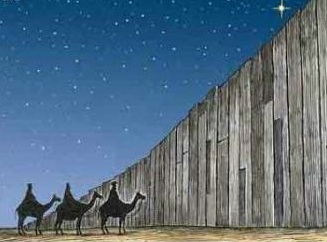
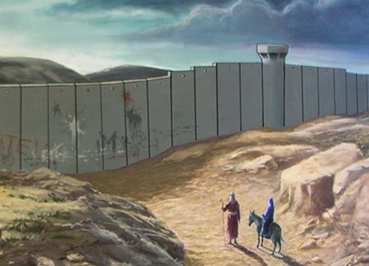
Bethlehem was anything but “merry” this Christmas because its citizens continue to live in a prison behind a 30 foot high wall, not a “security barrier”, as every US newspaper called the wall in its AP story.

The AP story also reports, without blushing, that Israel “allowed” 500 citizens from Gaza, to go through the “security barrier” to reach the Church of the Nativity. Was there not a single copy editor in America who knew that they were using the barrier term dictated by the ruling occupiers?

Here is the opening of the AP story as it entered homes across America on Christmas weekend. If you do not weep for the state of American journalism when you read it, you have made one too many Israeli-sponsored trips into Palestine.

BETHLEHEM, West Bank — The traditional birthplace of Jesus is celebrating its merriest Christmas in years, as tens of thousands of tourists thronged Bethlehem on Friday for the annual holiday festivities in this biblical West Bank town.

Officials said the turnout was shaping up to be the largest since 2000. Unseasonably mild weather, a virtual halt in Israeli-Palestinian violence and a burgeoning economic revival in the West Bank all added to the holiday cheer.

By nightfall, a packed Manger Square was awash in red, blue, green and yellow Christmas lights.

Merrymakers blasted horns, bands sang traditional Christmas carols in Arabic, boy scout marching bands performed and Palestinian policemen deployed around the town to keep the peace.

A group of 30 tourists from Papua New Guinea, all wearing red Santa hats, walked around the nearby Church of the Nativity, built on the site where tradition holds Jesus was born. Both church officials and the Palestinian president voiced hopes for peace.

As you read the complete story in the Washington Post, note carefully how the AP shapes the story:

The first reference to “Palestine” is not in the friendly reference to Bethlehem’s location in “this biblical West Bank town”, but in the lie that refers to “a virtual halt in Israeli-Palestinian violence and a burgeoning economic revival in the West Bank all added to the holiday cheer.”

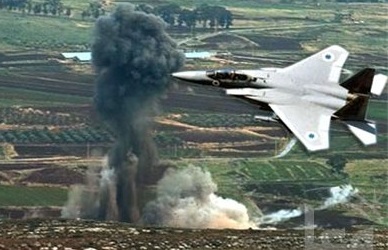
A virtual halt? That is the official Israeli line, but it is not true; there is no “halt” from the Israeli side.  What about these air strikes reported by the Palestinian Ma’an newspaper two days before Christmas?

GAZA CITY (Ma’an) — Two Palestinians were reported injured on Tuesday afternoon when Israeli warplanes dropped a single missile on an area used by members of Hamas’ armed wing, the Al-Qassam Brigades, medics confirmed.

The strike was the second round of the day, with jets striking eight sites across the Gaza Strip shortly before sunrise on Tuesday morning. The earlier strikes injured two fighters and one civilian, a security guard in a nearby dairy factory.

The latest strike hit west of the southern Gaza Strip city of Khan Younis, where at least three of the strikes earlier in the day also targeted.

Spokesman for medical and emergency services in Gaza Adham Abu Salmiya said the two injured were transferred to the Abu Yousif An-Najjar Hospital in Khan Younis.

A statement from the Israeli military said the strike targeted a “Hamas terror activity center,” and noted that “A direct hit was confirmed.”

The story also reports “rocket fire” from the Palestinian side, a “projectile” to which the Israeli Air Force responded with low-flying war planes attacking an “area” in which Hamas has been known to be located. Is this proportional? Fighter planes against random rockets? Of course not. Does the US media point this out? Of course not.

The AP Christmas story focuses on the crowded hotels inside Bethlehem. No doubt that benefits local hotels, but as the London Guardian notes, Israel benefits more than Palestine from the tourist trade.

“It is true that this is a record year and that we have never received so many tourists in Bethlehem. The problem is that we only get 10% of the tourist revenues. The rest stays in Israel,” complains Palestinian tourism minister Khouloud Daibes. A total of 1.4 million people have visited Jesus’s birthplace this year, a 60% increase compared with last year. According to the minister, 70%-80% of this year’s tourists are one-day visitors.

The London Independent is even more pessimistic about Bethlehem’s economic progress:

Hoteliers argue the easing of restrictions are largely cosmetic and fail to address the bigger issue of permanent access for tourists. “We don’t want only the seven days of Christmas. We want it all year round,” said Amir Jaber, director of sales at the Jacir Palace Intercontinental in Bethlehem.

Some agencies bringing groups from cruise ships that dock at Ashdod and Haifa are thinking of dropping Bethlehem from their itineraries altogether because of the unpredictable delays, Mr Jaber claimed.

Israel’s civil administration declined to comment on border procedures, saying only that 2010 was a “record-breaking year” for tourism in Bethlehem, thanks in large part to Israel’s confidence-building measures.

But not everybody is benefiting. At an iron gate that cuts off Palestinian access to Rachel’s Tomb to protect the Jewish worshippers, only five out of the 60 or more shops that once stood here remain. The area is one of the most lawless in an otherwise safe town because the Palestinian police are prevented by Israel from operating here.

Just off Manger Square, souvenir vendors watch with frustration as the tourists streaming out of the Church of the Nativity head back to their buses for the drive back to Jerusalem.

James J. Zogby, president of the Arab American Institute,  wrote an essay for the Jordan Times which compares the Bethlehem of 2000 years ago with today:

While the kings of old, we are told, were able to travel from afar bearing gifts to honor the newborn child, one can only imagine the difficulties they would encounter today dealing with Israeli soldiers at the King Hussein bridge.

Having endured their interrogations, myself, I can hear the kings answer hours of questions, such as: “Where are you from?”, “Who are your parents, grandparents?”, “Why are you here?”, “Who are you visiting?”, “What are these gifts for?”, and on and on. In the end, it is doubtful whether those hapless “kings from the East” would have gained entry.

That Joseph, Mary and Jesus were able to flee to Egypt to escape Herod’s vengeful wrath was possible back then. Today, that option is unlikely. The barrier/wall that encapsulates the West Bank and the closure of Gaza would make such a trip impossible.

Finally, as I reflect on the birth of Jesus, I cannot help but think of the nearly 400 babies who would be born on Christmas day to Palestinian parents in the West Bank and Gaza. I think as well of the number of those who will perish at birth because of inadequate medical services (some babies have been put at fatal risk at checkpoints, because Israeli soldiers would not permit their delivering mothers to pass).

And I think of Mary, 2000 years ago, and am grateful that, despite all she endured, there were no checkpoints blocking her way to Bethlehem.

Look not to the American media for the truth about this Christmas season in Palestine. Look instead into your own soul and ask the simple question: When will the American media wake up to the fact that it has been deceived by the government of Israel into doing its bidding?

Posted in Media, Middle East Politics | 15 Comments

The “Little Town of Bethlehem” Still Waits for Its Stolen Democracy

By James M. Wall

A new Palestinian parliament was elected in the Occupied Territories on January 25, 2006.  One month from this Christmas, Palestinians should have been celebrating the fifth anniversary of that democratic, internationally-monitored, election.

There will be no celebration in January, 2011.  Instead, Bethlehem, the West Bank, and Gaza still wait for the democracy that was stolen from them.

Palestinians remain trapped in a military occupation the Israeli government forced the world to accept because the “wrong” party won.

For one brief shining moment, before the 2006 results were rewritten to fit the Zionist narrative, democracy lived in the land where Christ was born.

In a story of rare candor for a major American news outlet, on January 26, 2006,  the Washington Post reported the elections fairly. The Post began its coverage:

The radical Islamic movement Hamas won a large majority in the new Palestinian parliament, according to official election results announced Thursday, trouncing the governing Fatah party in a contest that could dramatically reshape the Palestinians’ relations with Israel and the rest of the world.

In Wednesday’s voting, Hamas claimed 76 of the 132 parliamentary seats, giving the party at war with Israel the right to form the next cabinet under the Palestinian Authority’s president, Mahmoud Abbas, the leader of Fatah.

Fatah, which has dominated the legislature since the previous elections a decade ago and the Palestinian cause for far longer, won 43 seats. A collection of nationalist, leftist and independent parties claimed the rest.

The Post writer had not received the Israeli media narrative when he wrote that lead. He reported the election as it happened, giving his readers the facts and speculating on the impact the Hamas victory would have on future relations between the Palestinians and Israel.

US Secretary of State Condoleezza Rice was shocked at the election results. Israeli intelligence had assured her that Fatah would win. She had not counted on having to deal with a non-subservient Palestinian leadership.

Israel claimed to be as surprised as Rice, which was unlikely, since Israel had its own intelligence agents swarming all over the occupied territories.

Israel had agreed to tolerate the election, knowing that if Hamas won, the results could easily be manipulated to fit the scenario Israel would write.

The election results were revised to fit the standard “terrorism” narrative. It works this way: When Israel does not win a war or an election, it simply rewrites the script to conform to whatever fits Israel’s preferred story line.

Israel’s version, which a compliant  world media, endorsed, quickly converted victorious Hamas legislators like Jabalya refugee camp resident Youssef Shrafi, at left, from a family man to a “terrorist”.

This Reuters photo ran next to the January 26, 2006, Post story.  This picture may well represent the last time an Hamas politician was correctly identified in an American newspaper as a family man.

Israel could not allow Hamas to be seen as a political party that had won an election the way parties do in a democracy. Hamas had to be peddled as a “terror” organization that is a theat to world peace, a narrative pattern that continues to this day, as Israel and its US neoconservative allies pound the war drums against Iran.

On election day, 2006, I was in Bethlehem, where I watched long lines of voters participating in the core event of a democracy, choosing their leaders.

The Bethlehem city council already had a majority of Hamas members, and on the day of the election, the green colors of Hamas dominated the square outside the polling place I visited.

I walked into the polling place and saw election judges checking credentials.  One official asked me, politely, to move away from the voters; no electioneering inside the polling place. I told him I understood.

The picture above, of political posters plastered neatly on a building in downtown Bethlehem, was one I took on election day. Hope was in the air. There was joy that a people living under military occupation might soon come together to slowly and no doubt, painfully, build their own stable, peaceful, country.

So Israel did what it always does. It played the fear card and arrested half of the victorious Hamas legislators before they could be sworn in. Many of those arrested still languish in an Israeli prison five years later.

Following Israel’s script for the next five years, Israel, the US and the European Union refused to accept the results of the 2006 election.

The electoral map below tells the story of the legitimacy of the election. Hamas district legislative winners are in green. Fatah is yellow.

Immediately, Israel took over the story. Since the Hamas legislative majority had been deemed by Israel and the US to be a “terrorist” organization, all outside funding was funneled to the now minority Fatah party, which remained under Israeli control.  Cutting off the funding was intended to starve the Hamas political organization, leading to it failure.

But Hamas did not fail, not even after Israel sealed the Gaza strip.

An ongoing economic blockade and periodic military assaults on Gaza’s civilian population, in “retaliation” for home-made rockets fired into Israel by non-Hamas forces, also did not lead to Hamas’ defeat.

Hamas simply hunkered down; its army defeated Fatah in a US endorsed civil war in which Fatah’s army was funded and trained by the US military.

Israel became an even more isolated military fortress, threatening its neighbors and encouraging the US to come over and save the world from the deadly non-existent Iraqi WPDs. With that successful enterprise completed, Israel turned to the nuclear threat it insists it sees in Iran..

Five years after that brief 2006 shining moment when democracy threatened to break out in Palestine, the military power that is Israel stands alone in the Middle East, a nuclear-armed behemoth that has abandoned any pretense of democracy even as it continues to cling to the fiction that it is the “only democracy” in the region.

The US did its part for Israel, taking advantage of a divided Palestinian political structure.  The US lured Fatah leader Mahmoud Abbas into agreeing to “talk” to Bibi Netanyahu, a man who likes to talk so long as nothing is said that would deter his goal to extend the state of Israel from the Mediterranean Sea to the Jordan River.

A few weeks before the fifth anniversary of the 2006 legislative election, another Christmas season is upon us.

Church congregations will gather together and sing traditional hymns, celebrating the birth of a child in a manger in the little town of Bethlehem, a little town that is no longer little, living within an Israeli-built wall, with limited access to the outside through Israeli-controlled check points.

In most of those churches, on Christmas Eve, members will sing O Little Town of Bethlehem or Silent Night with little thought of those Palestinians who, for a brief, shining moment almost had a democracy in which they might have finally been able to move freely throughout the land of Palestine.

When church congregations see their own small children stand around a manger scene in the front of the sanctuary, their eyes wide as they await the arrival of the wise men from the east, will any of them pause, even just for a moment, to wonder what life is like today for children in the land where Jesus was born?

This two minute clip reports on a Palestinian family living under military occupation in Palestine, five years after the 2006 election, and two thousand years after the the birth of the Christ child. The video was produced by the Israel-based human rights organization, B’tselem.

Archbishop Desmond Tutu was interviewed by a Boston Globe reporter in 2007. The South African leader was asked by the reporter what he had seen and heard in the Holy Land on his recent visit there.  He responded:

Some people cannot move freely from one place to another.  A wall separates them from their famlies and from their incomes. They cannot tend to their gardens at home or to their lessons at school.

They are arbitrarily demeaned at checkpoints and unnecessarily beleageured by capricious applications of bureaucratic red tape.

I grieve for the damage being done daily to people’s souls and bodies. I have to tell the truth: I am reminded of the yoke of oppression that was once our burden in South Africa.

In a folder encouraging visitor to visit Bethlehem in 2010 and 2011, the American Association for Palestinian Equal Rights reports:

A recent United Nations report stated that the wall and other measures imposed by Israel have “reduced Bethlehem’s development space, limited its access to resources, severed Bethlehem’s historical links to Jerusalem and restricted the urban area’s potential for residential and industrial expansion.”

These measures have severely damaged Bethlehem’s tourism industry, a major part of Bethlehem’s economy, a city still waiting for its stolen democracy.

Posted in Media, Middle East Politics | 9 Comments

Humiliating Israeli Rejection Leads to Further US Diplomatic Isolation

by James M. Wall

Leave it to linguist Noam Chomsky to provide a precise description of President Obama’s latest diplomatic failure.

Washington’s pathetic capitulation to Israel while pleading for a meaningless three-month freeze on settlement expansion—excluding Arab East Jerusalem—should go down as one of the most humiliating moments in US diplomatic history.

Few observers were fooled by the “stop the settlements” offer, least of all Noam Chomsky, who can smell a linguistic rat faster than most of us.

Chomsky has been a teacher of linguists since 1955 as the Institute Professor in the Department of Linguistics and Philosophy at MIT. He is also a consistent critic of American imperialism.

In his analysis of the Obama offer, Chomsky does not limit Zionist influence on US politics to the Israel Lobby. He looks for the money trail.

That gift of $3 billion for fighter jets is “another taxpayer grant to the U.S. arms industry, which gains doubly from programs to expand the militarization of the Middle East.”

Chomsky knows that an American emotional attachment to the state of Israel, while an important factor, is hardly enough to push US foreign policy decisions into two wars and a possible third war against Iran.

U.S. arms manufacturers are subsidized not only to develop and produce advanced equipment for a state that is virtually part of the U.S. military-intelligence establishment but also to provide second-rate military equipment to the Gulf states—currently a precedent-breaking $60 billion arms sale to Saudi Arabia, which is a transaction that also recycles petrodollars to an ailing U.S. economy.

Israeli and U.S. high-tech civilian industries are closely integrated. It is small wonder that the most fervent support for Israeli actions comes from the business press and the Republican Party, the more extreme of the two business-oriented political parties.

Martin Indyk was born in London, England, but grew up and was educated in Australia. He immigrated to the United States and became an American citizen in 1993.

Recently, he wrote in the Financial Times:

Few seemed to even notice when the Obama administration quietly announced this week that it had ended the effort. Washington’s focus has shifted to a more promising negotiation with Congress over renewing tax cuts.

Israel has moved on to the next crisis – a police sex scandal here, a natural disaster there. In the West Bank, life is good: 11 per cent growth, low unemployment and Palestinian police maintaining order.

Even in Gaza, a new normalcy is taking hold, albeit under repressive Hamas rule. Hamas, Hizbollah and Iran still swear they will liberate Palestine through violence, but in the meantime they do nothing to upset the current calm.

Life in the West Bank “is good” and “normalcy” has returned to Gaza? What would lead an experienced diplomat to reach a conclusion this unrelated to the reality of life in the West Bank and Gaza?

Over the years Indyk has shown a strong affinity for appointed positions that have enabled him to be a good friend to Israel. He served as US ambassador to Israel and Assistant Secretary of State for Near East Affairs during the Clinton Administration.

His Wikipedia entry concludes that Indyk “is arguably best known as one of the lead U.S. negotiators at the Camp David talks.” These were the talks that led to the “generous offer” Israel and the US made to Yasir Arafat, an offer that was neither generous nor an authentic offer.

Indyk has served a deputy research director for AIPAC. He is currently a Senior Fellow at the Saban Center in Washington.

In his FT analysis, Indyk concluded, “WikiLeaks has now revealed the world’s worst kept secret: Arab leaders care more about Iran’s threat than about the Palestinian cause,” repeating the conventional US-Israel spin that WikiLleaks “proves” the need to attack Iran.

Arab leaders may support such an attack, but the Arab public does not. Chomsky writes:

The Iranian threat is not military, as the Pentagon and U.S. intelligence have emphasized. Were Iran to develop a nuclear weapons capacity, the purpose would be deterrent—presumably to ward off a U.S.-Israeli attack.

The real threat, in Washington’s view, is that Iran is seeking to expand its influence in neighboring countries “stabilized” by U.S. invasion and occupation.

Whatever the ruling dictatorships may prefer, Arabs in a recent Brookings poll rank the major threats to the region as Israel (88 percent), the United States (77 percent) and Iran (10 percent).

Noam Chomsky has written that his goal as a linguist, “is to find the principles common to all languages that enable people to speak creatively and freely”.

He also believes the goal of language is to enable us to find the “human essence” in one another. A worthy goal, of course, but where will we discover sufficient open dialogue among leaders willing to bring “human essence” to our current political situation?

We could begin with those 26 former European Union leaders who have just issued a letter that “urged the union to impose sanctions on Israel for continuing to build settlements on occupied Palestinian territory”.

The former leaders said Israel “like any other state”, should be made to feel “the consequences” and pay a price for breaking international law.

The letter sent to European governments and EU institutions, asks EU foreign ministers to reiterate that they “will not recognise any changes to the June 1967 boundaries and clarify that a Palestinian state should be in sovereign control over territory equivalent to 100% of the territory occupied in 1967, including its capital in East Jerusalem”.

We may look also to those younger Israelis who no longer want to live in a country that is deliberately isolating itself from the world community.

Peter Beinart, senior political writer for The Daily Beast, writes:

Israel’s increased isolation from the world community has begun to lead young Israeli citizens to leave Israel and move to the US and European countries.

According to the Department of Homeland Security, the number of Israelis applying annually for permanent residence in the United States doubled between 2000 and 2009.

Former Prime Ministers Ehud Olmert and Ehud Barak both have adult children living here. And it’s not just the U.S. An Israeli friend recently told me that there are so many young Israelis in Berlin (Berlin!) that when he goes there and runs into acquaintances from Tel Aviv, they don’t even act surprised.

There is also an increasing number of world governments willing to support the formation of a Palestine state unilaterally, unrelated to the “peace talks” that have ended because of Israeli intransigence.

Press-TV reported on the International Middle East Media Center website:

Bernard Valero, a spokesman for the French Foreign Ministry, revealed on Tuesday [December 7] that France welcomes the formation of a Palestinian state, becoming the first European country to do so.

Over the past week, Argentina, Brazil and Uruguay have all announced that they recognize a Palestinian state within the 1967 borders.

More than 100 countries, mostly from across Asia and Africa, have so far recognized an independent Palestine within its ’67 borders. Other emerging economic powers such as China and India have already done so.

Secretary of State Hillary Clinton spoke at the Saban Center for Middle East Policy in Washington Friday night, where she called for a “clean start” in Palestinian-Israeli negotiations.

Settlements, she said, should be dealt with as part of efforts to determine the borders of a future Palestinian state. Her remarks, reported by the Palestine Monitor, were not encouraging to Palestinians.

Clinton said that the Obama Administration intends to treat the settlement issue as part of the wider border dispute, which strongly suggests “that certain settlements, and thus large swathes of Palestinian land, will be incorporated into Israel following any future peace deal.”

Also of concern to the Palestinians was Clinton’s comment, “we will deepen our support of the Palestinians’ state-building efforts, because we recognize that a Palestinian state, achieved through negotiations, is inevitable”.

The Palestine Monitor wrote: “If the past 43 years have taught us anything, it is that a Palestinian state through negotiations is anything but inevitable.”

Clinton’s Saban speech is not hopeful. Instead, she is is practicing the anti-freedom George Bush policy which Noam Chomsky exposed in the title of his 1992 book, Deterring Democracy.

The picture at the top is from The Palestine Monitor.

Posted in Media, Middle East Politics | Comments Off on Humiliating Israeli Rejection Leads to Further US Diplomatic Isolation