“It Was The Night They Drove Old Dixie Down”

by James M. WallJoseph Sohm | Shutterstock.com

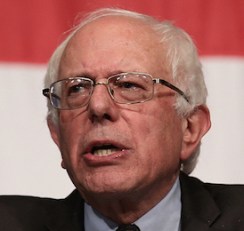
The New York Times editorial board was absolutely right when it declared the day following the New York primaries, that it is too soon for Bernie Sanders and John Kasich to concede the nominations to Hillary Clinton and Donald Trump.

In its editorial, the paper called on Kasich and Sanders to stay in their respective campaigns. The Times calls on them to “let the remaining states have their say”.

Furthermore, the Times writes,

This should be a wake-up call to leaders of both parties. They are missing something big about their own members’ priorities, and their mood.

A spirited nominating season might teach them what voters actually want from their president. So far, voters are saying they aren’t willing to settle for a party favorite, and don’t want to be cheated out of a choice.

After their strong victories Tuesday, Trump and Clinton called on their opponents to give up, and rally around the party flags for November.

The post-primary narrative makers are asking, why should the two losers continue to fight? The answer lies in Yogi Berra’s wise saying, “It ain’t over til its over”

We need to hear more from Bernie Sanders, a rarity in national life, an authentic, passionate socialist candidate who, over a lifetime, has drilled to the core of this nation’s militaristic, empirical dark side.

Sanders demands that we confess to this dark side, our national “id component” that succumbs to the corporate bread and circuses strategy that urges us to indulge our wants and shallow desires.

At its best, politics can be a noble pursuit, but like the rest of us, politicians have their dark side. This “id component” of human personality, about which the Jewish intellectual/medical giant Sigmund Freud, warned us, lures us into such selfishness that it closes our eyes to the less unfortunate among us.

That selfish “id component” also makes us susceptible to con artists who profess to do good when they intend us harm.

On the international scene, Israel hides behind its ancient biblical name to build and sustain a military dictatorship which occupies and controls another people, not like them.

Israel has its loyalists hidden within our institutions to promote the myth of its goodness, which disguises its quest for power. We are easily seduced.

Candidate Hillary Clinton has long succumbed to this seduction, while Bernie Sanders, a secular Jew who as a young American lived for a time on an Israeli kibbutz, has openly rejected it.

Clinton, a Goldwater volunteer in her Chicago suburban youth, was driven by a burning ambition to break from the suburban mom role she might have followed.

Clinton is not as good a politician as the man from Arkansas she married after the two worked together as young operatives in the idealistic George McGovern anti-Vietam war presidential campaign of 1972.

Why should she be? There were few models of female politicians in her generation.

Electing the first U.S. female president would be a major leap forward in equality for women, which is, of course, part of Clinton’s appeal to voters, especially women.

Voting in this week’s New York primary, according to the New Yorker, “reveals that Clinton and Sanders split male voters and white voters just about evenly. Clinton carried female voters by sixty-three per cent to thirty-seven per cent, a huge gap”.

Clinton has been a role model for women’s achievement. That fact makes it even more painful to read her fawning testimony in the Jewish Forward, which pandered to her Jewish financial benefactors and is also a criticism of President Obama’s increased frustration over Israel’s occupation conduct. She wrote:

I will do everything I can to enhance our strategic partnership and strengthen America’s security commitment to Israel, ensuring that it always has the qualitative military edge to defend itself.

That includes immediately dispatching a delegation of the Joint Chiefs of Staff to meet with senior Israeli commanders.

I would also invite the Israeli prime minister to the White House in my first month in office.

Contrast her subservient attitude to that of Sanders, her Jewish opponent, who offers a new, fresh, and frank reading of the conduct of the Prime Minister to whom Clinton plans to invite to the White House her first month in office.

How strong is Clinton’s devotion to Israel?

Joe Conason wrote an essay April 15, for In These Times with an eye-catching title, On Israel and Palestine, Bernie Sanders Is Right—And Hillary Clinton Knows It.

He writes about the moment in the Thursday night April 14 Democratic primary debate in Brooklyn before the Tuesday voting “when Bernie Sanders challenged Hillary Clinton over her refusal to criticize Israel’s excessive use of force against the Palestinians in Gaza”. Conason wrote:

For the first time in memory, a major American political figure insisted publicly that the Jewish state and its leaders are “not always right”—and that in attempting to suppress terrorism, they had killed and injured far too many blameless human beings.

Asked by CNN’s Wolf Blitzer about his judgment that Israel’s military response to attacks from Gaza in 2014 was “disproportionate and led to the unnecessary loss of innocent life,” the Vermont Senator answered firmly: “Yeah, I do believe that.” He mentioned that many other nations, including longtime allies of Israel, had denounced the atrocities in Gaza, along with human rights organizations around the world.

In the debate, Clinton “blamed the casualties among Palestinian civilians solely on Hamas, even as she vaguely mentioned ‘precautions’ that Israel should have taken to prevent them. This display of subservience to the most right-wing elements in Israel and its Washington lobby was all too typical of American presidential aspirants”.

There is every likelihood Hillary Clinton will be elected president in November. When she ascends once again to the White House, we can only hope a still small voice will whisper to her that she reached her pinnacle of success with nary a nod to the suffering her Israeli loyalty has brought to the Palestinian people.

Reflecting on the debate’s rare exchange between two presidential aspirants, I was reminded of a song by the musical group, The Band. I was not the first to be so reminded.

On November 5, 2008, Brent Budowsky felt the same connection to The Band. He wrote in The Hill, The Night Old Dixie Died and a New Generation Was Born.

The nation had just elected its first African American president, Barack Obama, when Budowsky wrote:

It was a moment for the ages and the night Old Dixie died, when the trumpet sounded and a president like Caroline Kennedy’s father came. In terms of race relations and America being a community of diverse people from countless backgrounds working together for the common good, it was the most important night since the Emancipation Proclamation.

It was the night Old Dixie died, when those who were whipped and beaten can have a president of their own, and we will have a president of our own. It was a night for the realignment of generations, as people age 18 to 30 have a president of their own, and just as profoundly, kids too young to vote in 2008 will have a president of their own.

The leader of The Band, Robbie Robinson, described his feelings when he first wrote, The Night They Drove Old Dixie Down:

I was humming the melody but I didn’t know what the song was about. Until that one day when it just appeared in that kind of way. 

The song speaks of the end of the American Civil War. It connotes an ending and the start of a major change. Below is a video of the song as it was featured in the film, The Last Waltz.

The Israel Lobby was driven down on the night Bernie Sanders and his cheering supporters declared their independence from the empirical designs of Israel.    

“The Night They Drove Old Lobby Down” was the night of the Brooklyn debate. There will need to be other nights like it.

But it was in the year of 2016 that the Israel Lobby was first driven down in the middle of a national political debate. And Bernie Sanders led the way.

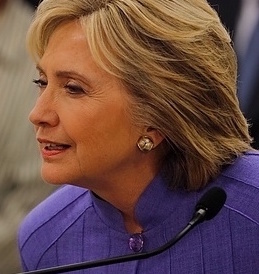
The picture of Hillary Clinton is by Joseph Sohm. It is a Shutterstock.com picture.

Posted in Bernie Sanders, Donald Trump, Hillary Clinton, Iran, Israel | 4 Comments

WH Campaign Shields Israel’s Occupation Ferocity

by James M. Wall5df355fe1140afeeaf4c94124c02e5744793660e

So obsessed is U.S. media with this year’s headlong dash for the White House, that Israel’s increase in settlement construction has gone by us like a snake sliding into a back yard recycling bin.

The Paris-based news agency, AFP reported from Jerusalem this week that “the number of West Bank settlements Israel plans to build” has more than tripled “in the first quarter of 2016 compared to the same period last year”.

Israeli-based Peace Now, a settlement watchdog, said in a statement “that between January and March, projects for 674 housing units passed at least one of the steps in the planning approval process, up from 194 in the first quarter of 2015”.

The absence of media attention to such a development is no surprise. The mainline media narrative on Israel/Palestine is already conditioned to treat Israel as a 51st U.S. state, surrounded by “terrorists”.  

With attention directed more than usual to a domestic conflict between and within two political parties, what happens in Israel/Palestine stays in Israel/Palestine. Local U.S.conflicts are better copy especially if they involve name calling and ugly innuendos.

It is not just the settlements. At the end of March, Israel’s Knesset, voted in favour of a “Suspension Law” designed “to allow lawmakers to suspend an elected member of the Knesset (MK) with a three-quarters majority”.

The impact of this Israeli law on American readers/viewers has slid by virtually unnoticed as our major media focuses on the imbroglio between Clinton, Sanders, Trump and Cruz.

Does any of this sound familiar to situations confronted on American campuses, church law-making bodies and in political elections?

Israeli PM Benjamin Netanyahu said at an Likud Party meeting, the law is “meant to remove MKs [members of the Knesset] who stand against Israel and for terrorism.”

Under the new law, the grounds for suspension of an MK member would “include negating the existence of the State of Israel as a Jewish and democratic state, inciting racism, and supporting armed struggle by a hostile state or a terrorist organisation against the State of Israel”.

The Knesset “suspension law” is designed to remove any MK member who dares to speak, or act, in what Israeli law deems “is against Israel and for terrorism”.

According to Israeli sources, the “suspension bill originated” after three Israeli-Palestinian MKs from the Balad Party visited families of Palestinians killed during attacks against Israelis.

This adds pressure on those MKs who wanted to pay condolences to the grieving families. The clear implication: You want to be an Israeli-Palestinian member of the Knesset? Stay away from Palestinians who are not Israeli citizens.

Housing demotions were also increased against the captive Palestinian population in the West Bank. The Palestine News Network reports: 

Israeli occupation authorities (IOA) destroyed 523 Palestinian homes and civilian structures in the West Bank since the start of 2016, with an increase of 275% from last year, a Palestinian center reported Sunday. 

According to the report by the Land Research Center (LRC), the Israeli occupation army demolished 188 civilian structures sheltering 854 Palestinians. Nablus province, in the northern occupied West Bank, hit a record high of 58 in the number of demolished homes.  

In case you had not noticed, the Israeli “suspension law” merely codifies the Knesset’s war against any and all who do not display absolute loyalty to the state. 

The hatred embedded in that law have surfaced in bills proposed and passed, in U.S state and city legislative bodies, demanding allegiance to an American version of Israel’s “suspension law”. They even use essentially the same language passed by the Knesset. 

The MK “suspension law” has long been operative in all corners of the U.S. Are there church journalists alleged to be anti-Semitic for questioning Israeli policies?. Of course there are. 

Are there university professors dismissed or fired for failing to give allegiance to a specific foreign power? A professor from a college within bike-riding distance of my home, ran into trouble for displaying solidarity to Muslims. She is no longer at the school..

What’s does this have to do with Israel’s “suspension law”?  If you had to ask, you have not been paying attention. Supporting Muslims is tantamount to questioning the right of Israel to exist. How is that possible? Ask your pro-Israel friends.

Hillary Clinton, a United Methodist member since her childhood in the town of Park Ridge, Illinois, has pledged to work to stop BDS agitation if she is elected. How do we know this?

She said so in a letter to Haim Saban, a strong pro-Israel Hollywood figure and one of Clinton’s major contributors.

In Truthdig, Sandy Toland reports that with Saban’s $6.4 million destined for her campaign war chest, Clinton wrote to her benefactor to express her “alarm” over BDS, “seeking your thoughts and recommendations” to “work together to counter BDS.”

If it is wrong for a foreign power to buy loyalty from American politicians, is it not also wrong for American police chiefs and Christian pastors to accept Israel’s free trips to a foreign nation?

Are these freebie trips to Israel designed to educate? Of course they are not.  They are a form of hashish which creates an addictive bond to a foreign power. For pastors it can mean slanted sermons. For police chiefs it can lead to massive purchases of military assault weapons to “keep the peace” in our cities.

Rulers of the Roman empire once deluded their subjects into ignoring their poverty and suffering through elaborate circuses.

Our media today is feeding this nation a political circus which features four politicians fighting over insults and childish name calling, a diversion made all the more diverting when candidates’ wives come into play. 

The media knows what its subjects will read, watch and buy. Meanwhile, Israel’s occupation ferocity, shielded from an indifferent American public, grows more oppressive by the day, and especially, by the night.

Posted in Bernie Sanders, Donald Trump, Hillary Clinton, Israel, Media, Netanyahu, Politics and Elections, United Methodist Church | 6 Comments

Secretary Clinton’s Big Money Burden

by James M. Wall4:7:76 Milwaukee Journal AP

The race between former Secretary of State Hillary Clinton and Vermont Senator Bernie Sanders reached a watershed in Tuesday’s Democratic Wisconsin primary.

Secretary Clinton, the presumptive party nominee, lost to Sanders for the sixth straight time. His Wisconsin margin of victory was a substantial 57% to 43%.

On Saturday, April 9, Wyoming will hold its Democratic caucus, a western state venue that favors Sanders. On April 19, the two will meet again in the delegate-rich New York primary, a state in which Sanders was born and Hillary served as a U.S. Senator.

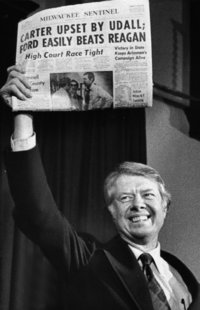
Forty years ago, it was in the 1976 Wisconsin primary that Jimmy Carter was transformed from “Jimmy Who”, as even his home state Atlanta Journal once called him, to a candidate on the fast track to his party’s nomination.

Carter was outside the establishment mainstream, making him an outlier not unlike this year’s candidate, the avowed democratic socialist Senator from Vermont.

Carter had only recently started to attract notice with his 1976 upset Iowa caucus finish, second only to a slate of delegates pledged to “uncommitted”. His major opponent in Wisconsin was Arizona Congressman Morris Udall, an establishment candidate. 

The 1976 Wisconsin race was so close that the Milwaukee Journal declared Congressman Udall the winner in an early edition, repeating the embarrassment of the Chicago Tribune‘s famous early edition headline, “Dewey Defeats Truman”. (see above).

Forty years later, the establishment 2016 candidate, Secretary Clinton, has absolutely no known connection to a developing financial scandal now breaking in the middle of her campaign against Sanders.

For Clinton, however, this is not a good time for a big money scandal to emerge. Her campaign benefits from money raised from big donors, but given the rising tide of support for Sanders, her benefit can also be a burden.

Sanders’ campaign has consistently deplored big money control of the U.S. and world economies.

Revelations now emerging from what is being called the Panama Papers, give Sanders more anti-one per cent stump speech fodder. 

Both Clinton and her husband, former President Bill Clinton, have many wealthy donor friends who obviously benefit her campaign coffers and their Clinton Foundation.

This is a burden she must carry as she struggles to win votes in the coming primaries and caucuses, and, she hopes, the November general election.

Sanders does not implicate Clinton in the current financial scandal. However, his supporters see Sanders as the champion of the “rest of us”.

In a New York Times editorial, the Panama Papers are examined, carefully.

The Times wrote:

The first reaction to the leaked documents dubbed the Panama Papers is simply awe at the scope of the trove and the ingenuity of the anonymous source who provided the press with 11.5 million documents — 2.6 terabytes of data — revealing in extraordinary detail how offshore bank accounts and tax havens are used by the world’s rich and powerful to conceal their wealth or avoid taxes.

Then comes the disgust. With more than 14,000 clients around the world and more than 214,000 offshore entities involved, Mossack Fonseca, the Panama-based law firm whose internal documents were exposed, piously insists it violated no laws or ethics.

But the questions remain: How did all these politicians, dictators, criminals, billionaires and celebrities amass vast wealth and then benefit from elaborate webs of shell companies to disguise their identities and their assets? Would there have been no reckoning had the leak not occurred?

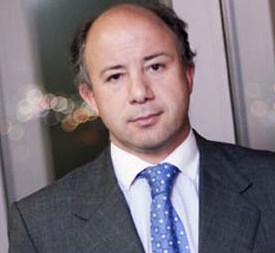
Gonzalo-Delaveau-700x450A day before the prime minister of Iceland announced his resignation after his name appeared in the Papers, Gonzalo Delaveau, the president of the Chilean chapter of Transparency International also vacated his office after he was named for his alleged involvement with secret companies.

Transparency International is an organization monitoring government and corporate corruption. While Delaveau is not accused of illegal activity, the leaks call into question his role as head of an organization monitoring government and corporate corruption.

President Obama did not help Clinton dispel the oppressive aura of big money when he recently talked to reporters about the Panama Papers.

“We’ve had another reminder in this big dump of data coming out of Panama that tax avoidance is a big, global problem,” the President said.

He added, ”It’s not unique to other countries because frankly there are folks here in America that are taking advantage of this same stuff. A lot of it’s legal, but that’s exactly the problem.” 

Again, it must be stressed that in no way is Secretary Clinton linked to the “big dump of data”, to which President Obama referred.

But it remains her burden to seek the White House against an energetic Bernie Sanders while the Panama Papers push big money into the media spotlight.

She will have to carry that burden into a debate with Sanders in Brooklyn, five days before the New York primaries.  The DNC-sanctioned debate will be on CNN, April 14, from 9 to 11 p.m. EST.

The New York debate would be a good place for Secretary Clinton to remind the nation which she seeks to lead, that there is a captive population in Palestine which suffers under a total military control that brings with it the burden of being occupied by another nation.

Such a declaration would call for political courage from Secretary Clinton.  It would also be an admission from her that some burdens are heavier to carry than others.

The picture of President Carter is an AP photo from the Milwaukee Journal. The picture of Gonzalo Delaveau is from the Nation of Change website.

Posted in Bernie Sanders, Hillary Clinton, Jimmy Carter, Politics and Elections | 4 Comments

The Day Obama Chose Peace Over War

by James M. Wall

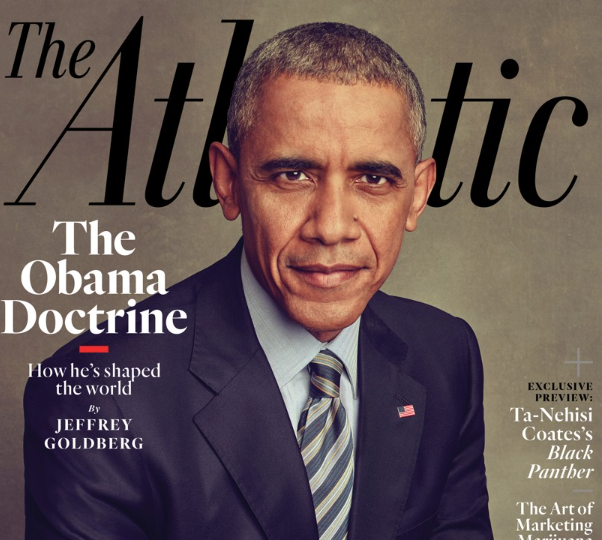
Screen Shot 2016-03-26 at 3.28.33 PMJeffrey Goldberg’s Atlantic essay, “The Obama Doctrine”, opens with two contrasting conclusions which could be drawn from events on Friday, August 30, 2013.

It was either the day Barack Obama “brought to a premature end America’s reign as the world’s sole indispensable superpower”, or, it was the day Barack Obama “peered into the Middle Eastern abyss and stepped back from the consuming void.”

In President Obama’s mind, August 30, 2013, “was his liberation day, the day he defied not only the foreign-policy establishment and its cruise-missile playbook, but also [defied] the demands of America’s frustrating, high-maintenance allies in the Middle East.

 Barack Obama’s presidential “liberation day” began with a “thundering speech” given on his behalf by Secretary of State John Kerry.

“Kerry’s uncharacteristically Churchillian remarks”, were delivered in the State Department’s Treaty Room. It dealt with the gassing of Syrian civilians by the president of Syria, Bashar al-Assad.

In his remarks, Kerry said Assad should be punished, in part, because the “credibility and the future interests of the United States of America and our allies” were at stake.

It is directly related to our credibility and whether countries still believe the United States when it says something. They are watching to see if Syria can get away with it, because then maybe they too can put the world at greater risk.

The Pentagon and the White House’s national-security team believed President Obama was ready to attack President Assad for “crossing the red line” by gassing civilians. Goldberg reports that “John Kerry told me he was expecting a strike the day after his speech”.

The President was preparing for an attack. Privately, however, he had “come to believe that he was walking into a trap—one laid both by allies and by adversaries, and by conventional expectations of what an American president is supposed to do.”

Late in the afternoon, President Obama “determined that he was simply not prepared to authorize a strike”. He asked Denis McDonough, his chief of staff, to take a walk with him on the South Lawn of the White House.

Obama did not choose McDonough randomly: He is the Obama aide most averse to U.S. military intervention, and someone who, in the words of one of his colleagues, “thinks in terms of traps.” . . .Obama and McDonough shared a long-standing resentment.

They were “tired of watching Washington unthinkingly drift toward war in Muslim countries. Four years earlier, the president believed, the Pentagon had ‘jammed’ him on a troop surge for Afghanistan. Now, on Syria, he was beginning to feel jammed again.”

When the two men came back to the Oval Office, the president told his national-security aides that he planned to stand down. There would be no attack the next day; he wanted to refer the matter to Congress for a vote. Aides in the room were shocked. . .

What led to this decision by the President?

Goldberg asked him to describe his thinking on that day. Obama listed the practical worries that had preoccupied him. “We had UN inspectors on the ground who were completing their work, and we could not risk taking a shot while they were there.”

A second major factor was the failure of [British Prime Minister] Cameron to obtain the consent of his parliament.

The third, and most important, factor, he told me, was “our assessment that while we could inflict some damage on Assad, we could not, through a missile strike, eliminate the chemical weapons themselves, and what I would then face was the prospect of Assad having survived the strike and claiming he had successfully defied the United States, that the United States had acted unlawfully in the absence of a UN mandate, and that that would have potentially strengthened his hand rather than weakened it.

The fourth factor, he said, was of deeper philosophical importance. “This falls in the category of something that I had been brooding on for some time,” he said. “I had come into office with the strong belief that the scope of executive power in national-security issues is very broad, but not limitless.”

Obama’s decision to choose further negotiations over a military strike drew heavy criticism. Today, three years after the U.S. came close to yet another military attack on a Muslim state, John Kerry has come to understand the good judgment behind Obama’s choice.

John Kerry today expresses no patience for those who argue, as he himself once did, that Obama should have bombed Assad-regime sites in order to buttress America’s deterrent capability. “You’d still have the weapons there, and you’d probably be fighting ISIL” for control of the weapons, he said. .  .  .  “It just doesn’t make sense.”

Goldberg described the President’s understanding of how his decision would be read by his critics. He writes, “Obama understands that the decision he made to step back from air strikes, and to allow the violation of a red line he himself had drawn to go unpunished, will be interrogated mercilessly by historians. But today that decision is a source of deep satisfaction for him.

“I’m very proud of this moment,” he told me. “The overwhelming weight of conventional wisdom and the machinery of our national-security apparatus had gone fairly far. The perception was that my credibility was at stake, that America’s credibility was at stake. And so for me to press the pause button at that moment, I knew, would cost me politically.

And the fact that I was able to pull back from the immediate pressures and think through in my own mind what was in America’s interest, not only with respect to Syria but also with respect to our democracy, was as tough a decision as I’ve made—and I believe ultimately it was the right decision to make.”

This was the moment the President believes he finally broke with what he calls, derisively, the “Washington playbook”.

Goldberg quotes Obama’s description of this “playbook”.

There’s a playbook in Washington that presidents are supposed to follow. It’s a playbook that comes out of the foreign-policy establishment. And the playbook prescribes responses to different events, and these responses tend to be militarized responses. Where America is directly threatened, the playbook works.

But the playbook can also be a trap that can lead to bad decisions. In the midst of an international challenge like Syria, you get judged harshly if you don’t follow the playbook, even if there are good reasons why it does not apply.

 Obama knows there are times when bellicosity is justified. But choices must be made in our current international arena.

Obama believes that the Manicheanism, and eloquently rendered bellicosity, commonly associated with Churchill, were justified by Hitler’s rise, and were at times defensible in the struggle against the Soviet Union. But he also thinks rhetoric should be weaponized sparingly, if at all, in today’s more ambiguous and complicated international arena.

The president believes that Churchillian rhetoric and, more to the point, Churchillian habits of thought, helped bring his predecessor, George W. Bush, to ruinous war in Iraq. Obama entered the White House bent on getting out of Iraq and Afghanistan; he was not seeking new dragons to slay. And he was particularly mindful of promising victory in conflicts he believed to be unwinnable.

Secretary Clinton thought differently:

Hillary Clinton, when she was Obama’s secretary of state, argued for an early and assertive response to Assad’s violence. In 2014, after she left office, Clinton told me that “the failure to help build up a credible fighting force of the people who were the originators of the protests against Assad … left a big vacuum, which the jihadists have now filled”.

President Obama opposed the 2003 Iraq invasion launched by President George W. Bush. He told Goldberg that invasion “should have taught Democratic interventionists like Clinton, who had voted for its authorization, the dangers of doing stupid [things]”.

Hillary Clinton has said she regrets her vote to support President Bush’s decision to attack Iraq. She has, however, continued to maintain her support for interventionism. 

Less than a year later, after she was no longer Secretary of State, The Week charged that Clinton had stepped up her criticism of  Obama’s foreign policy.

Clinton distanced herself from President Obama’s foreign policy, suggesting that he has not made it clear how D.C. “intend[s] to lead and manage” international affairs. Clinton advocated a more interventionist approach, arguing that, “We have to go back out and sell ourselves” as guarantors of worldwide stability.

flick.com (image by marcn) DMCAClinton’s opponent for the Democratic presidential nomination, Bernie Sanders, gave Obama strong and immediate support in his posting in the Huffington Post, called“No More War”.

His post had appeared September 12. 2013 (updated November 13), less than a month after Obama’s peaceful “stand down”.

Obama’s (and Kerry’s) subsequent negotiations to relieve Syria of its chemical weapons, reached a successful conclusion in June, 2014.

Sanders had written in 2013:

At a time of great political division in our country President Obama has found a remarkable way to unite Americans of all political persuasions — conservatives, progressives and moderates. With a loud and clear voice, the overwhelming majority of the American people, across the political spectrum, are saying NO to another war in the Middle East — Syria’s bloody and complicated civil war.

Bernie Sanders enjoyed an election sweep Saturday in Democratic caucuses: Washington (72-27), Alaska (82-18) and Hawaii (71-29). Earlier, Sanders won Tuesday caucuses in Utah (80-29) and Idaho (76-21). 

Before the caucus vote, Washington state’s governor, and all of its Democratic members of Congress, handed over their non-binding super delegate votes to Clinton.

It may be time for those political leaders to take some long walks with trusted aides.

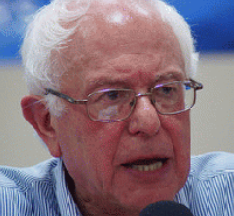
The picture from the cover of The Atlantic magazine is a screen shot. The picture of Bernie Sanders is from flick.com (image by marcn) DMCA.

Posted in Hillary Clinton, John Kerry, Middle East, Obama | 8 Comments

Hillary, Bernie, AIPAC: A Stone Cries Out

by James M. Wall

Hillary Clinton and Bernie Sanders were among the invitees to the 2016 American Israel Public Affairs Committee (AIPAC) meeting which this  year happened to coincide with the start of Holy Week.

Candidates For President Attend Iowa Democrat's Wing Ding DinnerI do not know if candidate Clinton attended a worship service on Passion/Palm Sunday, the day before she gave her keynote address.  If so, she might have heard a reading from the Gospel of Luke, which records that the authorities said to Jesus: “Teacher, rebuke your disciples!”

The authorities were complaining about the shouts of praise which greeted Jesus as he rode into Jerusalem.  “I tell you,” he replied, “if they keep quiet, the stones will cry out.”

Stones cry out to deliver a message when others remain silent. Stones cry out with messages of last resort in the hope the words will penetrate the shields surrounding those who remain stubbonly oblivious to reality.

Candidate Bernie Sanders did not attend the AIPAC conference. He sent his Stone message to the AIPAC event, which he also delivered at a campaign event. 

One sample: “to be successful, we have got to be a friend not only to Israel, but to the Palestinian people, where in Gaza unemployment today is 44 percent and we have there a poverty rate which is almost as high”.

Candidate Clinton did attend, delivering her customary anodyne praise, described by Juan Cole as the speech she always gives on Israel:

I once heard Hillary Clinton give her AIPAC speech at a university. It doesn’t change much, just as US policy toward the Mideast doesn’t change much. She was still a senator then. Much of the audience was Middle East experts, who could barely keep themselves from gagging.

Clinton used her speech to the American Israel Public Affairs Committee meeting, the gathering of some of the most powerful lobbyists in Washington, to lambaste Donald Trump for saying he’d try to be neutral in heading up negotiations between Israel and the Palestinians.

Donald Trump should be lambasted. He is wrong on everything most of every day. But, like a clock, he is right twice a day and this a point on which he is correct. The US cannot be an honest broker in the Mideast conflict if it is more Israeli than the Israelis, which it typically is.

Clinton’s speech was also blasted by Palestinian supporters.

Yousef Munayyer, executive director of the U.S. Campaign to End the Israeli Occupation, noted that Clinton’s speech “could well have been written by an Israeli government public relations firm.”  He added that her speech “took pandering to a new level.”

A news clip highlights a moment where she criticizes her opponents: 

https://youtu.be/Q8PmMMsGb-A

In contrast to the Clinton embrace of all things Israeli, Bernie Sanders’ message to AIPAC sounds less like a lover and more like a friend admonishing a friend:

It is absurd for elements within the Netanyahu government to suggest that building more settlements in the West Bank is the appropriate response to the most recent violence. It is also not acceptable that the Netanyahu government decided to withhold hundreds of millions of Shekels in tax revenue from the Palestinians, which it is supposed to collect on their behalf.

The Vermont Senator also told AIPAC it was time to end the economic blockade of Gaza. He identified a long-held Israeli practice of using water as a weapon against Palestinians and called for a “sustainable and equitable distribution of precious water resources so that Israel and Palestine can both thrive as neighbors.”

Peace has to mean security for every Israeli from violence and terrorism. But peace also means security for every Palestinian. It means achieving self-determination, civil rights and economic well-being for the Palestinian people. Peace will mean ending what amounts to the occupation of Palestinian territory, establishing mutually agreed upon borders.

In a news clip from CNN, Sanders offers specifics.  https://youtu.be/QgxhzOyXnF0

The full Sanders text may be found here. Click to view the video of his speech:

The speeches run long, but surely, this is a time when attention should be paid.

The picture of Bernie Sanders at the top is a Win McNamee/Getty image.

Posted in Bernie Sanders, Donald Trump, Gaza, Hillary Clinton, Israel, Middle East, Middle East Politics, Palestinians, Politics and Elections, Religion and politics, Religious Faith | 9 Comments

Vulnerabilities Tested As Clinton Keeps Winning

by James M. Wall

imrs.phpIn her effort to become the first woman President of the United States, former First Lady Hillary Clinton easily won three Democratic primary states Tuesday night.

Clinton won, by comfortable margins, in Ohio, North Carolina and Florida, In Missouri she finished slightly ahead of Vermont Senator Bernie Sanders.

In an unsettling display of her nagging vulnerabilities, Clinton had to hold off a late surge from Sanders, to gain a narrow victory in her home state of Illinois.

What really matters in these primaries, however, is not the popular vote, but the number of delegates won. 

Clinton’s impressive victories in Ohio, North Carolina and Florida gave her enough delegates to leave her with an almost insurmountable total of delegates in her campaign to return the Clinton family to the White House. She and her husband, former President Bill Clinton, lived and served there from 1993 to January, 2001.

Clinton’s pro-Israel stance had projected easy victories in Florida and Illinois, two states with heavy Jewish voting pockets. She did win impressively in Florida but she almost lost Illinois in the popular vote totals.

One of Sanders’ weaknesses is that his Vermont-based political career did not call for extensive minority interaction. Sanders has been a civil rights activist while a student at the University of Chicago. In his political career his focus has been more on economic reform, not issues of peace and justice.

His economic focus is a strength, but he still runs well behind Clinton in endorsements from racial minorities and from women. That is a high barrier for Sanders to climb. 

Sanders did gain one important female endorsement, which was reported by Washington Post political writer John Wagner before Tuesday’s primaries.  

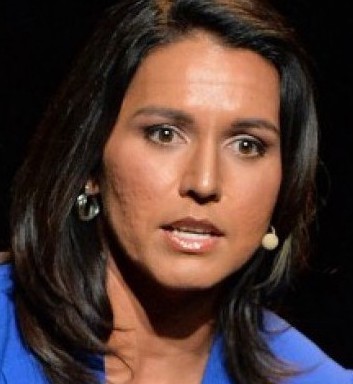
Rep. Tulsi Gabbard,  Hawaii, (pictured above) resigned from her post on the Democratic National Committee, to throw her support to Senator Sanders. Wagner described the campaign support Rep. Gabbard brings to Sanders:

KISSIMMEE, Florida—The thousands of people who have streamed to Bernie Sanders’s rallies around the country in recent days have been treated to an opening act — Rep. Tulsi Gabbard of Hawaii — who arguably does more to articulate Sanders’s views on foreign policy than he does.

Gabbard, 34, who resigned as vice chairwoman of the Democratic National Committee last month to endorse Sanders for president, has been tasked with introducing him at recent events, including one here Thursday that drew more than 5,000 people.

Unlike the Vermont senator, who focuses heavily on domestic policy at his rallies, Gabbard is talking about U.S. entanglements abroad. And she doesn’t pull any punches when relaying what she sees as a crucial difference between Sanders and her party’s front-runner, Hillary Clinton.

“The choice before us is this,” Gabbard told the crowd here. “We can vote for Hillary Clinton and … get more of these interventionist, regime-change wars that have cost us so much, or we can vote for and support Bernie Sanders, end these counterproductive, costly interventionist wars and invest here at home, because we cannot afford to do both.”

A female member of Congress who supports Sanders’ stance against interventionism, should strengthen Sanders’ foreign policy credibility among progressive Democratic voters. 

Clinton’s relationship to African American voters is one reason she has won easily in states with substantial African American voting bloc, especially among the older voters. In Illinois, Sanders aggressively attacked Clinton for not rejecting the endorsement of her long-time ally, Chicago Mayor Rahm Emanuel. 

Emanuel had lost his support in the Chicago African American community following the Laquan McDonald police shooting. The Chicago Tribune reported:

The mayor’s fight to keep a police video of the shooting under wraps led to weeks of street protests, allegations of a cover-up, calls for resignation and a plummeting approval rating.

In the final days of the [Illinois] campaign, Sanders assailed Emanuel’s record as “disastrous.”

Sanders also criticized  the mayor’s decision to close nearly 50 schools, which had a special impact on minority neighborhoods.

The narrowness of her home-state Illinois victory was a downer for Clinton, but she continues to build on her large delegate lead. Clinton’s stump speech of inspiration, unity and interventionism “to keep us safe” is well received by Democratic audiences.

Assuming this response continues in upcoming primaries and caucuses, her nomination now appears virtually assured. Sanders’ campaign rhetoric, however, has exposed vulnerabilities accumulated during her long political career.

Her interventionist stance, for example, disappoints many in the party’s progressive base. Her unrelenting pro-Israel stance is not encouraging to voters who believe Israel’s occupation is both immoral and destructive. 

Donald Trump, her likely Republican opponent in the general election, has won strong support among what pollsters describe as “white evangelicals”. Trump stepped on the third rail of vulnerability in American politics when he promised to deal with the Israeli-Palestinian issue from a “neutral” stance. 

That incongruity from a conservative Republican candidate has not slowed Trump’s momentum. 

Trump’s vitriolic demeanor and his bullying style, places him among a long line of demagogues in American politics. His go-for-broke style appeals to a simmering undercurrent of disenchantment and anger that might take him to the White House

In spite of her vulnerabilities, Clinton now appears to be the last hope to prevent a Trump general election victory. 

Trump added to his delegate total Tuesday, winning three states, including Florida,  Senator Marco Rubio’s home state. Rubio lost to Trump by a two-to-one margin, which led him to suspend his campaign.

Governor John Kasich finally won a primary–his home state of Ohio–and quickly emerged as the Republican establishment’s new preferred choice over Trump. 

Clinton’s vulnerability to Sanders’ strategy of linking her to political and public figures who have antagonized ethnic minorities, is a strategy that an apt and well-mannered candidate like Kasich, could use to cut into her voter base.

Assuming Clinton has locked up her party’s nomination, she could not have asked for a better sparring partner than Sanders to prepare her for her main bout in November.

Sanders, of course, still believes he would be a better nominee than Clinton. He plans to continue to persuade voters to give him that responsibility. Buckle up, it is going to be a wild ride to the two conventions, and beyond.

Correction: In an earlier version of this posting, I referred to states where Democrats follow a “winner take all” allocation of delegates.  This was incorrect. All of the Democratic primaries and caucuses allocate delegates proportionally. 

The picture at top of Rep. Tulsi Gabbard, is from the Washington Post.

Posted in Bernie Sanders, Donald Trump, Hillary Clinton, Middle East, Politics and Elections | 8 Comments

Questions From Israel: How and Why Trump?

by James M. Wall

ReutersTwo months and eight days into this tumultuous election year, Donald Trump and Hillary Clinton hold commanding leads for the presidential nominations of their respective parties.

It is not difficult to explain Clinton’s success. Democrats have grown accustomed to her face in the White House, the Senate and on the international scene.

Voters who knew her face and wanted her to be president were not sufficient to enable her to defeat Barack Obama for the 2008 Democratic nomination.

After eight more years in the public arena, Clinton’s political identity is more fully formed, and her financial backing more firmly fixed by her favorability rating on Wall Street.

Clinton now appears poised to win the Democratic nomination. Trump’s victory at the Republican Convention, also appears almost certain.

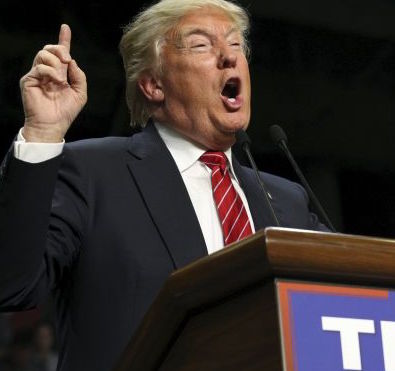
Like Clinton, he is a familiar face. He gained familiarity as a (for real) billionaire television star who played an uncouth talk show bully. In the political arena, Trump has honed that same image to emerge as a successful (still for real) billionaire uncouth political bully.

One Israeli media commentator who has covered and analyzed his own local share of uncouth bullies in political office, has written a succinct and on-target explanation as to why and how, Donald Trump emerged. 

Ari Shavit is a senior correspondent at Jerusalem-based Haaretz and a member of its editorial board.

In a recent column on the U.S. election, Shavit offers three reasons why a billionaire like Trump, with no political background, has risen so high and so fast in his race for the presidency.

To begin, Trump is a political demagogue in the American political tradition of demagogues who emerge to confront and over-simplify what a portion of the population has been taught to fear.

Shavit explains that Trump’s success is rooted in three fears: 

The first reason for Trump’s success is fear for the nation’s identity. American demography is changing fast. White Christian America is becoming a minority. In the two election campaigns won by Barack Obama, American politics celebrated the change.

Now comes the reaction. Something dark and horrible is rising from parts of the conservative white population, which feels it’s losing its hegemony over the land it has built.

Shavit writes that Trump’s ability to tap into economic fear is the second reason for his political success. Shavit examines the history of that fear.

In the last 30 years American capitalism has become rapacious as it hasn’t been since the end of the 19th century. Massive concentration of capital, huge social gaps and an eroding middle class are breaking the American dream to bits. In the absence of real mobility and the lack of confidence in a better future, American stability and optimism have been undermined.

Shavit continues with a third reason to answer the questions, why and how Trump?

The third reason for Trump’s success is fear of decline. All those who will be voting in the November election are children of the American century. They grew up in a world dominated in one way or another by the United States.

But in the last 15 years these voters have seen America lose its place of leadership in the world. China’s rise, Russia’s provocation and the Middle East’s despair prove that Washington is no longer in command of the world as it was in the past. Thus was created the yearning for a new commander, an unrestrained one.

Shavit finds that these three deep fears–fear of the loss of identity, economic fear, and fear of decline–have coalesced in recent years to “become a quiet dread”. 

While on the surface, the economy seemed to be more or less recovering, the world more or less peaceful, and life more or less reasonable – down below this dread gripped the heart of the American masses.

In the lack of job security, communal security and security in the future, the dread intensified.

Senator Bernie Sanders could still emerge as the Democratic nominee in November. His upset victory in Michigan Tuesday showed his potential. 

For Sanders to overtake Hillary, however, would be as surprising as Trump’s sudden transformation from talk-show host to almost-certain presidential nominee.

Sanders’ supporters share with Trump supporters a passionate attachment to their candidates. 

Those of us who fought in the 1972 Democratic convention to give Senator George McGovern the nomination, remember well how passion can go a long way in politics when there is a cause and an inspiring candidate to lead that cause.

We also remember how difficult it is to confront a fixed establishment invested in an establishment candidate who is also an incumbent president named Richard Nixon. 

If Hillary Clinton is the Democratic nominee she will run as the establishment candidate while Trump will run in the passion lane. 

Given Sanders’ background as a revolutionary, a Trump-Sanders general election would have put two opposites in the ring, both of whom would appeal, from different directions, to the passions that emerged out of the 1960s U.S. cultural/political revolution.Sanders 63

As a college student and a confirmed radical, Bernie Sanders was a fighter in that revolution. He fought on its cultural front lines, specifically to undermine the hegemony of the white ruling class.

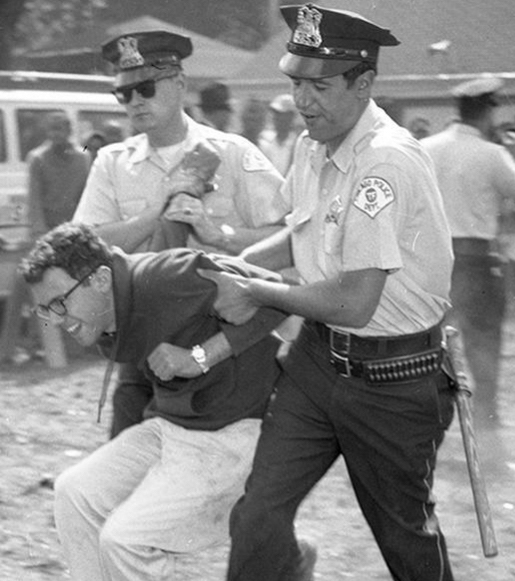
Sanders marched and protested. In 1963, he was arrested during a civil rights protest demonstration, (right) on Chicago’s South Side. He later became a successful politician, moving from  mayor to U.S. Senator.

To be successful in a November general election, Sanders would need to address the fears of Trump supporters who, in Shavit’s terms are part of a “conservative white population, which feels it’s losing its hegemony over the land it has built”.

It is the establishment candidate’s task to persuade the voters that addressing their fears is best left to the establishment candidate.

Will a Clinton-Trump November race produce a winning establishment candidate named Clinton, or will passion provoked by fears produce a winner named Trump?

That is a question to ponder. There are still primaries and caucuses and two conventions ahead before we reach November 8.

On that date, voters must decide who best to lead this nation in a time when so many are gripped in a “quiet dread”.

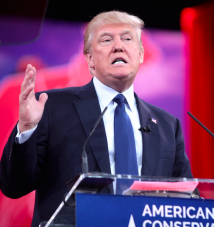
The picture of Donald Trump at top is from Reuters.

The picture of Bernie Sanders being arrested as a young man in 1963 at a Chicago South Side protest demonstration, is from the Chicago Tribune archives. It was posted by www.democraticunderground.com.

Posted in Bernie Sanders, Donald Trump, Hillary Clinton, US govermemt | 10 Comments

Trump Success Born and Raised In Fear and Hate

by James M. WallThe_Scream

Super Tuesday performed as predicted. Hillary Clinton won six southern states with considerable African-American backing. She narrowly won Massachusetts. Sanders won Vermont, Oklahoma, Minnesota and Colorado.

The major message from this particular Super Tuesday is that Donald Trump has emerged as an even more threatening nightmare to both political parties. It is a nightmare which will only grow in intensity.

Trump’s success is rooted in the political toxins of fear and hate, symbiotic emotions generated by a political process whose dominant generating force is the manic desire to gain power and control wealth. 

That force is so prevalent that a disturbingly large and expanding number of voters do not respond to the current political culture with the agonizing “scream” displayed above in the iconic composition by the Expressionist Norwegian artist Edvard Munch.

Instead of screaming in horror, those voters thrive on fear and hate, toxic forces that landed with the pious Pilgrims at Plymouth Rock.

After the Pilgrims and their successors conquered and slaughtered the indigenous people of a not-so-new land, a new republic grew into an empire, but at what a cost. “We reap what we sow” is the harsh reminder of how we got to this moment that demands a “scream”.

In our current political incarnation, Republicans are directly responsible for Trumpism, while Democrats assisted in creating the cultural soil in which Trumpism was born and raised.

The Democratic Party developed a softer brand of fear and hate through its militant neoliberalism. That softer brand is now embodied in the campaign of Hillary Clinton, carrying forward the Clinton brand her husband shaped and polished in his two terms in the White House.  

Nicholas Kristof describes the current Trump phenomenon in polite New York Times language when he writes:

trump_again_4The most likely Republican nominee for president is a man who mocks women, insults Latinos, endorses war crimes like torture, denounces party icons and favors barring people from the United States based on their religion.

He’s less a true-believer conservative than an opportunist, though, for he has supported single-payer health insurance, abortion rights and tighter gun measures. Lindsey Graham says he’s “crazy,” Jeb Bush says he would be worse than President Obama, and the conservative National Review warned that he is a “menace to American conservatism.”

Donald Trump is “smarter than critics believe — he understood the political mood better than we pundits did — but I can’t think of any national politician I’ve met over the decades who was so ill informed on the issues, or so evasive, or who so elegantly and dangerously melded bombast and vapidity”.

Kristof asks the question we will hear increasingly over the next nine months, “how did we get to this stage where the leading Republican candidate is loathed by the Republican establishment?”

His answer is direct: “Republican leaders brought this on themselves. Over the decades they pried open a Pandora’s box, a toxic politics of fear and resentment, sometimes brewed with a tinge of racial animus, and they could never satisfy the unrealistic expectations that they nurtured among supporters”.

Peter Wehner is a self-described evangelical Christian and a senior fellow at the Ethics and Public Policy Center. He served in the last three Republican administrations. He speaks from the GOP side of the political spectrum and the conservative side of the religious spectrum.

The question that troubles him is why is Donald Trump “the candidate of choice of many evangelical Christians?”  He probes for an answer in a recent New York Times column he wrote before Trump’s Super Tuesday victories: 

Mr. Trump won a plurality of evangelical votes in each of the last three Republican contests, in New Hampshire, South Carolina and Nevada. He won the glowing endorsement of Jerry Falwell Jr., the president of Liberty University, who has called him ‘one of the greatest visionaries of our time.’ Last week, Pat Robertson, the founder and chairman of the Christian Broadcasting Network, told Mr. Trump during an interview, ‘You inspire us all.’

Wehner adds that “Trump’s evangelical supporters don’t care about his agenda; they are utterly captivated by his persona. They view him as the strongest, most dominant, most assertive political figure they have ever seen. In an odd bow to Nietzschean ethics, they respect and applaud his Will to Power. And so the man who openly admires tyrants like Vladimir V. Putin and praised the Chinese crackdown in Tiananmen Square because it showed “strength” has become the repository of their hopes”.

Set aside the fact that Mr. Trump is a compulsive and unrepentant liar. Set aside, too, that he has demonstrated no ability for statecraft or the actual administration of government and has demonstrated much incompetence at business to boot. Bracket for now the fact that Mr. Trump has been more erratic, unprincipled and proudly ignorant when it comes to public policy than perhaps any major presidential candidate in American history.

What “stuns” Wehner is how “his fellow evangelicals can rally behind a man whose words and actions are so at odds with the central teachings of our faith. They overlook, rationalize and even delight in Mr. Trump’s obsessive name-calling and Twitter attacks, his threats and acts of intimidation, his vindictiveness and casual cruelty (including mocking the disabled and P.O.W.s), all of which masquerade as strength and toughness.”

This Republican evangelical Christian points to a conclusion that has obviously disturbed him:  “For some evangelicals, Christianity is no longer shaping their politics; with Mr. Trump in view, their faith lies subordinate”.

Yet it goes beyond that. Trumpism is not a political philosophy; it is a purposeful effort, led by a demagogue, to incite ugly passions, stoke resentments and divisions, and create fear of those who are not like ‘us’ — Mexicans, Muslims and Syrian refugees. But it will not end there. There will always be fresh targets.

Author and analyst Mike Lofgren identifies the source of the fear and hate that generated Trumpism, the “war on terror”:

The ‘war on terror’ is the longest continuous war in US history. Taxpayers have ponied up over $4 trillion to wage it. Yet the consensus of our intelligence community is that we are more in danger than ever. Did we spend more than $4 trillion to make ourselves less safe? Let us unpack the contradictions.

Terrorism in the United States is statistically a negligible cause of mortality: One is about as likely to die from being crushed by a flat-screen TV, and more likely to die falling in the bathtub than from terrorism. Imagine if we had spent $4 trillion to cure cancer or heart disease. Nevertheless, nearly every word US government officials have uttered about the matter during the last 15 years has been designed to instill dread of terrorism in the population. And it has worked.

Lofgren cites a study of the South Carolina Republican primary which found that voters “declared terrorism to be their foremost concern, eclipsing a stagnant, low-wage economy; deteriorating living standards leading to an actual increase in the death rate of GOP voters’ core demographic; and the most expensive and least available health care in the ‘developed’ world.”

It is not just the voters of South Carolina who see “terrorism” as our nation’s “foremost concern”. We are a people described in this statement by a foremost authority on shaping national concerns:

The people can always be brought to the bidding of the leaders. That is easy. All you have to do is tell them they are being attacked and denounce the pacifists for lack of patriotism and exposing the country to danger. It works the same way in any country.

—Hermann Göring, in an interview by Gustave Gilbert, April 18, 1946.

The photo of Donald Trump is from AlterNet

Posted in Donald Trump, Religious Faith | 8 Comments

Do Surprises Await Outside the MSM Frame?

by James M. Walllarge_4Mfp4ouiGPmYGVw8J9pa3q7de5b

It is still early in the U.S. presidential nomination races.

It is not too early, however, to harbor a pretty strong suspicion that on November 8, the election will provide a choice between Democrat Hillary Clinton and Republican Donald Trump.

Of course, surprises could emerge that could lead voters to create a different pairing for November 8. Democrat Bernie Sanders, a secular Jewish radical socialist, could face Marco Rubio, now emerging as the Republican establishment candidate.

Given those competing scenarios, what will American voters do?

One answer may be found in the observation, often attributed to Winston Churchill: “You can always count on Americans to do the right thing – after they’ve tried everything else”.

What will be the right thing to do on November 8? As the kid in the back seat keeps asking, “are we there yet?” Absolutely not. The journey ahead is filled with turns and dips before each individual voter finally decides, driven by heart and/or head, preferably both.

Will voters make a disastrous decision? Or will they choose a leader who, at least. has the potential to pull the nation out of its current political mire?

51EU92Bi4GL._SX329_BO1,204,203,200_Nine months out, we must Go Set a Watchman (rest in peace, Harper Lee) to guide individual voters. And always in politics, a wise “watchman” will caution: Be alert for surprises.

That alertness demands nothing less than urging voters to look outside the box–or the narrative frame–into which the public is jammed by the mainstream media (MSM).

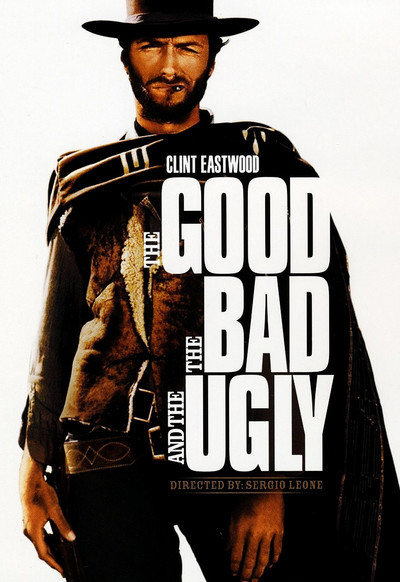
In an essay on the 1966 film, The Good, the Bad and the Ugly, critic Roger Ebert writes about that narrative frame. He begins:

A vast empty Western landscape. The camera pans across it. Then the shot slides onto a sunburned, desperate face. The long shot has become a closeup without a cut, revealing that the landscape was not empty but occupied by a desperado very close to us.

In those opening frames, Ebert continues, Italian Director Sergio Leone established a rule he follows throughout the film.

The rule is that the ability to see is limited by the sides of the frame. At important moments in the film, what the camera cannot see, the characters cannot see, and that gives Leone the freedom to surprise us with entrances that cannot be explained by the practical geography of his shots.

With appreciation to Ebert and Leone we must ask, what surprises lurk in the presidential race over the next nine months?

One recent example has largely escaped MSM attention: A scathing putdown of Bernie Sanders by Steven Salaita, an academic who earned pro-Palestinian street cred in his lengthy encounter with pro-Israeli forces.

The Chicago Tribune reported in November, 2015,  on the final settlement the University of Illinois reached with Salaita after his contract was terminated.

The University of Illinois’ decision last year to revoke a job offer to controversial professor Steven Salaita will cost more than $2 million, including an $875,000 settlement that trustees approved Thursday.

Salaita, who lost a tenured faculty position after posting a string of anti-Israel comments on social media, will get $600,000 in the deal in exchange for dropping two lawsuits against the university and agreeing he will never work at U. of I. Salaita’s attorneys will get $275,000.

The settlement — to be paid out within 30 days — is on top of the $1.3 million in legal fees the university has spent during the past 14 months on Salaita-related issues, including a federal suit brought by Salaita that alleged breach of contract and violation of his free speech rights. Trustees voted 9-1 to approve the agreement, in which the university admits no wrongdoing.

Salaita currently holds the Edward W. Said Chair of American Studies at the American University of Beirut.

In his essay for Salon, Salaita wrote,” I won’t vote for Bernie Sanders: His feeble position on Israel is a serious progressive problem.”

It is a huge surprise to find a strong pro-Palestinian academic who reject Sanders with such vehemence. Sanders’ opponent, Hillary Clinton, has exhibited a far stronger pro-Israel stance than Sanders in their respective careers. 

Sanders’ autobiography, An Outsider in the White House, was first published in 1997 as An Outsider in the House when he was a House member. It was reissued, with revisions in 2015, with “White” added to the title.

In both versions Sanders focuses on his passion to confront “wealth and income inequality” in the U.S.

In an afterword to the 2015 edition, John Nichols writes:

Wrangling with the White House and Republican neoconservatives, Sanders was a forceful critic of proposals to send U.S. troops back into the Middle East. At a point in 2013, when Republicans such as Senator John McCain were pushing for intervention in Syria, and when the White House was sending ominous signals, most Democrats in the House and Senate kept quiet. But Sanders kept recalling the rush to war in Iraq, and its consequences. . . 

Sanders’ book is focused solely on his issue of wealth and income inequality. His only reference to his Jewish background comes in brief references to his parents, both Jewish.

The essay by Salaita attacking Sanders, begins with praise for Sanders’ focus on economic imbalance:

Bernie Sanders has run a smart and spirited campaign. Even if he eventually loses the Democratic primary, his rise from virtually nowhere to threaten Hillary Clinton from the left offers much-needed optimism in a time of dismal inequality. His invective against Wall Street is accurate and often courageous. He is the rare candidate who doesn’t traffic in patriotic or religious platitudes.

But I won’t be voting for him.

At no point in his essay does Salaita indicate if his rejection of Sanders covers both the race for the nomination and the general election. He simply blasts Sanders:

Sanders has long supported Israeli colonization, including the worst elements of its military occupation. . . Is it fair to call Sanders an adamant Zionist? Is he a Zionist at all? Does it even matter? How bad is he, really, in the spectrum of U.S. politics, where kowtowing to Israel has long been a prerequisite for the presidency?

. . . Here’s what we know: He’s not a raging ideologue. He doesn’t extol Israel. He hasn’t kissed Netanyahu’s ring. He recently declined to call himself a Zionist. Last year, though, he yelled at pro-Palestine activists and his platform on Israel-Palestine sounds agreeable but reproduces a failed status quo.

In this largely unsubstantiated tirade against Sanders, Salaita makes no reference to Hillary Clinton’s staunch support of Israel. Nor does he appear to understand that members of the House and Senate do not stay elected long without some modicum of deference to Israel. 

In our political presidential process, when the ballots are cast, the choices have been narrowed down, winnowed by earlier primaries and caucuses. Some winnowing also comes from unexpected surprises along the respective campaign trails.

It is up to the voter to watch for those surprises as they spring from outside the MSM frame of reference. Do not watch for the perfect. Watch, rather, for the potential and the possible.

Posted in Bernie Sanders, Hillary Clinton, Israel, John Kerry, Middle East, Movies, Netanyahu, Palestinians, US govermemt | 5 Comments

Hillary or Bernie? I’m With My Friends

by James M. Wallimages

Some of my friends support Hillary; some of my friends support Bernie. Me? I’m with my friends.

I first heard those fence-straddling words of wisdom from a wise old Chicago politician. It is a good way to approach the Hillary Clinton-Bernie Sanders race this early in the year.

Why not wait until a few more states vote before we agree on the strongest candidate to run against whichever Republican emerges from the hard-right options currently wallowing in the muck of the GOP primary and caucus races.

Strong support from minority voters in Nevada and South Carolina (on February 20, 23, and 27) could deliver twin victories to Clinton over Sanders. On Tuesday, March 1, voters in 13 states, American Samoa and Democrats Abroad, will make their decisions between the two Democratic opponents.

If that leader is Clinton, a nagging question must be asked:

Is she too military-minded for the Democratic liberal base she needs to win a general election?

Clinton may look like the strongest candidate to defeat any Republican. But will she take the nation back to the bellicose military policies favored by Israel and corporate military interests? 

Is that a fair question? Maybe not, but Clinton’s critics are asking it, and her strongest supporters are worried about it. 

Sanders has the most enthusiastic supporters, but enthusiasm goes only so far. Regrettably, we know little about Sanders’ foreign policy views.  We do know a great deal about Hillary Clinton’s record. 

Stephen Zunes wrote an essay for the Cairo Review of Global Affairs which offers troubling reminders from her record. 

Zunes is professor of politics and international studies and program director of Middle Eastern studies at the University of San Francisco. His essay is entitled “Hillary the Hawk”.  

He argues that a President Clinton would push this nation back toward militarization of the problems she has faced as Secretary of State.  

“If Clinton wins the American presidency in 2016, she will be confronted with the same momentous regional issues she handled without distinction as Obama’s first secretary of state: among them, the civil war and regional proxy war in Syria; the Syrian conflict’s massive refugee crisis; civil conflict in Yemen and Libya; political fragility in Iraq and Afghanistan; Iran’s regional ambitions; the Israel-Palestine conflict; and deteriorating relations with longstanding allies Israel, Egypt, and Saudi Arabia.

“There are disagreements as to whether Clinton truly embraces a neoconservative or other strong ideological commitment to hardline policies or whether it is part of a political calculation to protect herself from criticism from Republicans who hold positions even further to the right.

“But considering that the Democratic Party base is shifting more to the left, that she represented the relatively liberal state of New York in the Senate, and that her 2008 presidential hopes were derailed in large part by her support for the Iraq war, it would probably be a mistake to assume her positions have been based primarily on political expediency.

“Regardless of her motivations, however, a look at the positions she has taken on a number of the key Middle East policy issues suggest that her presidency would shift America to a still more militaristic and interventionist policy that further marginalizes concerns for human rights or international law.”

Clinton, then a senator from New York, was among a minority of Democrats who supported President George W. Bush’s request for congressional backing to attack Iraq.

In her 2002 senate speech she said she was persuaded that Saddam Hussein was moving toward a nuclear capability. In voting with Bush she said her vote was one “cast with conviction”.

She has since said the vote “was a mistake”. But, she did cast it, in her own words, “with conviction”. Barack Obama, then an Illinois state senator, spoke against the war.

In casting that vote “with conviction”, she was in harmony with Israel’s eagerness to attack Iraq. Bernie Sanders, a secular Jew, and also a member of Congress, voted against the Bush request.

C-SPAN has posted a ten-minute video clip (below) that contrasts the different positions taken in 2002, first by Sanders, and then by Clinton. 

That was 2002. The “shock and awe” attack on Iraq followed in early 2003.  Now, 14 years later, Clinton and Sanders meet on a 2016 political battlefield to determine which of them should be the Democratic nominee.

Bernie Sanders has said very little about what he would do to negotiate this nation through the minefield of conflicts with which Hillary Clinton dealt during her years as Secretary of State. His vote against the Iraq war is encouraging. His reluctance to speak in depth on contemporary issues is discouraging.

Sanders’ raison d’être, his passion for correcting the imbalance in the nation’s economy, is a worthy cause, badly needed. Thus far, however, as a candidate, he has failed to direct much of that passion toward ending Israel’s occupation, the root cause of the conflicts the next President will face in the Levant. 

Clinton’s insistence on taking a gun to the diplomatic bargaining table might help her with her neoconservative friends and her pro-Israel financial backers who are eager to embrace American military solutions to every Levant problem.

Pistol-packing diplomacy excites Israel’s loyalists, but it does nothing to restore any semblance of freedom to a captive and long-suffering Palestinian population.

Which of the two candidates is best prepared to negotiate a foreign policy in the best interest of a war-weary American public, and at the same time, is in the best interest of war-weary nations saddled with the empirical militaristic policies of successive U.S. administrations?

Which of the two candidates is best equipped to win a general election in November?

Some of my friends think it is Hillary; some of my friends think it is Bernie. Me? I will stick with my friends until I have had time to study this a bit longer. You got any better ideas?

The picture of Hillary Clinton at top is a screen grab.

Posted in Bernie Sanders, Hillary Clinton, Middle East | 10 Comments