The Goldstone Affair: The Loyal Zionist Judge Who Came In From the Cold

by James M. Wall

I have been studying an excellent documentary, Occupation 101, an examination of the root causes of the Israel-Palestine conflict.

The case of Judge Richard Goldstone broke too late to make it into the film, but I have a suggestion for the film makers: Start work on a sequel. Call it The Goldstone Affair: The Loyal Zionist Judge Who Came in From the Cold.

On April 1, 2011, Goldstone wrote an op ed column for the Washington Post in which he offered a light clarification of the negative report of Israel’s 17-day 2008-09 military assault in the Gaza Strip.

Goldstone’s Post mea culpa gave Israel’s current tribal leaders the opening they demanded, an opening which they are now exploiting to rewrite the script of what actually happened in the Gaza assault.

The mea culpa, with clarifications that are skimpy in the extreme, brought public humiliation to Goldstone. It also warns any Zionist loyalist who enters enemy territory that there are consequences for disloyalty.

The hasbara (public information/propaganda) specialists in the current Israeli government found a few morsels in Goldstone’s 500-word newspaper column to feed to the media and to appease American PEPs (progressive except for Palestine) who had been reeling for months over the detailed 552-page (including annexes) Goldstone Report.

Those hasbara specialists, or someone, may even have suggested the column’s most effective line to Goldstone. It sounds more like a spin-doctor’s phrase than something that would have come from the computer of a conservative South African Jewish judge.

The line the media seized upon is the one in which Goldstone, or whoever shaped the final version (a Post copy editor, perhaps?) was this: “If I had known then what I know now”.

Exactly what would have changed in the report, if he had “known then what I know now?”

Roger Cohen has some suggestions. He calls the column a “bizarre affair”:

[Goldstone] says his report would have been different “if I had known then what I know now.” The core difference the judge identifies is that he’s now convinced Gaza “civilians were not intentionally targeted as a matter of policy.”

His shift is attributed to the findings of a follow-up report by a UN committee of independent experts chaired by Mary McGowan Davis, a former New York judge, and what is “recognized” therein about Israeli military investigations. Well, Goldstone and I have not been reading the same report.

McGowan Davis is in fact deeply critical of those Israeli investigations — their tardiness, leniency, lack of transparency and flawed structure. Her report — stymied by lack of access to Israel, Gaza or the West Bank — contains no new information I can see that might buttress a change of heart.

On the core issue of intentionality, it declares: “There is no indication that Israel has opened investigations into the actions of those who designed, planned, ordered and oversaw Operation Cast Lead.”

Cohen concludes that whatever it was that prompted the Goldstone column remains “a mystery”.

Why did Goldstone do it?  He knew his Zionist masters would manipulate his column for their benefit, not for his.

Was he so naive about Zionist politics that he did not know that in the final days of the Gaza assault Israel was already preparing its hasbara (propaganda) campaign to counteract the international negative impact of the assault?

Could he have missed this January 15, 2009, Ha’aretz news report, written by Barak Ravid, that revealed the government’s plans to prepare for the aftermath of its murderous assault on Gaza’s civilian population?

The Foreign Ministry has created a special task force to prepare for the aftermath of the Israel Defense Forces’ Gaza operation. . .  .  .

The working assumption is that Israel has suffered a blow to its image in the West in the wake of heavy civilian casualties in the Strip. Israeli officials believe after the fighting stops and foreign journalists are allowed entry into the territory that negative sentiment toward Israel will only grow as the full picture of destruction emerges.

These tribal leaders know how to plan ahead.

What they had not counted on was that the UN investigation of this destruction would be led by a South African judge with impeccable Zionist credentials.  Unfortunately for Israel, he was also honest, a jurist who followed the facts as they emerged.

The result was the Goldstone Report that brought world approbation, and possible criminal charges, against Israel’s leaders and its soldiers.

Zionism’s hasbara operatives plugged that loophole by exploiting Goldstone’s devotion to Zionism.

The parallel between the judge who wanted to go home to Zionism, and John LeCarre’s 1961 novel,  The Spy Who Came in From the Cold, is not absolute.  But LeCarre’s Alec Leamas and Richard Goldstone, have this in common: They were both gripped by a love which blinded them to the reality that their masters were not be trusted. (Richard Burton. who played Leamas in the 1965 Martin Ritt film, is shown in the poster at left.)

William Boyd wrote an essay for the London Guardian (July 24, 2010) about LeCarre’s spy:

Leamas, betrayed, hoodwinked, terminally fatigued, is in a state of existential despair at the end of the novel. The opportunity to escape means nothing to him — but it does mean everything to him that the girl he is with, Liz Gold, innocent, unwittingly drawn into the Circus’s plotting — should escape. Leamas knows unequivocally at the end of the book that he is going to be betrayed again  …. but he tries all the same to thwart that betrayal.

Boyd sets up the ending of the novel:

Leamas has been sent into Communist East Germany by agents of the British Secret Service “who have used Liz as brutally and pitilessly as they have used their trusted agent Leamas.”

Judge Goldstone’s fatal weakness is that the Zionism he loves is no longer the Zionism he once knew. The British Secret Service that sent Leamas into the cold is also not the Service a younger Leamas signed up to serve.

Leamas’ spy masters knew he would do anything to save the woman he loved. Goldstone’s Israeli minders knew what motivated him. His home and his family are in South Africa. His tribe is Zionism.

The American Jewish publication Forward writes that when Goldstone returned home to South Africa last May for his grandson’s bar mitzvah — an event he almost missed because of protests planned against him — he also attended a secret meeting.

The meeting was conducted by Avrom Krengel, chairman of the South African Zionist Federation. Krengel aggressively critiqued the Goldstone report at the meeting.

Krengel had this to say, later, about Goldstone:

“It’s interesting with Goldstone. He’s not an assimilated Jew. He very much regards himself as, and wants to be, part of the community. That always came into play. He’s not a Finkelstein or Chomsky.”

Exactly, just as the British Secret Service knew their spy, so do Israel’s tribal leaders know their judge.

The Forward writes that the May, 2010 meeting between Judge Goldstone and ten members of the South African Jewish community “had a profound impact on Goldstone, according to several participants who were there.”

Debating face to face with the community really shook him,” said David Saks, associate director of the South African Jewish Board of Deputies, who received a read-out on the meeting right after it took place. “When he saw the extent of the anger and he couldn’t answer the accusations against him… I think he realized he was wrong.

.  .  .  It was a heavy meeting. They went in very hard against him. There were no smiling handshakes afterwards. Avrom’s opening statement was pretty merciless.”

In my American Southern White Protestant tribe, we would refer to this confrontation as Goldstone’s “come to Jesus” meeting.

Daoud Kuttab, a leading Palestinian journalist, had more to say about Goldstone’s meeting in South Africa: He wrote in the Jordan Times:

It is very rare that a judge would actually go back on a decision or judgement even if that was not a judicial act in the normal sense of the word. A mea culpa using an op-ed after a committee report has been submitted is extremely unusual. This is where the case becomes scary.

For months, the social persecution of Judge Goldstone has been widely publicised. The head of the South African Zionist Federation, Avrom Krengel, boasted to Yedioth Ahronoth’s Aviel Magnezi how the Jewish community pressured Goldstone: “He suffered greatly, especially in the city he comes from. We took sides against him, and it encourages us to know that our way had an effect.”

Kuttab also reported that Goldstone was allowed to attend his grandson’s bar mitzva only “after the judge agreed to meet with the leaders of the South African Zionist Federation”.

Whatever initially might have been right about Zionism as a movement, the Goldstone affair is a further indication that Zionism has been badly misused by Israel’s current leadership.

Ha’aretz writer Meirav Michaeli correctly identifies the paranoia that appears to motivate Israel’s leaders:

It is often said that a wise man learns from the mistakes of others, while a fool learns from the mistakes of his own. Those who do not learn from their own mistakes confirm that insanity is repeating the same act while expecting a different result. In our case, this insanity is an insanity of persecution.

Our belief that “the world is against us” has in recent years turned into a real obsession, a sense that we are constantly under attack, a fear of delegitimization, an insanity of persecution. It is unclear whether Israel is truly capable of differentiating between a real enemy and those who wish it well, or if it is simply complaining about being persecuted because it believes this serves its interests.

It is not “good for the Jews” when a good man like Richard Goldstone is forced to come in from the cold to a Zionism that has betrayed him.

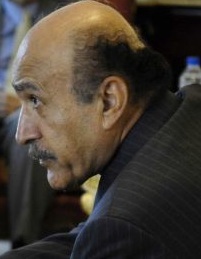
The photo of Judge Goldstone is by Getty/Images.  The photo of Meirav Michaeli is from Ha’aretz.

Posted in Media, Middle East Politics | 9 Comments

If Obama’s Libyan Intervention “Succeeds”, Will Palestine Be Next?

by James M. Wall

New York Times columnist Roger Cohen was one of many media liberals who was surprised to find himself supporting the President’s decision to intervene in Libya.  He had not expected Obama to embrace American exceptionalism with such enthusiasm.

Cohen is not speaking of the neo-conservative self-righteous, superior exceptionalism, but of an American exceptionalism “as a transformative moral beacon to the world.” Cohen figured the term itself made the president “uneasy”. He explains:

And yet, and yet, this cautious president, who has been subtly talking down American power — with reason — has involved the nation in a new conflict in Libya, one in which his own defense secretary holds that the United States has no “vital interest.” He has joined a long line of U.S. leaders in discovering the moral imperative indivisible from the American idea.

Michigan professor Juan Cole, another liberal who supported President Obama’s air war intervention over Libya, is now equally enthusiastic over his decision to pull back in favor of NATO.

Cole’s Informed Comment column on Friday points to two significant developments which suggests a political solution could be imminent in Libya: The US withdrawal from active military participation and the growing number of inner-circle defections away from Muammar Quaddafi.

The situation remains fluid, so this optimism could disappear overnight. There also remains the presence of American CIA operatives on the ground in Libya, assisting the rebel forces and helping to identify targets for the allied bombing runs. Technically, these operatives are not US military, so the US pledge to have “no boots on the ground” has not been violated.

Cole writes:

The slow, cautious war of attrition from the air against Qaddafi’s forces that undertake attacks on civilians in rebel-held cities will continue. Qaddafi’s closest associates are fleeing from Tripoli in terror of being held accountable for his crimes against humanity when his regime ultimately falls.

Some of these developments on Thursday drew howls of outrage from hawks such as Senators John McCain and Lindsey Graham, which is how you know that they are promising developments. It is better that the intervention in Libya not be branded a US one, but rather be seen as the effort of the 28 nations of NATO plus the Arab League.

Following the change in Libya, it is not too early to look northward toward Israel. Knowing of Juan Cole’s support for the Palestinian struggle, it would be assumed he would be even more enthusiastic over a non-violent, second intervention in Israel and the Occupied Territories.

If Libya does stabilize, President Obama will be on a roll, all the more reason he could decide he will not need congressional backup to end Israel’s irresponsible domination of the region.

Robert Burns,  the Washington-based National Security Writer for the Associated Press, described the disappointment of members of Congress who had earlier supported the President’s decision to engage in the air war.

“Odd,” “troubling” and “unnerving” were among critical comments by senators pressing for an explanation of the announcement by Defense Secretary Robert Gates and Joint Chiefs chairman Adm. Mike Mullen that American combat missions will end Saturday.

“Your timing is exquisite,” Sen. John McCain, R-Ariz., said sarcastically, alluding to Gadhafi’s military advances this week.

Gates and Mullen, in back-to-back appearances before the House and Senate armed services committees, also forcefully argued against putting the U.S. in the role of arming or training Libyan rebel forces, while suggesting it might be a job for Arab or other countries.

We can be certain that Israeli Prime Minister Bibi Netanyahu is watching to see if the Libyan intervention ends as a “success”. From his perspective, “success” would be measured by its impact on Israel. Because these uprisings are a new phenomenon, Netanyahu is apprehensive about what to expect next  from the Arab Spring.

Israel’s greatest fear is that the Palestinian civil society within Israel, and in the Occupied Palestinian Territories, will continue to expand and gain confidence.

Ramzy Baroud, editor of the Palestine Chronicle, describes what it is about the growing impact of civil society that frightens Israel’s leaders.

.   .    .The concept of civil society is often used as a meeting point between other forces, including a healthy and fully functional state. In the Palestinian scenario, however, with the occupation, siege and regular assassinations and imprisonments of political leaders, such a state is missing.

This reality has skewed the traditional balance, resulting in a political void engineered by Israel to de-legitimize Palestinian demands and rights. It is most impressive, to say the least, that representatives of Palestinian civil society have managed to step up and fill the void.

This success would have never been possible without individuals from international civil society, including Rachel Corrie, the Turkish heroes aboard the Mavi Marmara, and the many Israeli activists and organisations who are currently being targeted by the rightwing government of Binyamin Netanyahu and Avigdor Lieberman.

Israel has shown alarm over the growing importance of civil society by reacting on many fronts. In Palestine, it has imprisoned Palestinian non-violent resisters. In Israel, it has cracked down on funds received by Israeli human rights groups. And internationally, it has pushed forward a media campaign of defamation.

In September, the United Nations will consider a proposal to make the State of Palestine a UN member in full standing. The new state would include all of the West Bank, Gaza and East Jerusalem. The New York Times calls this vote  “a move that could place Israel into a diplomatic vise”.

Why? Because Israel would be occupying land belonging to a fellow United Nations member, an ugly and brutal reality called The Occupation.

Palestinian civil society has been steadily building toward this UN vote through non-violent actions during a period when the US indulged Israel as a rich parent might indulge a spoiled child, with generous gifts of military funding and protective political cover.

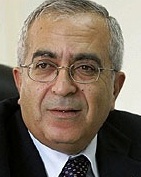
The Palestinian Authority cabinet, headed by Prime Minister Salam Fayyad, pictured right, has worked with international civil rights groups and governments, to urge support for a Palestinian state.

At last count, 112 members of the UN have endorsed a Palestinian state, a result achieved by the efforts of the PA, in spite of the occupation, to build a government structure which has gained the trust of the international community. For more on the PA plan developed under Fayyad’s direction,  click here for Elizabeth Braw’s Huffington Post interview with the prime minister.

Fayyad’s program was published in 2009 under the optimistic title, “Palestine: Ending the Occupation, Establishing the State.”

At the time, as I wrote in Wall Writings, September 9, 2009, Palestinian Journalist Daoud Kuttub described the plan as “brilliant”.

What impressed Kuttub, as he wrote at the time in Huffington Post, was the fact that:

Palestinians have finally started to act in a different way. Instead of cursing the occupation, the new strategy is aimed at building up the desired Palestinian state. The idea is to force the Israelis to the negotiating table rather than beg them to come. The way to do that is to work for a state as if there were negotiations.

Fayyad’s plan has received strong international support through the “boycott, divestment and sanctions” (BDS) movement, which has given international activist groups a tangible way to support the creation of a Palestinian state. This movement began in Palestine in 2005,  modeled after the successful anti-apartheid campaign in South Africa.

Israel’s leaders see, and fear, this tangible non-violent resistance to the occupation. American church leaders are familiar with this fear, as anyone within the churches can testify.

The moment any church body decides to embrace BDS as a non-violent tactic, or even suggests a conversation on the issue, Israel’s US supporters show up at the church door armed with their Hasbara (propaganda) weapons of attack, an arsenal which always includes a dash of Holocaust guilt and the ever present threat to play the”anti-semitic” card.

Ramzy Baroud writes that Israel’s Hasbara campaign has backfired. Instead of de-legitimizing a future Palestinian state,

.  .  .   it is the Israeli occupation that is now being de-legitimized, its own government that is being isolated, and its own country’s reputation that is constantly compromised. The power of civil society has indeed surpassed that of military hardware, archaic and exclusivist historical discourses, propaganda and political coercion.

The Palestinian civil society uprising is an uprising which President Obama must embrace. The President showed caution and wisdom in his limited use of force in Libya. In confronting Israel he does not need to rely on the force of arms. What he does need is the power of a non-violent movement designed to eradicate injustice.

Israel’s occupation has been de-legitimized, its own government increasingly isolated, and its own country’s reputation has been compromised.  It is for Israel’s own good that President Obama must support Palestinian civil society and bring a permanent end to Israel’s illegal and immoral military occupation.

The Arab Spring is all about overthrowing the forces of oppression, wherever and in whatever form these forces exist.  Israel’s occupation is one of these forces of oppression. End it, Mr. President, end it peacefully.

The picture of President Obama is by Saul Loeb/AFP/Getty Images. It is from the Shadow Government blog on the Foreign Policy web site.

The photo of graffiti art by Banksy on the Palestinian side of Israel’s separation wall, is in the East Jerusalem district of ar-Ram. The photograph is by William Parry, whose book Against the Wall: The Art of Resistance in Palestine will be published in the US by Lawrence Hill Books/Chicago Review Press this spring.

Posted in Middle East Politics | 8 Comments

Free Congressional Trips to Israel: Learning to Embrace Your Narrative

by James M. Wall

On March 23, the Chicago Tribune presented one of its periodic reports on  overseas travel by Chicago area members of the US Congress. The country most often visited? Israel.

The Tribune‘s interest was primarily on what motivated the trips. Were they junkets to resorts or would something really be learned by actually visiting other nations?

Trips to Israel are not junkets. They are described as “educational seminars”.

The report revealed that US Senator Dick Durbin made 14 overseas trips in 2009-2010.  He did not, however, visit Israel. No need, Durbin has been one of Israel’s strongest allies in Congress since he first won the House seat previously held by Paul Findley.

Illinois’ junior senator, former House member Mark Kirk, did go to Israel in 2009-2010, as did one other Republican, House member Peter Roskam, now occupying the seat formerly held by Henry Hyde. All other Chicago area members who traveled to Israel in 2009-2010, were Democrats, members who were either new or in need of some additional education on the Israeli narrative. These members were Debbie Halvorson, Daniel Lipinski, Jesse Jackson, Jr, Mike Quigley. Melissa Bean, and Bill Foster.

Jackson is the son of Jesse Sr. and Quigley now holds the seat once occupied by former Obama chief of staff, and Chicago’s new mayor, Rahm Emanuel, who needs no introduction to travel to Israel. Three of those six Democrats lost their seats in 2010: Halverson, Bean and Foster. Mark Kirk has left the House for the Senate where he occupies Barack Obama’s old seat.

The organization that funded, planned, organized and directed the trips to Israel in 2009-2010 was the American Israel Education Foundation, a tax-exempt affiliate of AIPAC.

We will hear more from AIPAC May 20-21, when AIPAC conducts its annual Policy Conference in Washington. Since presidential primaries are less than a year away, this year’s conference should attract every living Republican presidential candidate and a large majority of the members of Congress, including some members who have recently traveled to Israel.

One recent traveler was former Alaska Governor Sarah Palin. Governor Palin was escorted on her visit to the Old City of Jerusalem  by Western Wall Rabbi Shmuel Rabinovitz (left in photo here) and Israeli lawmaker Danny Danon (right) as she emerged from the Western Wall tunnels in Jerusalem’s Old City, March 20. The closest Palin got to the West Bank was to the checkpoint between Jerusalem and Bethlehem.

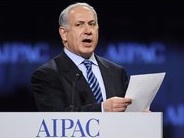
Also expected to be on hand for the May AIPAC conference will be Israeli officials, beginning with Prime Minister Bibi Netanyahu, pictured above addressing the 2010 Policy Conference.

In John J. Mearsheimer’s latest book, Why Leaders Lie: The Truth About Lying in International Politics, he examines the importance of national narratives.

Mearsheimer is the other half of the team (with Steve Walt) that wrote the book, The Israel Lobby, which made such an impact on the formerly impenetrable Iron Wall that protects the “Israel narrative as the only truth” in American culture.

Mearsheimer writes that elites create and dominate “a nation’s discourse”, a version of the state’s founding and ongoing purpose that is a mixture of deliberate lies and patriotic enthusiasm.  They do so for two reasons: False stories about the past “help create a powerful sense of nationhood, which is essential for building and maintaining a viable nation-state.”

In particular, these fictions help give members of a national group the sense that they are part of a noble enterprise which they should not only be proud of, but for which they should be willing to endure significant hardships, including fighting and dying if necessary.

These dominating elites first develop the myths, and then control each succeeding generation through internal education that constantly reinforces the myth of the nation’s founding. In the US, think the Fourth of July, Memorial Day, Veterans Day, Presidents’ Day.

The internet-inspired uprisings in the Arab world is a concern to the Israeli authorities, as an increasing number of younger Jews in Israel have joined hands with Palestinians in protests and demonstrations against Israel’s current right wing government with its tight control and denigration of Palestinians.

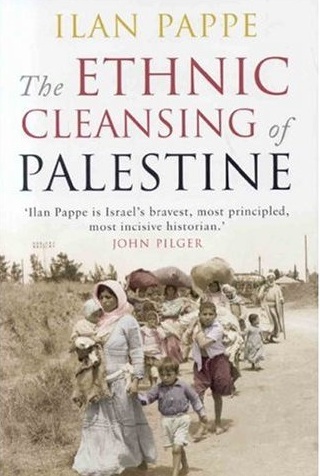
Ilan Pappe, the Jewish scholar who literally wrote the book on Israel’s ethnic cleansing of Palestine, wrote in the March 22 issue of the political newsletter Counterpunch, that the current Israeli government has been rapidly expanding its “apartheid laws” against Palestinians inside Israel and in the Occupied Territories.

The most recent apartheid law passed by Israel’s Knesset “allows Jewish settlements built on state land inside Israel not to admit Israeli Palestinian citizens as residents and  legalizes the wish of these new settlers not to sell land to  the Palestinians citizens of the state.”

This is one of many such laws passed recently (the loyalty oath law that turns the Palestinians in Israel to second class citizens by law and one which does not allow them to live with their Palestinians spouses from the occupied territories are two of the more famous apartheid laws passed recently).

The new law, like the previous others,  institutionalize the Apartheid State of Israel,  or for short, ASOI.

ASOI is now one of worst apartheid regimes in the world. It controls almost all of Palestine (apart from Gaza which it imprisoned hermetically since 2005). .  .  .

Its policies against the discriminated native population, now composing nearly half of the overall population in ASOI,  include atrocities such as  barring people from using water sources, from cultivating their fields, building more houses, from getting to work, schools or universities and it bans them from commemorating their history and in particular the 1948 Nakba.

This treatment of a sizable minority of Israeli citizens and Palestinians in the OPT, is an affront to the national myth of Israel as a righteous democracy. The national myth is being exposed as a fraud by the actions of its leaders.

This, in turn, makes it even more imperative that the national Israeli myth be reinforced in other nations.

John Mearsheimer points out any new state must look for support and alliances with those nations who have within their borders “an influential diaspora” to which the new state (in this case, Israel) can export and reinforce its national founding myth. The best example of this phenomenon involves Israel and the American Jewish community.

There was no way that the Zionists could create a Jewish state in Palestine without doing large-scale ethnic cleansing of the Arab population that had been living there for centuries. This point was widely recognized by the Zionist leadership well before Israel was created.

The opportunity to expel the Palestinian came in early 1948 when fighting broke out between the Palestinians and the Zionists in wake of the UN decision to partition Palestine into two states. The Zionists cleansed roughly 700,000 Palestinians from the land that became Israel, and adamantly refused to let them return to their homes once the fighting stopped.  . . .

Not surprisingly, Israel and its American friends went to great lengths after the events of 1948 to blame the expulsion of the Palestinians on the victims themselves. According to the myth that was invented, the Palestinians were not cleansed by the Zionists; instead, they were said to have fled their homes because the surrounding Arab counties told them to move out so that their armies could move in and drive the Jews into the sea.

The movie industry has been a reliable diaspora ally. Movies shape a culture, reinforcing the control that AIPAC, which is the American diaspora command center, has over US media, politicians and churches.

At the slightest sign that any narrative contrary to the Israel narrative might emerge in a film, AIPAC and its media allies go into their first line of attack: This Film is Not Yet Balanced.  That usually frightens away film makers and distributors, until now.

Miramax, a company with an advertising budget ample enough to cover a two page ad in the New York Times, has entered the game. Miramax also has the media outreach to place directors and stars of films it is promoting into such outlets as the Charlie Rose television interview program. Miramax has won four best picture Academy Award Oscars, including its most recent winner, The King’s Speech

Miramax is distributing the new film Miral in North America. Is it possible that Miral, which has just opened in New York and Los Angeles, might emerge as the film with the power to threaten the decades old power of Exodus? Probably not, but the Israeli government and its US allies are taking no chances.

Freida Pinto, (shown at right) who was introduced to world audiences in Slumdog Millionaire, plays Miral in the film.

What makes Miral such a threat to Israel’s narrative myth is that Miral begins with the Deir Yassin massacre and ends by commemorating the history of the Palestinian people and the Nakba.

Sandy Tolan, an associate professor at the Annenberg School for Communication and Journalism at USC and the author of The Lemon Tree: An Arab, a Jew, and the Heart of the Middle East, considers the way in which the novel and movie, Exodus, has shaped the Israeli narrative in American culture. He wrote in Al Jazeera:

Most Americans, Jew and Gentile, grew up with the Leon Uris history of the struggle for the Holy Land. Exodus chronicles the heroic birth of Israel out of the ashes of the Holocaust. There the story ends; there is no other narrative.

This politically convenient and magnificently incomplete version of history remains the dominant American narrative of the tragedy known as Israel and Palestine.

Despite the cracks in that narrative in recent years, the über story of Exodus – Uris’ 1958 mega-bestseller, and the subsequent Hollywood film starring Paul Newman – still holds a tremendous grip on the American imagination. It may be one of the most influential pieces of fiction ever written in the US.  .  .  .

In Exodus there are only heroic or victimised Jews; only malicious, pathetic or cowardly Arabs, driven not by a love of their land but by fear and manipulation. As Uris tells the story, the Palestinians have no legitimate claim to their homeland: “If the Arabs of Palestine loved their land, they could not have been forced from it – much less run from it without real cause.”

Here there is no Deir Yassin massacre; no “Plan Dalet” and its blueprint for sowing fear and fire in Arab villages; no Nakba and its dispossession of 750,000 indigenous Palestinians.

How eager is Israel to protect its national myth? Consider a bill now moving through Israel’s Knesset that would make it illegal for an individual or an organization to endorse and support the Boycott, Divestment and Sanctions movement.

A word of caution on your next trip to Israel: If you want to make it safely through the Tel Aviv airport, leave your BDS buttons at home. There will be buttons available when you reach your destination.

If you have a DVD of Miral in your carry-on, and your interrogator objects, offer it as a gift to her. Consider it as missionary outreach.

The Palin picture above is from Reuters. It was taken by Ronen Zvulun. The picture of Netanyahu was taken in Washington by Jonathan Ernst, also of Reuters.

Posted in Middle East Politics, Movies | 17 Comments

“Miral” Asks Questions The Israel Lobby Does Not Want You to Hear

by James M. Wall

In an early scene from the new motion picture Miral, the school principal Hind Husseini, tells a group of teenage Palestinian girls that “an uprising some people call an intifada has started”.

Miral whispers to a student next to her: “It means ‘stand up straight'”.

Which is precisely what Miral does in this film now under attack from leading organizations in the Israel Lobby.

Miral’s mother is dead. Her father enrolls her in Jerusalem’s Dar El Tifel, a school and an orphanage begun and run by Hind Husseini, a cousin of Feisal Husseini, and a member of a prominent Palestinian family.

The film is  is based on an autobiographical novel written by Rula Jebreal, a Palestinian journalist.

Miral had its official US opening at the United Nations auditorium March 14. (It had earlier been shown in film festivals around the world).

Prior to the UN screening, the AJC hit the film with the tactics all too familiar to anyone or any group which schedules an event, film, or discussion that does not meet the AJC seal of approval.

An American Jewish Committee press release issued before the screening quoted AJC Director David Harris, who complained that “the Israeli Mission to the UN was not even given the minimal courtesy of being consulted in advance about the wisdom of showing such a film”.

Adam Horowitz, reporting for Mondoweiss, concluded:

As per usual, the AJC is only echoing the Israeli government, which has called the premiere “scandalous” and is protesting it within in the UN. .  .

A member of the Israeli delegation to the UN who had seen the film told The Jerusalem Post on Sunday that the film is “scandalous.”

“There’s no historic context, not at all, nothing,” the diplomat said, noting that the film was laden with instances of Israeli cruelty to Palestinians. “You can see us bombing a house in the film, but you don’t see why – maybe this was the house of a suicide bomber that killed 30 Israelis. We don’t know.”

Miral is scheduled to open in US theaters later this month, the Lobby permitting. And even if the film gets by the Lobby, will you find it on your local mall screens?

You should.  A movie about a teenage girl falling in love with a revolutionary fighter, facing torture and rebelling against both her father and her school principal?  Sounds like just the sort of picture your average American teenager might want to see. It also  has the advantage of being a true story a younger generation needs to see.

Will you be able to see it for yourself, and perhaps share the experience with your teenagers?  (The film is now rated PG-13, after an appeal reduced it from an R rating).

Whether the film makes it to a theater near you will depend on whether the AJC, and its allies in the Israel Lobby are able to persuade, or possibly, coerce, your local theater manager to book a different film.

The Lobby campaign against Miral’s UN premiere failed. The evening was a smashing success, an outcome the AJC wanted to avoid.

The Agence France Press (AFP) reported that the screening had all the trappings of a major Hollywood red carpet opening.

Sean Penn, Robert De Niro, Josh Brolin and Steve Buscemi on Monday turned out to support award-winning American-Jewish director Julian Schnabel at the premiere of Miral, the story of two Palestinian women after the creation of Israel in 1948.

The Israeli mission to the UN had said that showing the movie in the UN General Assembly hall was “clearly a politicized decision” that “shows poor judgment and a lack of even-handedness.”

But UN General Assembly president Joseph Deiss of Switzerland turned down the Israeli request to cancel the event. A spokesman said Deiss hoped that showing the film would “contribute” to a settlement in the Israeli-Palestinian conflict. . . .

The film, with Indian actress Freida Pinto of Slumdog Millionaire fame in the lead role, is based on an autobiographical novel by Palestinian journalist Rula Jebreal that traces the Arab-Israeli history from a Palestinian perspective.

Like Jebreal, the lead character Miral grows up in an orphanage in East Jerusalem set up by a socialite from a wealthy Palestinian family, who one morning in 1948 came across 55 children who escaped a village taken over by radical Jewish militants.

The “socialite” (a term she would not like) is Hind Hussenni, who rescued 55 children whose families were killed at Deir Yassin. They did not “escape”. They were driven in an Israeli army truck to Jerusalem where they were left on the street.

Julian Schnabel is a New York-based Jewish painter who has only recently applied his artistic eye to films. In  addition to the 2007 Cannes prize winning, The Diving Bell and the Butterfly, he directed Basquiat, the true story of a young American painter, a film praised by the late Chicago Tribune critic Gene Siskel as “one of the year’s best movies”.

His third film, Before Night Falls, was based on the true story of Cuban poet Reinaldo Arenas, who like Basquiat, died at an early age. Javier Barden portrays Arenas in a deeply moving performance.

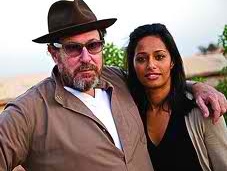
In a recent interview, Schnabel, pictured here with the Rula Jebreal, was asked to contrast his view of the occupation before, and after, making Miral.

He responded:

It was an epiphany. I was totally naïve, totally in the dark and I believe so many of the American Jewish population are totally in the dark. We cannot believe that a Jewish person would behave like that. It’s not the Jewish way. We have suffered so much that if anybody should understand the Palestinian problem, it should be Jewish people. I was so disappointed and ashamed at certain moments.

I was at the airport one day, leaving with Rula. I respect the security, when they check your bags. But they took her bags and put them through an X-ray machine not once but three times. We went to a second checkpoint and they made her strip and, the last minute, let her come on the airplane Jon Kilik [the film’s producer] and I were taking.

And it felt just like apartheid, there was absolutely no reason for it. It was pure racism and prejudice. It was cruel and I was ashamed of everybody in that airport.

Schnabel and Miral have supporters in the more liberal US Jewish press. Danielle Berrin wrote in her blog for the Jewish Journal:

That the film Miral, a portrait of the Israeli-Palestinian conflict seen through the eyes of an orphaned Palestinian girl is earning the early ire of mainstream Jewish groups is not at all surprising.

It makes perfect sense that a film told from the Palestinian perspective would rouse cries of condemnation from the American Jewish Committee, the Simon Wiesenthal Center and others for being “one-sided” as AJC’s executive director David Harris wrote earlier this week, protesting the screening of the film for the U.N. General Assembly in New York (since when do Hollywood movies have an obligation to objectivity?).

Another knee-jerk reaction came from SWC founder Rabbi Marvin Hier who called the screening of the film “anti-Israel” in a widely- released statement.

But this early condemnation is short-sighted and unfair. And not just to the film itself, but to the conversation American Jews might be having about Israel. That conversation, if it has any hope of pushing past party-line radicalism and a peace process stalemate, demands and deserves more than one perspective, as well as a deeper understanding of the ‘other’ – which a film like ‘Miral’ provides.

As the lack of mainstream media coverage of Miral‘s premiere indicates, the Israel Lobby continues to intimidate American journalists and politicians, but there is also an increasing number of American Jews who are beginning to reject the one-sided rigidity of the Lobby.

One major journalist who has escaped the clutches of AIPAC is David Remnick, editor of the New Yorker magazine for 13 years, who wrote in the magazine’s current issue that the 44-year Israeli occupation of Palestine is “illegal, inhumane, and inconsistent with Jewish values”.

Remnick was recently profiled in the Huffington Post by Jewish columnist MJ Rosenberg:

David Remnick, editor of the New Yorker, is arguably the most influential Jewish American journalist. Now 50, Remnick became editor at 37 after an impressive career covering the collapse of the Soviet Union for the Washington Post.

His book about that incredible period, Lenin’s Tomb: The Last Days of the Soviet Empire, won a Pulitzer in 1994.

Over the years he has written about Israel and the Palestinians with some regularity. Although he claims no special expertise in the area (other than being a strongly identifying Jew), his editor’s “comments” indicate that he knows the issue well. In fact, his pieces are usually far more sophisticated than the news and opinion pieces that the supposed experts regularly produce for the prestige newspapers and journals.

Over Remnick’s past 13 years as editor of the New Yorker, his attitudes toward the Israeli-Palestinian conflict have evolved. In the early years, Remnick’s views were decidedly mainstream. Though no Likudnik, he did give Israel the benefit of the doubt in most situations.

Back then, he clearly believed that although Israel often blundered, even badly, it still was sincerely seeking peace. Of course, holding those views was significantly easier a decade or two ago than it is today.

Today those views seem only to be held by either true believers (the “Israel can do no wrong” crowd) or politicians determined to ingratiate themselves with donors whose politics can be summed up as “Israel First.” There aren’t a whole lot of those donors but it doesn’t take very many to intimidate politicians. And intimidated they are. .  .  .

Remnick is treading the path blazed last year by Peter Beinart, another influential Jewish American writer who had been editor of the New Republic at 24.

A year ago, Beinart broke with the AIPAC crowd with a blockbuster piece in The New York Review of Books explaining how the combination of right-wing Israeli policies and the mindless chauvinism of AIPAC and its allies had succeeded in alienating young Jews from Israel.

The inevitable downfall of what Rosenberg calls “the AIPAC crowd” will arrive when more artists like Schnabel and more journalists like Remnick start their own journey to explore why a 44 year Occupation of an entire population has been tolerated by the American government.

In his interview with Deadline: New York, Schnabel describes his journey of discovery.

I didn’t understand the implications at the beginning of this journey. I never make a movie to illustrate what I already knew, I make a movie to find out about my subject, whether it’s discovering Cuba by making Before Night Falls or learning about locked-in syndrome making The Diving Bell And The Butterfly. I won a Sloan Award  for science. I don’t know a damn thing about science but I know how to ask questions.

For a preview of the movie Miral, click below.  And then tell your local theater you want to see the film.

Posted in Media, Middle East Politics, Movies | 13 Comments

Fear Goes Away When the Desire To Act for Liberation Is Shared By Others

by James M. Wall

In 1968, American civil rights organizer Bayard Rustin wrote,

“We would be mistaken to think that the only desires of young Negroes today are to have a job, to have a decent house, to be well educated, to have medical care.

All these things are very important, but deeper and more profound is the feeling of young Negroes today—through all classes, from the lumpenproletariat to the working poor, the working classes, the middle classes, and the intelligentsia—that the time has come when they should have power, a voice in the solution of problems which affect them.”

Helene Cobban, for many years the Middle East foreign correspondent for the Christian Science Monitor, recently found this Rustin passage, which she described  as a “great, short piece of writing by the African-American, gay, Quaker activist”.

The passage was written by Rustin for his 1968 book, Down the Line. Rustin came to Cobban by way of Egypt, specifically from the Egyptian blog, Baheyya.

The connection between the aspiration of Palestinians today and the American civil rights struggle, was described by Laila El-Haddad, the author of a recent book, Gaza Mom:

What the Palestinians in Gaza are suffering from is not restrictions on their food, it is restrictions on their freedom!

In her Cairo-based blog, along with the Rustin quote, the blogger Baheyya included the picture below of a large crowd of protestors in Sanaa, the capital of Yemen. The protestors were demanding an end to social inequality, vote rigging, and the chokehold of president Ali Abdullah Saleh’s ruling party. I like to think Bayard Rustin would approve. 

From Rustin to Baheyya to El Haddad to Cobban, the connections demand to be heard. The writer of Baheyya, by the way, explains in her blog profile that she chose the title of her blog because:

“Baheyya is an Egyptian female name that has come to stand in for Egypt itself. The symbolism of course is the handiwork of the gifted duo of Shaykh Imam Eissa and Ahmad Fu’ad Nigm in their haunting song, ‘Masr yamma, ya Baheyya.'”

Masr yamma, ya Baheyya, according to one source I consulted, may be translated into English as Egypt, O Mother, you are Glorious.

Another source informs me that in her research she found:

The poet stated in an introduction to this poem that he has drawn/designed his poem after his mother or literally he was in fact drawing his mother.  He also stated a famous saying that goes, “it was a sweets chef who constructed Egypt” (literally: the one who constructed Egypt was a sweets chef).

The connection between the American civil rights movement and the current uprisings across the Arab world, is inescapable. Does the President hear, and more importantly, feel, this connection?

Lamis Andoni has followed President Obama before, and since, his 2008 election. She writes from Doha, Qatar, where she is currently a Middle East consultant for Al Jazeera, the Qatar-based news station. She also writes for the Washington Post Global blog.

Andoni has covered  the Middle East for 20 years for the Christian Science Monitor, the Financial Times and major newspapers in Jordan. She has also been a professor at the Graduate School in UC Berkeley.

In a Washington Post blog column, on January 23, 2009, Adoni wrote that she believed the new president had a better understanding of the Israeli-Palestinian issue than earlier presidents.

She was, however, concerned about the young president’s first steps in the Middle East. She called her posting: “Don’t Endorse Israel’s War”.

The inauguration of Barack Obama, the first African-American President, is itself an inspiration of hope for a better world. It has sent a message of goodwill even to the most skeptical spectators around the globe. But he can easily shatter people’s glimmer of hope if he does not really and truly break away from an American foreign policy of ruthless hegemony imposed by ruthless military force.

His reaction to the Israeli-Palestinian crisis will be the first and most important test of the change he has promised to bring. His biggest blunder would be to reinforce America’s full-fledged support of Israel, especially after the Israeli war of destruction on Gaza.

Two years later, in a speech the President gave at a Miami, Florida Democratic party fund raiser March 4, his “full-fledged support of Israel” was all too evident. This is not what people seeking freedom wanted to hear.

In his remarks, Obama said:

[W]hen you look at what’s happening across the — around the world, what’s happening in the Middle East is a manifestation of new technologies, the winds of freedom that are blowing through countries that have not felt those winds in decades, a whole new generation that says, I want to be a part of this larger world and I want to have some say in what happens.

Now, that’s a dangerous time, but it’s also a huge opportunity for us, because America is built on liberty and innovation and dynamism and technology. And all the forces that we’re seeing at work in Egypt are forces that naturally should be aligned with us, should be aligned with Israel, if — if — we make good decisions now and we understand sort of the sweep of history.

It is very difficult to understand how the President could conclude that the forces at work in Egypt are forces that “naturally should be aligned with us”, and should “be aligned with Israel”. The evidence is overwhelmingly against such a conclusion.

In her Al Jazeera response to Obama’s Miami fund-raising speech, Lamis Adoni wrote that the pro-western Arab dictators and royal rulers across the Middle East have always sought to appease their publics “by paying lip service to the Palestinian cause, because they understand the place [that cause] holds in the Arab psyche.”

The current Arab revolutions, however, have revealed that “lip service” is no longer sufficient.

It is wrong to assume that the new Arab mood is somehow consistent with a friendlier posture towards a country that continues to occupy Palestinian land and to dispossess Palestinian people.

This kind of misreading of the situation derives not from facts but from an Orientalist attitude that has long dominated American thinking and large sections of the American media.

In the prevailing US political culture, supporting Washington’s policies is considered synonymous with democratic thinking and behaviour, while opposing the American outlook and Israel is judged to derive from the backwardness of ‘captive minds’.

According to this perspective, a mentality of imagined victimhood feeds ‘hatred’ of and resistance towards Israel.

But, it is, in fact, this thinking that is utterly undemocratic. If we assume that democratic values are universal values and move away from a Western ethno-centric interpretation, we will find that the rejection of occupation is totally consistent with ideas of freedom and human dignity – two supposedly integral components of democratic thought.

Just as rejecting racial discrimination asserts a belief in freedom, so does the refusal to simply accept the Israeli and American occupations of Arab lands and subordination of Arab people.

So unless Obama is talking about ending the US occupation of Iraq and the Israeli occupation of Palestine, why would he imagine that the Arab revolutionaries who rose against their oppressors would be natural allies of the US?

Hossam el-Hamalawy is an Egyptian journalist from Cairo. In a piece he wrote for the London Guardian, March 2, he examines recent history and traces the growth of the Egyptian revolution.

He concludes that the revolution the Arabs are conducting for their own personal freedom is directly related to the growing outrage younger protestors feel about the treatment of the Palestinians living under Israeli occupation.

I recall the first time I heard protesters en masse chanting against [President Mubarak] in April 2002, during the pro-Palestinian riots around Cairo University. Battling the notorious central security forces, protesters were chanting in Arabic: “Hosni Mubarak is just like [Ariel] Sharon.”

The anger was to explode on an even larger scale with the outbreak of the war on Iraq in March 2003. More than 30,000 Egyptians fought the police in downtown Cairo, briefly taking over Tahrir Square, and burning down Mubarak’s billboard.

The scenes aired by al-Jazeera and other satellite networks of the Palestinian revolt or the US-led onslaught on Iraq inspired activists across Egypt to pull down the wall of fear brick by brick. . . . .

In April 2008, a mini revolt took place in the city of Mahalla over the price of bread. Security forces put down the uprising in two days, leaving at least three dead and hundreds detained and tortured.

The scenes from what became known as the “Mahalla intifada” could have constituted a dress rehearsal for what happened in 2011, with protesters taking down Mubarak’s posters, battling the police troops in the streets, and challenging the symbols of the much-hated National Democratic party. . . . .

The uprising that started on 25 January 2011 was the result of a long process in which the wall of fear fell, bit by bit. The key to it all was that the actions on the ground were visually transmitted to the widest possible audience.

Nothing aids the erosion of one’s fear more than knowing there are others, somewhere else, who share the same desire for liberation – and have started taking action.

The photo of Sanaa protestors in Yemen, is from the Associated Press. It ran on the Baheyya blog.

Posted in Middle East Politics | 9 Comments

Bibi Is On “The Wrong Side of History” When He Opposes Arab Uprisings

by James M. Wall

Professor Fawaz A. Gerges explained why Prime Minister Bibi Netanyahu tried to use his considerable political muscle in a failed effort to keep Hosni Mubarak in power.

Gerges, who teaches Middle Eastern Politics and International Relations at the London School of Economics and Political Science, described the Arab uprising for BBC New Middle East :

Regionally, Israel is the biggest loser. It has put all its eggs into the basket of Arab dictators and autocrats, like Egypt’s deposed Hosni Mubarak. Israel fought tooth and nail to support Mr Mubarak, who played a key role in tightening the siege of Gaza and the noose around Hamas’s neck.

Few members of the US Congress would agree with Professor Gerges. A large majority of the Congress sees nothing wrong with automatically approving an annual $3 billion contribution to the government of Israel, the responsible party to that “siege of Gaza”.

A recent debate in New York City’s New School featured two Democratic Party antagonists on the Israel/Palestine issue: Brian Baird, the former Washington state congressman, and Brooklyn congressman Anthony Weiner.

Philip Weiss described the debate for Mondoweiss:

The conversation was deftly moderated by Roger Cohen of the New York Times, who was not afraid to call Weiner out when the congressman said there are no Israeli soldiers in the West Bank, or when he said that all the settlements are in Israel.

The chief response to the debate so far (besides the predictable at the National Review) has been shock at Anthony Weiner’s contempt for international law and Palestinian humanity.

A politician who has distinguished himself on healthcare reform and economic justice issues in the US, resorts to “It’s war, and war is hell” arguments when Baird, a clinical psychologist by training, describes the destruction of schools and innocent families and U.N. compounds by Israeli bombing, and the collective punishment of millions of people denied lentils, toothpaste, building materials, and the freedom to move beyond a territory less than the size of New York City.

Weiner’s obvious lack of information about the West Bank and Gaza was in sharp contrast to Baird’s informed passion over the issue. This wide gap between Weiner and Baird  illustrates why there is such a desperate need in this country for Egyptian American journalist Mona Eltahawy.

Eltahawy is a columnist based in New York who writes for Canada’s Toronto Star, Israel’s The Jerusalem Report and Denmark’s Politiken. Her opinion pieces have been published in The Washington Post and the International Herald Tribune.

Before moving to the U.S. in 2000, Eltahawy was a news reporter in the Middle East for many years, and worked in Cairo and Jerusalem as a Reuters correspondent. She has also reported for various media from Egypt, Israel, Palestine, Libya, Syria, Saudi Arabia and China.

Eltahawy was all over the media during the Egyptian uprising, on one occasion confronting Alan Dershowitz on CNN.

In an appearance with Amy Goodman on Democracy Now, Feb 1, Eltahawy talked about her conversation with Dershowitz, and about her effort to convince American media to stop calling the uprising in Egypt a “crisis”.  It was not a crisis, she pointed out. For Egyptians, it was an opportunity.

Two months before the Egyptian uprising the US Congress experienced its own major upheaval. Republicans took over the House while Democrats experienced a reduction in its control of the Senate.

Where Israel is concerned, parties don’t matter much. Both Republicans and Democrats march to the drumbeat of the Israel Lobby. There were, however, a large number of new members elected in 2010.

Which explains why AIPAC was concerned about those Republican first-termers, many of them backed by the Tea Party. AIPAC  knew that these tea partiers were extreme fiscal conservatives who were determined to attack the federal budget from top to bottom.

In a recent Huffington Post essay, MJ Rosenberg described how AIPAC dealt with the problem:

Shortly after the election, AIPAC produced a letter for all those new Republican members to sign in which they pledged that, no matter what else they cut, Israel would be exempt. And almost immediately, 65 of the 87 Republican freshmen signed on. (More signed on later).

Among the signatories are some of the most vehement supporters of cutting virtually every domestic program. These are people who support cutting jobs in their own districts and proudly point to their devotion to the principle that shared sacrifice means everyone. But not Israel.

In its lockstep response to AIPAC,  Congress appears incapable of grasping the full significance of the Arab uprising. They need to listen to Rashid Khalidi, who calls the uprising a “sea change”.

In a recent Nation column,  Khalidi, the Edward Said Professor of Modern Arab Studies at Columbia University, describes that “sea change” as a major shift in perceptions about Arabs, Muslims and Middle Easterners.

Suddenly, to be an Arab has become a good thing. People all over the Arab world feel a sense of pride in shaking off decades of cowed passivity under dictatorships that ruled with no deference to popular wishes. . . .  Before, when anything Muslim or Middle Eastern or Arab was reported on, it was almost always with a heavy negative connotation.

Now, during this Arab spring this has ceased to be the case. An area that was a byword for political stagnation is witnessing a rapid transformation that has caught the attention of the world.

Khalidi writes that this “sea change” shift in perception shows

how superficial, and how false, were most Western media images of this region. Virtually all we heard about were the ubiquitous terrorists, the omnipresent bearded radicals and their veiled companions trying to impose Sharia and the corrupt, brutal despots who were the only option for control of such undesirables.

In US government-speak, faithfully repeated by the mainstream media, most of that corruption and brutality was airbrushed out through the use of mendacious terms like “moderates” (i.e., those who do and say what we want). That locution, and the one used to denigrate the people of the region, “the Arab street,” should now be permanently retired.

Khalidi cautions us to be aware that this shift in perception of the region remains “very fragile”

Even if all the Arab despots are overthrown, there is an enormous investment in the “us versus them” view of the region.

This includes not only entire bureaucratic empires engaged in fighting the “war on terror,” not only the industries that supply this war and the battalions of contractors and consultants so generously rewarded for their services in it; it also includes a large ideological archipelago of faux expertise, with vast shoals of “terrorologists” deeply committed to propagating this caricature of the Middle East. . . .

They are the ones who systematically taught Americans not to see the real Arab world: the unions, those with a commitment to the rule of law, the tech-savvy young people, the feminists, the artists and intellectuals, those with a reasonable knowledge of Western culture and values, the ordinary people who simply want decent opportunities and a voice in how they are governed.

Khalidi concludes with this sober reminder:

Things could easily and very quickly change for the worse in the Arab world, and that could rapidly erode these tender new perceptions. Nothing has yet been resolved in any Arab country, not even in Tunisia or Egypt, where the despots are gone but a real transformation has barely begun.

Who in the region benefits from holding on to the false views of Arabs?  First in a long line is the current government of the state of Israel and its many friends in America.,

During the Egyptian uprising Israeli Prime Minister Bibi Netanyahu put heavy pressure on the US to keep Hosni Muburak in power. Netanyahu instructed his supporters in the US Congress to warn President Obama that Mubarak’s fall would lead to dire consequences for the region.

In an effort to break from the policies of the current right wing Israeli government, many liberals have rallied around the banner of J Street, the “pro Israel, pro peace” alternative to the Israel Lobby.

At this year’s third annual Washington Conference, J Street attracted more than 2000 enthused participants who cheered speakers, some of whom were critical of Israel. However, right on cue, when the final conference statement was released, it cast its vote for an Israel determined to control the region by military power alone.

Just weeks after the start of the Arab uprising toward freedom and justice, J Street repeated the mantra: Nothing must be done to threaten that ten year guarantee of military aid from US taxpayers to Israel.

That guarantee comes from a Bush era contract that runs from 2007 to 2018, a total of $30 billion from the US to Israel, at $3 billion a year. That would be $3 billion a year from a US economy that is woefully cash-strapped.

Many of my liberal friends swear by J Street.  They see it as the only hope for peace. I have to agree that J Street is an attractive alternative to AIPAC. Nevertheless, it advocates a militaristic alternative which in the present hopeful climate, is self-defeating.

The Egyptian-American journalist Mona Eltahawy rejects that militaristic alternative. The organizers of the J Street conference had to know of Eltahawy’s passionate views about Middle East governments that exercise tight control over the Arab populations.  So it is very much to J Street’s credit that it gave Eltahawy a place on its program.

When Eltahawy laid out the history and the significance of the various uprisings by a new generation of Arabs she was greeted enthusiastically by the J Streeters.

Finally, we move from the young prophetic voice of Mona Eltahawy to the wisdom of Israeli activist Uri Avnery, still going at 87, who began his March 5 column:

Of all the memorable phrases uttered by Barack Obama in the last two years, the one that stuck in my mind more than any other appeared in his historic speech in Cairo in the early days of his term. He warned the nations not to place themselves “on the wrong side of history.”

It seems that the Arab nations took heed of this advice more than he might have anticipated. In the last few weeks they jumped from the wrong to the right side of history. And what a jump it was!

The picture at the top shows a sign that depicts in Arabic and English, the day of liberation in Egypt. It was taken in Cairo for Reuters by Peter Andrews. The picture ran in the London Guardian.

Posted in Middle East Politics | 11 Comments

Will The Arab Revolutions Finally Penetrate the US Echo Chamber?

by James M. Wall

The revolutions that began in Tunisia, continued in Egypt and now threaten Libya’s Muammar Gaddafi, are spreading throughout the Middle East. Perhaps, one day, the revolution may even engulf Palestine.

There are signs emanating from the echo chamber that controls US thought on all matters pertaining to Israel, that sounds of the revolutions may soon penetrate into the chamber.

What, exactly, is an “echo chamber”? It is a place where the only sounds you hear are the sounds generated inside the chamber. Or to be more precise, the sounds the Friends of Israel have steadfastly allowed to penetrate the Washington echo chamber.

Consider all those peace and justice Christian denominations that marched with Martin Luther King, Jr., and embraced the South African divestment campaign against apartheid.  By any standard, they should be in the forefront of demanding an end to Israel’s occupation of the Palestinian people.

With notable exceptions, they are not anywhere near the forefront. Instead, they live comfortably inside the echo chamber, brainwashed by some of the world’s finest propagandists.

As a result, many denominations are still debating divestment resolutions with the resolute determination of White Citizens Councils protecting “our Southern way of life”.

Echo chambers take a long time to build. They are also difficult to either break into, or to leave.

Tom Engelhardt describes the Washington echo chamber this way:

I mean not just the Obama administration, or the Pentagon, or our military commanders, or the vast intelligence bureaucracy, but all those pundits and think-tankers who swarm the capital, and the media that reports on them all. It’s as if the cast of characters that makes up “Washington” now lives in some kind of echo chamber in which it can only hear itself talking.

Engelhardt created and runs the web site, TomDispatch. He is also a fellow with the Nation Institute. In his recent Dispatch he writes:

It would seem like a good moment for Washington — which, since September 12, 2001, has been remarkably clueless about real developments on this planet and repeatedly miscalculated the nature of global power — to step back and recalibrate.

Recalibrate, as in, stop living in the past when Arabs were described by outside propagandists as dangerous terrorists. Recalibrate, as in recognizing that democracy and freedom are just as attractive to Arabs as they are to anyone else in the world.

Recalibrate, as in demanding that Israel pull back its borders to the 1967 Green Line, and cease forever its historically unsustainable claim on the land that has not been called Judea and Samaria since the Temple was destroyed by the Romans in 70 CE during the Siege of Jerusalem.

And that, my friends, was a long time ago, which even Christian pastors must know.

Thanks to the revolution of the young, there are signs of small cracks in the US echo chamber. The bond between Israel and the US has always been tight. It reached a high moment at Camp David in 1979 when President Jimmy Carter orchestrated a peace treaty between Israeli Prime Minister Menachem Begin and Egyptian President Anwar Sadat.

That bond was betrayed within a few days after President Carter discovered that Prime Minister Begin never intended to keep that part of the Camp David agreements in which he had agreed to halt settlement construction in the Palestinian Occupied Territories.

Begin’s successors have faithfully adhered to that betrayal even as they strengthened the Washington echo chamber while protesting they were in search of a “partner for peace”.

Politico’s Ben Smith sees signs of change.

For two years, the Obama White House has tried to give Israeli Prime Minister Benjamin Netanyahu the benefit of the doubt as a prospective peace partner — viewing him as a leader who shared U.S. goals but faced tough domestic political constraints that Washington felt obliged to help counter. That’s over.

In recent weeks . . . . a new, more hard-headed view of Netanyahu has become cemented in the West Wing — one that rates the chances of a personal alliance growing between the Israeli leader and President Barack Obama to be just about zero.

Smith points to the departure from the White house of Rahm Emanuel (now Chicago’s mayor-elect) and David Alexrod (back in Chicago to provide strategy for Obama’s re-election). He suggests that this duo was involved heavily in Middle East affairs.

Smith correctly identifies the shift in tribal loyalty from Emanuel and Alexrod to that of the more practical orientation of new staffers Bill Daley and David Plouffe, neither of whom have any known solidarity with Israel.

However, he may be expecting too much from that personnel tonal shift. The White House is still well staffed with friends of Israel. It is hard to imagine that Rahm Emanuel would have allowed anyone with Arabist tendencies to slip into the House that Rahm managed for two years.

The presence of so many high profile American journalists in Cairo during the overthrow of President Mubarak, is a more pragmatic signal that the US media is willing, under limited circumstances, to shine a light on the story of the revolution which the rest of the world is following so closely.

Rashid Khalidi, writing in the Foreign Policy blog, has detected a long-overdue shift in media portrayal of young people leading the revolutions:

The same mainstream Western media that habitually conveys a picture of a region peopled almost exclusively by enraged, bearded terrorist fanatics who “hate our freedom” has begun to show images of ordinary people peacefully making eminently reasonable demands for freedom, dignity, social justice, accountability, the rule of law, and democracy.

Arab youth at the end of the day have been shown to have hopes and ideals not that different from those of the young people who helped bring about democratic transitions in Eastern Europe, Latin America, and South, Southeast, and East Asia.

These young voices have been a revelation only to those deluded by this media’s obsessive focus on Islamic fundamentalism and terrorism whenever it turns its attention to the Middle East. This is thus a supremely important moment not only in the Arab world, but also for how Arabs are perceived by others.

A people that has been systematically and habitually maligned — probably more than any other in recent decades — are for the first time being shown in a new, and largely positive, light.

A comment in London’s The Economist finds hope in the revolution.

The lesson from the Arab awakening is an uplifting one. Hard-headed students of realpolitik like to think that only they see the world as it truly is, and that those who pursue human rights and democracy have their heads in the clouds.

In their world, the Middle East was not ready for democracy, Arabs not interested in human rights, and the strongmen the only bulwark between the region and Islamic revolution. Yet after the wave of secular uprisings, it is the cynics who seem out of touch, and the idealists have turned out to be the realists.


Israel’s biggest “fear selling point” is promoted by its campaign to spread the falsehood that Islamic forces will take over the revolutions.  For a sample of the campaign, spend a little time watching Fox News.

For a look at how Israelis are being sold on fear, Neve Gordon, in the Palestine Chronicle, offers insights into this fear-mongering.

During the three week Egyptian revolution, he writes, “an Orientalist perspective permeated most of the discussion about Egypt, thus helping to bolster the already existing Jewish citizenry’s fear of Islam. Political Islam is constantly presented and conceived as an ominous force that is antithetical to democracy.”

The proper response to that campaign is to shout for all to hear,”let them come to Alexandria, Egypt”. And then let them read what Al Arabiya reported after the explosion in Alexandria.

Egypt’s general prosecutor in the post-Mubarak goverment, has opened a probe into former Egyptian Interior Minister Habib el-Adly’s reported role in the New Year’s Eve bombing of the al-Qiddissin Church in Alexandria. The blast killed 24 people.

The probe instructs Egyptian prosecutor Abd al-Majid Mahmud, to investigate news media reports which suggest that the former interior minister (pictured here) masterminded the deadly church attack “with the intent to blame it on Islamists, escalate government crackdown on them, and gain increased western support for the regime.”

If this deadly attack was, in fact, the work of the government of former President Mubarak, then he was doing what dictators do, attack his own citizens and blame it on a handy enemy, in this case, the Muslim Brotherhood.

The video below demonstrates how some citizens of Alexandria responded to the attack on a Christian church. It shows their excitement when the Egyptian flag is seen connecting a mosque across the street from the al-Qiddissin Coptic Christian Church, where 24 died on New Year’s eve.

At the time of the bombing, the BBC reported:

About 1,000 worshippers were attending the Mass at the al-Qiddissin (Saints) Church in the Sidi Bechr district of the Mediterranean port city. As the service drew to a close after midnight, a bomb went off in the street outside.

That was almost two months ago. Now at the site of the explosion, there are joyful noises in the street, noises that are loud so you might consider lowering the volume before you view the one minute, plus, video.

At the end watch for the joy of the Coptic priest as he mingles with the young crowd.

Or if you really don’t really want to hear the noise, then hit the mute button. In that way, you will be joining the current US and Israeli governments which continue to operate inside their own “echo chambers”, where the sounds of revolution are muted by the continued reliance on military power.

Will this current excitement in Alexandria, Cairo and elsewhere, ultimately penetrate the echo chambers in Washington, Tel Aviv and London?

Alastair Crooke, a veteran British diplomat and author, wisely reminds us that echo chambers are extremely difficult to penetrate.

His historical analysis carries the provocative title, Permanent Temporariness. The essay will appear in the upcoming March 3, 2011, London Review of Books. Crooke’s conclusions are sobering:

Israel’s vice-premier, Moshe Ya’alon, was candid when asked in an interview [published in Yediot Ahronot, in March, 2010]: ‘Why all these games of make-believe negotiations?’ He replied:

“Because … there are pressures. Peace Now from within, and other elements from without. So you have to manoeuvre [cq]… what we have to do is manoeuvre with the American administration and the  European establishment, which are nourished by Israeli elements [and] which create the illusion that an agreement can be reached …

I say that time works for those who make use of it. The founders of Zionism knew … and we in the government know how to make use of time.”

Sever Plocker, the deputy editor of Yediot Ahronot, wrote in January that Avigdor Lieberman’s recent plan for a Palestinian state without borders in half of Judea and Samaria was, on the basis of his earlier discussions with Binyamin Netanyahu, more or less the prime minister’s plan too.

Netanyahu argued that the current situation on the ground in Judea and Samaria is stable and safe, and constitutes, for all intents and purposes, a solution to the conflict.

The Palestinians already have three-quarters of a state … they have a flag, an international telephone prefix … All that will remain for the government to do, hinted Netanyahu, is only to agree to a change in name of the entity from ‘authority’ to ‘state’ and to toss it a few more bones, a few token signs of sovereignty, such as the right to mint its own currency – and peace will reign for 70 years to come.

The demise of the ‘peace process’ has given us a rare moment of clarity: since the release of the Palestine Papers, the fiction underlying it has become clear to everybody. Such clarity enables new possibilities to emerge.  . . . Might the coming change in Egypt be an equivalent catalyst for Israelis and Palestinians?

The picture at the top was taken in Gaza as Palestinians celebrated the revolution in Egypt. The picture is from Al Jazeera. It appeared in the Palestine Chronicle.

Also, please note: thanks to several reader complaints, this blog is now Ad Free. Word Press has to make a profit. It made better sense to buy my way to the Ad Free category than to risk the appearance of unwanted ads on the site.

If you see any ads in the future, let me hear from you in an email to Jameswall8@gmail.com/

Posted in Media, Middle East Politics | 9 Comments

US Vetoes Anti-Settlement Resolution

by James M. Wall

The US has cast its first Obama UN veto, rejecting a Security Council resolution which would have condemned Israeli settlements in the Palestinian territories “as an obstacle to peace”.

The BBC reported that “all 14 other members of the Security Council backed the resolution, which had been endorsed by the Palestine Liberation Organisation.”

A top Fatah leader and former Palestinian intelligence official, Tawfik Tirawi, told the Palestinian newspaper Ma’an that the veto “amounted to ‘blackmail”. He said it exposed the true face of America as well as the extent to which its role in the Middle East peace process harmed Palestinian interests.

In Jerusalem, Ha’aretz provided the official Israeli response:

Israel said it was deeply grateful to the United States after it vetoed a United Nations resolution put forward by the Palestinian leadership condemning Israeli settlement activity. Prime Minister Benjamin Netanyahu’s office said in a statement, “Israel deeply appreciates the decision by President Obama to veto the Security Council Resolution”.

Ha’aretz columnist Gideon Levy spoke for a different segment of Israeli society:

This weekend, a new member enrolled in Likud – and not just in the ruling party, but in its most hawkish wing. . . .The first veto cast by the United States during Obama’s term, a veto he promised in vain not to use as his predecessors did, was a veto against the chance and promise of change, a veto against hope. This is a veto that is not friendly to Israel; it supports the settlers and the Israeli right, and them alone.

Ambassador Susan Rice tried to explain the veto in her statement to the Security Council. She said that even though the US vetoed the resolution,

“[the US still rejects] in the strongest terms the legitimacy of continued Israeli settlement activity. For more than four decades, Israeli settlement activity in territories occupied in 1967 has undermined Israel’s security and corroded hopes for peace and stability in the region.

Continued settlement activity violates Israel’s international commitments, devastates trust between the parties, and threatens the prospects for peace….While we agree with our fellow Council members—and indeed, with the wider world—about the folly and illegitimacy of continued Israeli settlement activity, we think it unwise for this Council to attempt to resolve the core issues that divide Israelis and Palestinians. We therefore regrettably have opposed this draft resolution.”

Phyllis Bennis reacted to Rice’s statement in AlterNet

Ambassador Susan Rice’s statement was astonishingly defensive – she went to great lengths to claim that the U.S. actually agrees with the resolution, that no one has done more than the U.S. to support a two-state solution, that the U.S. thinks settlement activity (not, we should note, the continuing existence of longstanding settlements now home to 500,000 illegal Jewish settlers in the West Bank and occupied East Jerusalem) violates Israel’s international commitments and more.

She tried to convince the world that “opposition to the resolution should not be misunderstood” to mean the U.S. supports settlement activity – only that the Obama administration “thinks it unwise” for the United Nations to try to stop that settlement activity.

She defined settlements as one of the “core issues that divide Israelis and Palestinians,” not as a violation of international law and a host of specific UN resolutions. Therefore, she claimed, the issue was just one of the wrong venues for this debate.

We’re really against settlements, she pleaded, we just want to end them OUR way. On OUR terms. In OUR peace talks.

And we all know how well that’s gone so far.

In a recent Huffington Post essay written before the veto, Ussama Makdisi, whose latest book is Faith Misplaced: The Broken Promises of US-Arab Relations: 1820-2001, asks: “Why is the US afraid of Arab democracy?”

It is a good question from the Rice University, Palestinian American scholar, who is a member of a distinguished family that includes Makdisi’s uncle, Edward Said.

Makdisi was responding to the “outrage of the people” of the Middle East over what is “more than a revolution in Arab affairs”.

Although [this outrage is] unquestionably first and foremost a revolt against unpopular and illegitimate governments and the economic and political despair these governments have engendered, the mass protests are also a revolt against American foreign policy itself.

For decades, successive U.S. Republican and Democratic administrations have supported repressive Arab regimes in the name of the “stability” of a strategic, oil-rich region. This discourse of stability rationalized repression of Arab citizens.

The US veto of the UN anti-settlement resolution is jarringly out of step with the demand for democracy from Middle East Arabs, including Palestinians. The old order is rapidly changing.

That demand has been received with enthusiasm by progressives and freedom loving Americans. The enthusiasm  is muted, however, among US conservatives and among PEPs (Progressive Except for Palestine) in the American government and other ruling elites.

The source of that reluctance is no surprise. The Media Line: The MidEast Media News Source reports on reactions from Israel, under the headline, “Israel to World: Don’t Be So Fast to Push Democracy on Middle East”.

I kid you not, that is the headline.  See the full report for yourself, by clicking on the Media Line title above.

While touting its own democratic credentials, Israel has been warning the world not to let experiments in democracy spread across the Middle East, lest Islamic fundamentalists are voted in.

“We don’t want to stay the only democracy in the Middle East. We would love to live in a neighborhood where all countries are democratic. But is it feasible now?” Deputy Prime Minister Dan Meridor said in an interview with The Media Line.

Israel’s response to the current Arab uprising in the region is consistent with the way Israel responded to the February, 2006 Parliamentary democratic elections in Palestine, an election only reluctantly agreed to by Israel. The US assumed Fatah would win the election in both the West Bank and Gaza.

This 2006 Arab democracy experiment in Israel’s immediate neighborhood delivered these unexpected (to the US) results:

Hamas won 74 Parliament seats out of 132, while the then-ruling party, Fatah, won 45 seats.  In any democratic election, that is a victory for Hamas. International observers, including a team organized by President Jimmy Carter, reported that the election was conducted fairly.

This information on the results of the 2006 elections won by Hamas is from The Goldstone Report: The Legacy of the Landmark Investigation of the Gaza Conflict, edited by Adam Horowitz, Lizzy Ratner and Philip Weiss.

This book includes an introduction by Naomi Klein, along with major sections from the Report and additional essays providing context of Israel’s 2008-09 invasion of Gaza.

And just what was Israel’s 2007 response to Arab democracy in its neighborhood? More than half of the elected Hamas Parliament members were thrown into Israeli jails. Israel, the US and the EU imposed economic sanctions on Gaza, after a US-Israel organized and sponsored Fatah coup failed to overthrow Gaza’s Hamas government.

That economic sanction on Gaza has been enforced by Israel with the consistent cooperation of President Mubarak’s Egyptian government. The sanctions have crippled the Gaza economy and punished its population.

Now, Gaza’s southern flank is guarded by Mubarak’s replacement government, an army leadership which has promised to hold democratic elections. Will the US join Israel in putting pressure on Egypt’s emerging government to continue to seal off Gaza’s southern border?

Ussama Makdisi concludes his recent Huffington Post essay on the current demand for democracy in the Middle East, with an analysis that would encourage the White House if only the President would listen to scholars like Makdisi, who operate beyond the Washington beltway.

As events in Egypt have demonstrated, Arab autocrats will not abdicate willingly. But ordinary people insist on real change. Mubarak’s sudden downfall is a testament to the strength of a human desire for dignity.

Because its hegemony in the Middle East has been so unpopular, the United States may soon have to confront a day of reckoning when Arabs finally achieve their democratic rights.

The irony is that the idea of self-determination began with an American president, Woodrow Wilson. Yet this idea has been systematically betrayed by the US in the Middle East since 1947.

2011 may well mark the beginning of the end of corrupt Arab regimes. And with the fall of these regimes there will be an opportunity to build not only a free Arab world, but an American foreign policy that supports this powerful current, and not, as it has done for decades, stand in its way.

Presidential leadership will be required to redirect US policy toward what Makdisi terms, “this powerful current”. President Obama will be conducting this struggle on his own.  He cannot expect any support from the US Congress.

He will need strong citizen support.  He will also need help from progressive politicians and religious communities. This would be a good time for PEPs (Progessive Except for Palestine) to respond to Middle East demands for real democracy.

In the picture at top, taken on the day the US vetoed the UN resolution condemning Israeli settlements, Palestinian teenagers are shown looking at the exclusive Jewish settlement of Modiin in the West Bank. The picture is from the BBC web site.  It is an Associated Press photo.

Wall Writings Alert Mailing List Information:

Our Wall Writings Alert mailing list continues to grow with new readers. Other readers receive an alert from helpful readers who forward the alert to their own mailing lists.  Sabeel has been an especially valuable ally in doing this, for which we are most grateful.

However, we can not expect Sabeel, nor other web sites and groups, to forward all of our postings. To be sure you will receive the full range of Wall Writings postings, send an email to jameswall8@gmail.com. Write on the subject line, “Please add me”.

Posted in Middle East Politics | 15 Comments

Obama Team Missed Egypt Signals

by James M. Wall

The Obama administration was not prepared for the Egyptian revolution. Nicholas Kristof knows this. He is highly critical of the US approach when he writes:

Egyptians triumphed over their police state without Western help or even moral support.

During rigged parliamentary elections, the West barely raised an eyebrow. And when the protests began at Tahrir Square, Secretary of State Hillary Rodham Clinton said that the Mubarak government was “stable” and “looking for ways to respond to the legitimate needs and interests of the Egyptian people.”

To be charitable, this was not our finest diplomatic moment. Paul Woodward is even tougher on the Obama team:

Commentators have repeatedly referred to the Obama administration playing catch-up during the Egyptian revolution, yet its seeming inability to track fast-changing events was merely an expression of its unwillingness to embrace the direction those events were heading.

Immediately after Hosni Mubarak resigned, Jake Tapper from ABC News tweeted that he couldn’t find anyone in the administration who thought that whatever comes next would be better for U.S. interests than Mubarak had been.

We should have seen this coming, this moment in history when the US failed to embrace what Woodward correctly sees as “the most significant transformation in world order since the birth of Western colonial power.”

The overthrow of President Mubarak should have been anticipated as an inevitable moment of change.

A major signal in the change came on April 6, 2008, when a nationwide textile workers’ strike failed.  The Los Angeles Times reported the failure at the time:

Egyptians might be mad, but they are not ready for revolt. Riot police and a public skittish about confronting the government of President Hosni Mubarak led to a failed nationwide strike on Sunday.

Activists had hoped that an Internet campaign and text messaging would arouse enough passion to get hundreds of thousands of Egyptians into the streets to protest low wages and spiraling inflation.

Instead, they got a whimper. The focal point was to be the big textile plant in the Nile Delta at Mahalla. The plant has come to symbolize labor and public unrest over Mubarak’s policies. But police seized the factory before dawn and prevented thousands of workers from striking.

Similar rallies were squelched across the country, including at Tahrir Square in Cairo. About 30 activists were arrested, but the atmosphere was relatively calm.

By January 2009, the April 6 movement reported a membership of 70,000 predominantly young and educated Egyptians, most of whom, Wikipedia reports, “had not been politically active before”. The movement focused on “free speech, nepotism in government and the country’s stagnant economy.” These issues were discussed on Facebook.

The April 6 movement uses the same symbols as the Otpor! movement from Serbia which is credited with helping “to bring down the regime of  Slobodan Milošević and whose tactics were later used in Ukraine and Georgia.” In a further gesture of pragmatic solidarity, Otpor provided on the ground training for the April 6 movement.

The movement used Facebook to demand that imprisoned journalists be released. It also used Facebook to protest Israel’s invasion of Gaza in 2008–2009.

The April 6 movement emerged from this early failure. It was this movement that generated much of the power behind the recent overthrow of Mubarak. Asmaa Mahfouz, 26, a young Egyptian activist, who is widely credited with the founding of the April 6 Youth Movement, rallied Facebook followers with a series of video blogs.

On Feburary 8, during the massive demonstrations in Tahrir Square, Amy Goodman posted an historic video blog on her site, Democracy Now. She introduced the Vblog this way:

Three weeks ago today, 26-year-old Egyptian activist Asmaa Mahfouz posted a video online urging people to protest the “corrupt government” of Hosni Mubarak by rallying in Tahrir Square on January 25.  Her moving call ultimately helped inspire Egypt’s uprising. “I, a girl, am going down to Tahrir Square, and I will stand alone. And I’ll hold up a banner. Perhaps people will show some honor,” Mahfouz said.

“Don’t think you can be safe anymore. None of us are. Come down with us and demand your rights, my rights, your family’s rights. I am going down on January 25th and will say no to corruption, no to this regime.”

The Obama White House was not ready for this change because its major players viewed Egypt from an Israeli perspective. They were not paying attention to Asmaa Mahfouz.

Helen Cobban was paying attention.

Cobban is a veteran Middle East observer and now a blogger. Recently she wrote:

The campaign against anyone with regional expertise– the so-called “State Department Arabists”– was launched in the public sphere by the dreadful know-nothing Robert Kaplan . . . .

It got a strong foothold throughout the federal bureaucracy– and far more broadly than in just the State department– with the arrival of President Clinton in 1993. Clinton, that is, who brought along as his key advisers on the affairs of the whole region the two long-time pro-Israel activists Dennis Ross and Martin Indyk!

Then, of course, under [George W Bush], we had Elliott Abrams and rest of the neocons running regional affairs for the government. . . .

So now, in the Oval Office, [there is] no Chas Freeman, no Bill Quandt, no Rob Malley… (The list of those excluded on ideological grounds is pretty long, too.)

No one, in short, who can integrate into the advice the President desperately needs to hear any real understanding of how the peoples of the region think and how the regional system actually works. God save us all from their self-inflicted ignorance.

The Kaplan book Cobban cites is Arabists: The Romance of an American Elite.

When I first read Kaplan, I recall appreciating the fact that someone took seriously the Protestant missionary endeavor in the region. But as you proceed through the book it becomes apparent that Kaplan, then and now a columnist for The Atlantic, was describing the Christian concern for Arabs as naive and detrimental to the new Jewish state.

He was wrong, of course. The Christian missionaries were not naive. They were evangelical and idealist. Once they realized that the Muslim population had its own well established religion, the Protestants switched over to education and health.

Many children and grandchildren of those original missionaries did, indeed, enter US foreign service because they had a love for, and a concern for, the inhabitants of the region.

These “Arabists” soon became influential in the State Department, men and women who knew the history, the language, the religion and the culture of the region. When the state of Israel was created by the UN, it was over the strong objection of the Arabists. They knew a European transplanted state would lead to trouble with Arab neighbors.

They were right. Supporters of the new state of Israel quickly moved into positions of political power in the US.  Their first task was to reduce the influence of the Arabists in the government. They were very successful.

When President Obama assembled his team of advisors last week to discuss the situation in Egypt, Helen Cobban reports that no one in the room had “any serious knowledge about either Egypt or the broader region.”

He was meeting with advisors vetted and approved by the Israel Lobby, thus insuring that President Obama made his decision on how to respond to the Egyptian revolution surrounded entirely by advisors who asked, “how does this affect Israel.”

An analysis in the New York Times was less blunt than Cobban but in assessing the mood in the room with Obama and his advisers, the Times also noted the staff differences:

A president who himself is often torn between idealism and pragmatism was navigating the counsel of a traditional foreign policy establishment led by Mrs. Clinton, Mr. Biden and Defense Secretary Robert M. Gates, against that of a next-generation White House staff who worried that the American preoccupation with stability could put a historic president on the wrong side of history.

The traditionalists–Clinton, Biden and Gates–may not concur with Israel’s belief that the Muslim Brotherhood is a major threat to Israel, but they are very much aware that it is a fear that drives Israeli leaders.

A top priority among the advisors was Israel’s fear that “Islamists”, in this case the Muslim Brotherhood, might assume power in Egypt and abrogate the peace treaty between Israel and Egypt. Israel backers point to Iran as a model to be avoided.  The analogy is not a good one.

Egypt’s population of 83 million is much more akin to the Turkey model where in recent years a secular government successfully rules a state whose religion is Islamic, while its government is secular.

The American media reading of Egypt is so locked into the Israeli narrative that it automatically dismisses a role for the Muslim Brotherhood in a future Egyptian government.

President Obama need not depend entirely on his White House team to instruct him on the Brotherhood.  He lives close to one of the country’s leading authorities on Muslim-Christian relations, John L. Esposito, Professor of Religion and International Affairs at Georgetown University.

In a CounterPunch piece on the Muslim Brotherhood, Esposito wrote:

Will the departure of Mubarak mean the “threat” of an Islamist takeover, instability and social chaos?

Gallup World Poll polling found that while majorities of Egyptian Muslims believe religion is important to their spiritual lives and to progress, they also want greater democratization, freedoms and the rule of law.

In fact those in the region were the most likely to say that greater democracy and attachment to spiritual and moral values would contribute to a brighter future. But, does regime change mean a Muslim Brotherhood takeover?

Since the late 20th century, far from being advocates of religious extremism, the Muslim Brotherhood like other Islamically-oriented candidates and political parties in Algeria, Tunisia, Morocco, Egypt, Lebanon, Turkey, Jordan, Kuwait, Bahrain, Pakistan, Malaysia, and Indonesia have opted for ballots, not bullets.

Among the Brotherhood’s most vigorous critics (and enemies) have been Egyptian militants, including Al-Qaeda’s Ayman al-Zawahiry. For decades the Muslim Brotherhood, though officially illegal, has proven to be the largest and most effective non-violent opposition movement, politically and socially within mainstream Egyptian society.

It and other Islamic organizations have provided an effective social service network of schools, medical clinics, and youth camps, an effective alternative an indictment of the government’s inability to deliver. Politically, despite government persistent provocation — harassment, arrest, imprisonment and violence against the Brotherhood, it has remained non-violent.

This information is available to the White House, information that would enable him to read Egypt signals correctly and quickly. The AIPAC project to keep the White House an Muslin/Arab-free zone has gone on long enough.

This need not continue. Indeed, it must not continue.

The picture at the top of two women in Cairo is an AP photo by Adel Hana.

Posted in Middle East, Middle East Politics | 13 Comments

Rendition: “Put Him on the Plane”

by James M. Wall

****************

Update: Friday 1 p.m. CST

Mubarak Resigns; Army Takes Command

President Hosni Mubarak of Egypt has given into popular demand and turned over all authority to run Egypt, to the Egyptian military high command. Muburak ended 30 years of autocratic rule in a dramatic step that will have repercussions throughout the Arab world.

Egypt’s recently appointed Vice President, Omar Suleiman, made the brief announcement Friday night, Cairo time:

“Taking into consideration the difficult circumstances the country is going through, President Mohammed Hosni Mubarak has decided to leave the post of president of the republic and has tasked the Supreme Council of the Armed Forces to manage the state’s affairs.”

For more on the final days of Muburak’s reign, read below:

*************

President Obama initially greeted the Egyptian revolution as the second domino to fall, following Tunisia. His instincts were correct.

This is a popular uprising which will only be satisfied with something resembling an “orderly transition” of power that allows Egyptians a future free from a dictator. Or not.  And that is the dilemma the President faces.

The President must contend with Israel, which needs Egypt to continue its agreement to seal the southern Gazan border and keep tight control over the Muslim Brotherhood.

Israel, Egypt and the US are the “three musketeers” of the Palestinian Occupation.  They are inseparable friends who live by the motto “all for one, one for all”.

Egypt. for its part, must balance its musketeer role with the anger felt by Arabs in the region who deeply resent Egypt’s role in keeping Gazans locked in their Israeli-controlled prison.

The timing of the uprisings in the region, first in Tunisia and now in Egypt, was perfect, arriving just as Wikileaks and the Palestine Papers were revealing the secrets of the cooperation between Egypt, the US and Israel in maintaining Israel’s military control of the region.

Given President Obama’s initial instinct to voice US support for the peoples’ uprising, it was only a matter of time–say a couple of days–for his partners in Israel and Egypt to dissuade him from his idealism and have him embrace, instead, the long-running US policy: Give Israel whatever it wants.

And right now, Israel wants to keep Egypt in the hands of a reliable dictator.

Who would that be, this reliable dictator selected by Egypt, approved by Israel, and sanctioned by the US? That decision was made years ago.

The US, Egypt and Israel discussed a replacement for President Mubarak at least as far back as 2008. At that time Mubarak was 80 years old. He was also in bad health. Now Mubarak is 83 and still in bad health.  So bad that there are already reports that the outgoing dictator will soon depart for a luxury medical center in Germany for treatment and quite likely, a permanent residency.

Recent Wikileaks released cables from 2008 revealed conversations between American embassies in Cairo and Tel Aviv. These cables were reported in the London Daily Telegraph.

In these earlier leaked conversations, it was revealed that Suleiman, then the director of Egypt’s intelligence service, “had become Israel’s main point of contact in the Egyptian government.”  He was also Israel’s choice to replace Mubarak. And that was in 2008.

After the Egyptian uprising signaled his early departure, Mubarak named Suleiman as his vice president.

Israel, which cares only for the reliability of its guardian on the southern border of Gaza, was no doubt pleased with the new vice president’s appointment. Suleiman had long been “their man” in Egypt.

At some point prior to 2008, Israel’s defense minister and Suleiman established a hot line between Tel Aviv and Cairo. The London Telegraph reports that they talked almost every day, no doubt finding ways to allow Egypt to pretend a friendship with the imprisoned Gazans. while keeping the southern portal tightly sealed.

Who is Omar Suleiman?  From 1993 to 2011, before he resigned to become Egypt’s vice president, Sulieman was Egypt’s General Intelligence Director. He is now the Egyptian-American-Israeli Orderly Transition leader.

It will be Suleiman who will “negotiate” with the various factions slowly emerging in a country that has known nothing but dictatorial military control since King Farouk was overthrown in the 1952 Egyptian Revolution.

Few political parties have been allowed to develop. The party with the best political structure is the Muslim Brotherhood, the one group that Egypt, Israel and the US most fear coming to power. It was the Brotherhood that spawned Hamas and Hezbollah.

The threesome will go through the motions of talking to the Brotherhood leaders, because that is what countries do when they are pretending to love democracy.  But do not look for any heavy participation of the Brotherhood in a Sulieman-run Egypt.

Suleiman is no friend of the crowds who gathered in Tahrir Square in Cairo, that is for sure. He is genuinely hated by many who know of his reputation as the dreaded “torturer” of political prisoners in Egypt.

Because of the American rendition program initially set up by Hillary Clinton’s husband, President Bill Clinton, in the mid-1990s,  Sullieman’s Egyptian torture team has been a reliable partner in the US “enhanced interrogation” program.

Of course, the CIA, the intelligence service of the United States, does not torture prisoners. Instead terror “suspects” are flown to other countries where torture is practiced.  Such an operation is called an “extraordinary rendition”.

Wikipedia defines “extraordinary rendition” as “the abduction and extrajudicial transfer of a person from one nation to another.” Critics of such transfers refer to this practice as “torture by proxy”. According to Wikipedia,

The CIA allegedly ran a capture and imprison operation of suspected terrorists, known as “extraordinary rendition”, which since 2001 has allegedly captured about 3,000 people and transported them around the world. It has been alleged that torture has been employed with the knowledge or acquiescence of the governments of the United States and the United Kingdom.

Condoleezza Rice, then United States Secretary of State, said in an April 2006 radio interview, that the United States does not transfer people to places where it is known they will be tortured.

Raise your hand if you believe her.

This movie clip is a preview of the 2007 movie, Rendition, which describes an extraordinary rendition operation from the moment Anwar El Ibrahim (Omar Metwally), an Egyptian-American, is arrested by US officials as he returns from an overseas trip. His wife Isbella (Reese Witherspoon) and small son Jeremy, are waiting for him in the terminal. The film is fiction; the renditions are all too real.

In the film, Egyptian-born El-Ibrahimi is a chemical engineer who lives in Chicago with his pregnant wife Isabella. His name is tracked to a “terror” organization through telephone records. It could be a case of mistaken identity.

CIA chief Corrine Whitman (Merle Streep, pictured above) is briefed on his case. She is told by her deputy that El Ibrahimi has a clean record,  and that there is not enough evidence to charge him with a crime. Streep pauses, and then says, “put him on the plane”.  Ibrahimi is flown to an unidentified Arab country where he is interrogated and tortured in the basement of a prison.

CIA analyst Douglas Freeman (Jake Gyllenhaal) is in the city on another assignment. He is new to the CIA and is not a field operator. But, hey, he is already in on site.  All they want him to do is monitor torture of an American citizen in an Arab prison.

You most likely did not see Rendition when it was released in 2007.  (It is n0w available on DVD.) The film was marketed as a “thriller”. It featured Witherspoon, Gyllenhaal, Alan Arkin, and Streep. Witherspoon won an Oscar for portraying Johnny Cash’s wife, June, in the movie, Walk the Line.

Rendition brought her no awards. In fact, it disappeared from sight in a few weeks. Movies critical of American foreign policy do not sell well with popcorn.

The movie makes no reference to Egypt nor to the Egyptian Director of Intelligence. But Egyptians know who has held that position in their country for many years. He is  Omar Suleiman (pictured at right), the man President Obama and Israel are pushing to succeed Hosni Mubarak as president.

Of course, Obama and Israel want “reforms” in the government which would be run by Suleiman. But the Intelligence chief as the next Egyptian president? That would appear to be a hard sell to the young leaders of the revolution of Tahrir Square. So, again, we must ask, who is this man  Israel, the US and Egypt now trust to lead Egypt into the post-Mubarak era?

Jane Mayer wrote in the New Yorker magazine:

One of the “new” names being mentioned as a possible alternative to President Hosni Mubarak of Egypt, Omar Suleiman, is actually not so new to anyone who has followed the American policy of renditions for terror suspects. . . .Suleiman is a well-known quantity in Washington.

Suave, sophisticated, and fluent in English, he has served for years as the main conduit between the United States and Mubarak. While he has a reputation for loyalty and effectiveness, he also carries some controversial baggage from the standpoint of those looking for a clean slate on human rights.

Mayer also wrote about Suleiman in her book, The Dark Side.

[S]ince 1993 Suleiman has headed the feared Egyptian general intelligence service. In that capacity, he was the CIA’s point man in Egypt for renditions—the covert program in which the C.I.A. snatched terror suspects from around the world and returned them to Egypt and elsewhere for interrogation, often under brutal circumstances.

Jane Mayer cites Stephen Grey’s book, Ghost Plane, for more on Suleiman:

[B]eginning in the nineteen-nineties, Suleiman negotiated directly with top [US} Agency officials. Every rendition was greenlighted at the highest levels of both the U.S. and Egyptian intelligence agencies. Edward S. Walker, Jr., a former U.S. Ambassador to Egypt, described Suleiman as “very bright, very realistic,” adding that he was cognizant that there was a downside to “some of the negative things that the Egyptians engaged in, of torture and so on. But he was not squeamish, by the way.”

Asking what Barack Obama should do to prevent Sulieman from becoming president, brings us back to the dilemma he faces.  Should he break with Israel on an issue the Republicans will most certainly use to defeat Obama’s bid for a second term? If a Republican does succeed Obama, the next American president might be a dedicated Zionist like Mike Huckabee, who, in recent weeks, has been campaigning in Israel more than he has in Iowa.

Or maybe Obama should wait until he is reelected to break with Israel’s control over American politics.  That is his dilemma. It is also known as the burden of leadership.

Obama told the recent Washington Prayer Breakfast that he prays for guidance in all decisions, large and small. Sounds like the right way to confront a dilemma of this magnitude.

Posted in Middle East Politics, Movies | 8 Comments