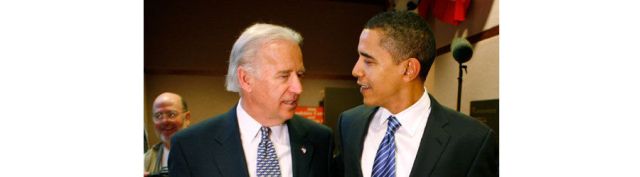
Why Joe Biden was a Smart Choice for Obama

By James M. Wall

Start with all the obvious reasons:

Passionate on core domestic liberal issues, civil rights, women’s rights, strong pro labor record;

Solid government background: Elected to US Senate, 1972.

Chair of Senate Judiciary Committee and currently chair of Foreign Policy Committee.

Proven campaigner on national stage: Abortive, but energetic, runs for president in 1987 and 2008.

Then move to the more personal strengths Biden brings to the Democratic ticket: Biden stole the show in several of the 2008 debates with his self-deprecating wit.  His humor is actually funny and at times acerbic. He is expected to use it against McCain, a fellow senator he has praised in the past. 

His personal history is compelling, and not widely known, yet. Until David Alexrod’s media shop starts turning out the campaign ads that will introduce him to the nation, Wikipedia has the bare facts about the impact of a tragic car accident on the Biden family in 1972:

In 1966, while in law school, Biden married Neilia Hunter. They had three children, Joseph R. “Beau” Biden III, Robert Hunter, and Naomi. His wife and infant daughter died in a car accident shortly after he was first elected to the U.S. Senate in 1972. His two young sons, Beau and Hunter, were seriously injured in the accident, but both eventually made full recoveries. Biden was sworn into office from their bedside.

Persuaded not to resign in order to care for them, Biden began the practice of commuting an hour and a half each day on the train from his home in the Wilmington suburbs to Washington, DC, which he continues to do.

In 1977, Biden married Jill Tracy Jacobs. They have one daughter, Ashley, and are members of the Roman Catholic Church. In February 1988, Biden was hospitalized for two brain aneurysms which kept him from the Senate for seven months.

Biden’s elder son, Beau, was a partner in the Wilmington law firm of Bifferato, Gentilotti, Biden & Balick, LLC and was elected Attorney General of Delaware in 2006. He is a captain in the Delaware Army National Guard, where he serves in the Judge Advocate General’s (JAG) Corps. He is set to be deployed to Iraq in October.[7] Biden’s younger son, Hunter, works as a lawyer in Washington, DC, serves on the board of directors of Amtrak, and previously worked in the Commerce Department.

Biden was critical of Obama’s lack of experience during the debates. His selection shows that Obama respects the experience of his elders but is confident enough in his own leadership skills to put Biden on his team, an indication he will emulate another candidate from Illinois, Abraham Lincoln. (See Team of Rivals: The Political Genius of Abraham Lincoln, by Doris Kearns Goodwin).

Pennsylvania is a swing state Obama-Biden must win in November. Obama did not fare well in Pennsylvania running against Hillary Clinton’s beer-drinking, “I’m one of the boys” campaign. Biden should be able to erase those memories. In addition to being from a working class Catholic background, and unlike McCain, he  lives in and owns only one home.

Biden has an oratorical style that lights up a union hall.  His experience with the fatal crash that cost the lives of his wife and daughter, and badly injured his two sons, left him with a permanent and affectionate bond with firefighters and paramedics.

In a speech (the You Tube clip is flawed) to a union meeting of fire personnel, Obama talked about that bond, which led to annual visits to his home at Christmas with Santa Claus and a ladder, where they visited the two boys who survived the car accident.  One of those sons, Beau, is Delaware’s Attorney General and a member of the National Guard. He is scheduled to be deployed to Iraq in October.

Biden is a seasoned campaigner. He is no stranger to confronting mud slinging opponents. Critics of Biden will point to a “plagarism scandal” from his 1988 presidential run. What happened was more a bad mistake than plagarism in the legal sense. It was a scandal only in the eyes of his opponents and the media. The political campaign of the eventual Democratic nominee, Michael Dukakis employed a Karl Rovian fervor to build on a mistake in a campaign speech that led to Biden’s withdrawal from the race.  This was before You Tube, but the Dukakis team had a video of the flawed speech which it “leaked” to the media. Wikipedia tells the story:

In September 1987, the campaign ran into serious trouble when [Biden] was accused of plagiarizing a speech by Neil Kinnock, then-leader of the British Labour Party. Though Biden had correctly credited the original author in all speeches but one, the one where he failed to make mention of the originator was caught on video.

David Brooks, the conservative New York Times columnist, underlines Biden’s blue collar background as the reason why he was “hoping” Biden would be the nominee. Since Brooks is an unabashed Republican, and the Times designated conservative hitter, the Obama campaign should get Brooks’ treatment of Biden’s personal story out to swing state voters:

Biden is a lunch-bucket Democrat. His father was rich when he was young — played polo, cavorted on yachts, drove luxury cars. But through a series of bad personal and business decisions, he was broke by the time Joe Jr. came along. They lived with their in-laws in Scranton, Pa., then moved to a dingy working-class area in Wilmington, Del. At one point, the elder Biden cleaned boilers during the week and sold pennants and knickknacks at a farmer’s market on the weekends.

His son was raised with a fierce working-class pride — no one is better than anyone else. Once, when Joe Sr. was working for a car dealership, the owner threw a Christmas party for the staff. Just as the dancing was to begin, the owner scattered silver dollars on the floor and watched from above as the mechanics and salesmen scrambled about for them. Joe Sr. quit that job on the spot.

Biden will bring to the Democratic ticket a political infighter who knows how the game must be played when the bullies storm out onto the playground.  The New York Times Bob Herbert (August 23) expects Joe to come out swinging:  “From Watergate to the Swift Boat madness, we’ve seen how the struggle for the ultimate power of the presidency can degenerate to the rankest kind of ruthlessness and ugliness, usually at the expense of the Democrat.”

Months ago, before he was tabbed to run with Obama, Biden was asked on MSNBC about the attacks on Obama by Senators McCain and Joe Lieberman. His response:

“I refuse to sit back like we did in 2000 and 2004. This administration is the worst administration in American foreign policy in modern history — maybe ever. … Every single thing they’ve touched has been a near-disaster.”

Joe Biden is a good man to have covering your back.  Will his nomination as the vice-presidential candidate be enough to propel the Democratic ticket to victory?  One thing is certain: To paraphrase Margo Channing’s famous prediction: fasten your seatbelts; its gonna be a wild and bumpy ride. As one commentator put it when word first emerged about Biden as the nominee: “The vice-presidential debate should be on pay TV!”
Posted in -Archive 2008, Politics and Elections | 4 Comments

Can a Cone of Silence Exist in a World With Evil?


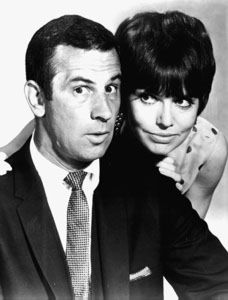
Maxwell Smart and 99

Maxwell Smart and 99

99: Oh, Max what a terrible weapon of destruction.

Smart: Yes. You know, China, Russia, and France should outlaw all nuclear weapons. We should insist upon it.

99: What if they don’t, Max?

Smart: Then we may have to blast them. That’s the only way to keep peace in the world.

by James M. Wall

Rick Warren is one smart and not so crazy guy. He names a California church Saddleback and still builds it into a 20,000 member institution that shoots to the top of the mega church charts. He writes a best selling religion/psychology self-help book that appeals to evangelicals and non believers alike. He makes friends easily, two of whom are now running for president. In institutions like the church and politics, it is not truth that speaks to power, but power that speaks to power.

After a few phone calls to his two political friends, they show up on the stage of his Saddleback Church to talk religion and politics.  And right away, we know Rick Warren knows how to conduct an interview to his own liking. He does not want a debate;  he just wants his two guests, Barack Obama and John McCain, to appear on stage with him, separately, before a national television audience, where they dutifully answer identical questions of interest to Warren and his national constituency.  

With these interviews Warren attempts to seize Billy Graham’s mantle as the nation’s national chaplain. The secular media is eager to help. Religion can be so frustratingly complex that the media measures the level of religious faith by asking “do you go to religious services once a month, every week or every day?”  They do appreciate it so much when the professional God people keep it simple.

      Keep It Simple, Rick

Rick Warren sure did keep it simple at his Saddleback colloquy, so simple that post-colloquy discussion hardly noticed what he let slide and what he cherry-picked by his questions that played to the public and media crowd that prefers to keep religion on the surface: Are you for or against same sex marriage?; do you want to eradicate disease and poverty?; have you done bad things in your life (like stealing an apple or cheating on your spouse.)? 

No wonder John McCain was judged to be the winner. The place was wired for him, the questions, the easy answers, the audience, the media’s ignorance on religion and its disdain for nuance. McCain was chosen to go second but would not be able to hear the questions and Obama’s answers. Warren promised us he would keep McCain under a “cone of silence”.

Hey, folks, this is television. They were expected to abide by a code of honor they first broke on the playground when they played hide and seek? The term comes from a television series, for goodness sake, with Maxwell Smart sitting under a “cone of silence” so the enemy would not hear his secret. Not even McCain’s favorite former president, Ronald Reagan, would fall for that one. Remember, “trust, but verify?” 

      Of Course He Knew

Of course, McCain knew the questions going into his segment and he knew Obama’s answers. Frankly, what difference did it make. What the colloquy, with Warren’s questions skewed to his own political views, actually revealed was the character of the two candidates. By exposing their world views under the spotlight of Warren’s softball evangelical-oriented questions, viewers saw the stark contrast between Obama and McCain.

Obama, going first, answered Warren’s question on the existence of evil in his careful and thoughtful manner, while McCain promised to see evil as the current incumbent president sees it (third term, anyone?). Complex awareness versus militant “us against them” simplicity; which man do you want answering that 3 a.m. phone call?

The moment Rick Warren asked his question on evil,  blogger Gary Paul Corcoran, writing on the Talking Points Memo website, saw McCain for what he is, a politician playing to an audience which has been conned into believing for the past eight years that military power is the answers to all problems.

Warren had asked, “does evil exist, and if it does, do we ignore it, do we negotiate with it, do we contain it or do we defeat it?” Obama answered the first part of the question to the affirmative, went on to explain evil’s many guises, from Darfur to ourselves and our own domestic policies, spoke in terms of “confronting” it but cautioned about the need for humility. A lot of evil has been perpetrated over the years in the name of good.

When asked the same question, McCain, who we now know was peeking from behind the curtain, channels Charlton Heston as Moses in contrast to Obama’s answer. “Defeat it,” he says to a raucous round of applause and with a look as stern as old prophets.

The fact is, McCain never even bothered to address the first part of the question, or to frame his answer in terms other than us against them.

What the colloquy revealed about McCain is that his value system is narrowly focused, far too much so for a multi-cultured nation like ours.  McCain said:  “Our Judeo-Christian principles dictate that we do what we can to help people who are oppressed throughout the world.” McCain’s fellow world traveler and dark horse vice presidential possibility, Joe Lieberman, echoes this same focus when he campaigns for McCain. 

          McCain’s Judeo-Christian Focus

The Boston Globe has studied McCain’s steady use of “Judeo-Christian” in his comments on religion. In a column written (August 19),  the Globe’s Washington bureau chief Peter S. Canellos noted an early primary Judeo-Christian focus by McCain. 

On a frozen winter evening at a Town Hall meeting in a school in the Manchester, N.H., suburbs, John McCain expressed surprise and irritation with an intelligence report downplaying the threat of Iran’s nuclear program.

At the end of a long list of reasons to be suspicious of the Iranians, McCain declared: “And they sure don’t share our Judeo-Christian values.”

It seemed at the time to be an odd thing to say about a Muslim country. After all, even if there were no nuclear program, no oil, and no rabble-rousing president, Iran still wouldn’t have Judeo-Christian values. And it’s troubling to wonder if that alone would be a reason for suspicion. . . .

McCain’s view of American power harkens back to the World War II era, when the United States held the moral high ground as liberator. He is a staunch interventionist, both on humanitarian and national-security grounds.

To most of the world, especially in Muslim nations, there is an enormous difference between standing up for freedom and standing up for Judeo-Christian values, but McCain conflates the two. And sometimes, his use of the term seems more than accidental.

New York Times Columnist David Brooks defends, or more often explains, McCain, speaking as an old friend who wishes the “old” McCain could return to his senses. He blames the staff and not McCain for his current tactics. 

The man who hopes to inspire a new generation of Americans now attacks Obama daily. It is the only way he can get the networks to pay attention.

Some old McCain hands are dismayed. John Weaver, the former staff member who helped run the old McCain operation, argues that this campaign does not do justice to the man. The current advisers say they have no choice. They didn’t choose the circumstances of this race. Their job is to cope with them.

And coping is what McCain is doing. The polls say it is working; the race is still close. So far, McCain, and his advisors are counting on the media to help them keep the voting public under Warren’s “cone of silence” long enough for McCain’s tough talk–and his insensitivity to all religions and cultures not under the Judeo-Christian blanket–viable through November 4. 

                     The picture and excerpt at the top of this post are from the archives of the Museum of Broadcasting Communications, Chicago, Illinois. They are from the Get Smart episode Appointment in Sahara. Behind the two characters is an image of a mushroom cloud.


Posted in -Archive 2008, Media, Politics and Elections, Religious Faith | 2 Comments

The Best Film Ever Made About Politics

John Wayne and Jimmy Stewart in a John Ford political film

by James M. Wall

Critics and scholars may differ, but what do they know.  With two national nominating conventions looming, it is time to single out the best film ever made about politics. I have my selection, you will have your own. Your choice may be better than mine. If you want to agree or disagree with my choice, write to wall writings.me, and voice your opinion. I won’t argue with you but I will learn from what you write.

When the two conventions are held in the next two weeks in Denver (Democrats) and Minneapolis (Republicans), the dramas will be shown on television. If you don’t have cable in your home, the major non-cable US networks will limit your viewing to one hour per night, leaving you plenty of time to view films that delve into the manner in which citizens actually choose their leaders.

Of course, if you have cable, and you feel strongly in favor of one of the two parties, then turn to pro-Democratic MSNBC, or pro-Republican Fox, for gavel to gavel coverage. Or you may want to check in on CNN and let political reporter Wolf Blitzer tell you which party has been nice to Israel, lately, something that is terribly important to the former AIPAC staffer, the Wolfster man.

Whatever your attitude toward the two parties, there will be some serious time available for major DVD viewing time. And if your library is as good as mine, it will have a good selection of current and classic films. I judge films not on their genre nor their entertainment success, but on their significance as works of film art.

Looking at the options for the best political film ever made, Citizen Kane is often viewed as the best film of any genre,  ever made, a legitimate claim. It is, indeed, about the political rise and fall of an ambitious man who moves from journalism to politics, assumed to be based on William Randolph Hearst.  Orson Welles directed, wrote and starred in a story about lust for power.  But I don’t view it as a political film because politics is the stage on which Charles Foster Kane’s career rises and falls. The dynamics of politics itself, is not the film’s focus.

The best ever political film list has to include the 1949 film, All the King’s Men, a fictionalized version of Louisiana’s Governor Huey Long. In the original novel by Robert Penn Warren and in the film, Long is Willy Stark. He is played by Broderick Crawford in Crawford’s finest performance over a long film and television career.  Crawford serves as a (uncredited) narrator in another good, though not great, 1972 political satire,The Candidate, which starred a boyish looking blond Senate candidate, Robert Redford.

Closer to the top of my list is John Ford’s 1958 film, The Last Hurrah, the story of big city Irish American mayor Frank Skeffington (Spencer Tracy) who seems to float above the ugliness of his final campaign for his reelection. It is clear that Ford sees him as the quintessential political boss, part rogue, part tough guy, and always pragmatically oriented to every important wake in the city. The film is based on Edwin O’Connor’s 1956 novel “The Last Hurrah”, is a fictionalized version of former Boston Mayor M. Curley.

Tracy invites a nephew who is also a journalist, to travel with him through the campaign, and we are meant to see the campaign through the nephew’s eyes. When he loses, Skeffington consoles his nephew with the understated, “sorry I could not provide you with a better ending”. Tracy as the mayor is superb.  His opponents, however, are all stereotypes and the nephew is bland. My favorite character, after Tracy, however, is one of those loyal Ford sidekicks, “Ditto” Boland (Edward Brophy) whose disappointment at the defeat leaves him furiously jumping up and down on his hat.

The runner up as the best film ever made on politics is The Best Man (1964), written by Gore Vidal from his own original stage play. Directed by Franklin J. Schaffner, the film centers on backstage dramas that unfold during a party’s nominating convention. William Russell (Henry Fonda) is the idealistic liberal candidate whose main opponent is a political hack, Joe Cantwell (Cliff Robertson), who is troubled by neither idealism nor values.

Both candidates hold smear cards against the other, ready to be played. The cards are familiar to us today: homosexuality (rarely mentioned this overtly in films in the early 60s), a pending divorce, and mental episodes from the past.  Will they be used and who will use them?

Vidal’s writing is sharp. The outgoing and dying president, Art Hockstader (Lee Tracy, in his final and oscar-nominated role) hits Fonda with this pragmatic advice:

Power is not a toy we give to good children. It is a weapon. And the strong man takes it and uses it. If you don’t go down there and beat Joe Cantwell to the floor with this very dirty stick, then you’ve got no business in the big league. Because if you don’t fight, the job is not for you. And it never will be.

Hockstader would be right at home in what is for me the best film about American politics ever made, John Ford’s The Man Who Shot Liberty Valance. The two stars of that 1962 release are John Wayne and Jimmy Stewart, pictured above at the top of this posting.  This picture is always viewed as one of Ford’s westerns, which it is, but the deeper significance of what was in my mind, Ford’s best western (even better than The Searchers), is its insights into the American political process.

At the center of the film is the conflict between the traditional story of the early American west, where the white invaders often confronted one another in gun fights in places like the OK Corral.  Liberty Valance (an over the top performance by Lee Marvin) is the embodiment of absolute evil, a killer who uses fear as an instrument of control.  The film is told in a flashback: A US senator named Ransom Stoddard (Stewart) returns to the town of Shinbone to attend a funeral of an old friend, Tom Doniphon (Wayne). The local newspaper reporter and his editor insist that the senator explain why this funeral is so important to him.

He agrees to do so and the flashback begins from the moment of Stoddard’s arrival outside Shinbone when he first encounters Liberty Valance in a holdup. Stoddard is from “the east” and he has come to this western frontier town to set up a law practice. He meets Hallie Stoddard (Vera Miles), a local beauty, when she treats his wounds from the holdup. He also meets Tom Doniphon who is courting Hallie and who is the only local willing to stand up to Valance.

The town is in need of a savior from Valance’s control. Doniphon cannot do it alone and Stoddard is not ready, with his law books still unpacked, to be that savior. But together, in the film’s pivotal moment, they rid Shinbone of Valance in a gun fight in a darkened street. Everyone assumes Stoddard killed Valance in self-defense.  Doniphon knows better, but he lets Stoddard take the credit, and as an added benefit, marry Hallie.

The eastern lawyer is nominated for a  territorial political role which takes him all the way to Washington as the state’s first senator. Before he starts that political career, Doniphon tells him who really shot Liberty Valance.  No longer filled with guilt for a “cold-blooded murder”, Stoddard allows his political career to be built on a falsehoodl

When he returns for Doniphon’s funeral, Stoddard decides to tell the truth to the local reporter and his editor. The two journalists listen and the reporter writes it all down. At the end of Stoddard’s story, the editor, Maxwell Scot (Carleton Young), tears up the notes.

Ransom Stoddard: “You are not going to use the story, Mr. Scott?”

Maxwell Scott:  “No sir. This is the west, sir. When the legend becomes fact, print the legend”.

The funeral over, Stoddard and his wife catch the first leg of the train trip back to Washington.  A political career built on a lie remans unscathed. When the legend becomes fact, the legend is printed and it becomes the fact.

This is a rich film, an old fashioned western, a love story and a story of a lost love, a favorite Ford theme. But it is also a story of politics and how sometimes goodness makes its ambiguous way into the future, there to look for even more creative ways to address the truth, ambiguity and all.  The Man Who Shot Liberty Valance demands that viewers remember it as a work of political art.

After all, “I give you the man who. . .” is a phrase that has rung through the rafters of political conventions since the time of Senator Ransom Stoddard’s rise to the heights of political glory.  Like many others before and since, he is doomed to live out his life hearing the words the train conductor speaks when he tells Ransom and Hallie that the train will make up time and connect with the express train to Washington.

Punching their tickets, the conductor proudly proclaims, “After all, nothing is too good for the man who shot Liberty Valance.”  Nothing, that is but the truth.  Which is why one of John Ford’s final pictures is the best film ever made about politics.

Posted in -Archive 2008, -Movies and politics, Movies, Politics and Elections | 3 Comments

The Clinton Gang is Ready for its Denver Corral Shootout

          Chicago: Where Obama Found His Political Voice          Photo by Richard Wall

by James M. Wall

Barack Obama’s father was born in Africa. His mother grew up in Kansas. As a child Barack went to school in Hawaii, Indonesia, and Kansas. His law degree is from Harvard.  But it was the city of Chicago, located on the shores of Lake Michigan in northern Illinois, that gave the 2008 Democratic Party nominee his political voice. 

It was here, in the city of “broad shoulders”, that Barack Obama emerged as a young man who believed he could become the president of the United States. He found his voice which combines community organizing street savvy with big city board room sophistication; a voice that blends religious fervor with classroom erudition. 

Reaching the White House is a goal now close at hand. But before he faces John McCain in November, Oboma must face one final gunfight with the Clinton gang in a confrontation that could echo the deadly cinematic “gunfight at the OK Corral”. 

Democratic Party leaders are desperate to avoid a shootout at the Denver Democratic Convention, August 25-28. Party chair Howard Dean, Speaker Nancy Pelosi and Senate leader Harry Reid have Democrats running in state, local and federal race and they want a strong candidate for president to emerge from Denver.  What worries them is that the Clinton gang seems to have other ideas.

Would you believe Hillary wants her name put in nomination with an attendant celebration so her supporters can shout to the nation that their party is about to choose a candidate who lacks the experience to be president? You don’t believe such a thing?

Then, would you believe the Clintons want to dominate the convention with speeches by both of them to remind the party of a Clinton era of prosperity?  It is true that Bill and Hillary were in the White House before two Bush terms plunged the world into war and high prices at the pump. For them, the shootout at Denver would celebrate those eight years, and maybe, just maybe, weaken Obama enough to set Hillary up to return to the White House for a third Clinton term.

You refuse to  believe any of this?  You prefer to believe that the Clintons only want to get the respect Hillary’s historic campaign deserves?  You prefer to believe that the Clinton gang only wants what is best for them AND for their party? 

So believe what your heart tells you to believe, but before you do, travel back with us to a July 31 cocktail reception in a suburban back yard in Palo Alto, California, an informal gathering of Clinton supporters which was billed as a time for healing.  Time magazine’s Karen Tumulty did not see much healing:

As Clinton took questions from the 150 or so people who had paid $500 and up a head to listen, it became clear that the healing process was far from over. “For so many of my supporters, just like so many of Barack’s supporters, this was a first-time investment of heart and soul and money and effort and sleepless nights and miles of travel,” Clinton said. “You just don’t turn it off like that.”

You don’t?  Is it not inherent that in a democracy voters decide who wins and who loses?  Hillary Clintopn failed to win enough Democratic delegates to gain the nomination. Instead of moving on from that setback, the New York senator tells her supporters that the Obama campaign needs to make them feel better about their loss. 

If this does not sound like the Hillary you have supported since she entered the 2008 primary season as the almost certain nominee, then look at these You Tube clips now available on the internet, here and here, clips obviously taken by an amateur, a supporter who wanted to cherish one final up close and personal moment with the woman she greatly admires.

What Senator Clinton told that group of supporters in Palo Alto were not the words of a gracious loser who came close, but not close enough, to win the nomination of her party. Karen Tumulty’s Time article makes it as clear as anything in politics can be clear, that Tumulty believes the Clintons’ lack of enthusiasm for Obama has an ulterior motive:

In private conversations, associates say, Clinton remains skeptical that Obama can win in the fall. That’s a sentiment some other Democrats believe is not just a prediction but a wish, because it would prove her right about his weaknesses as a general-election candidate and possibly pave the way for her to run again in 2012.

So don’t be surprised by a shootout at the Denver corral. When the delegates gather for battle, watch to see if Harold Ickes, Jr., is mingling with the Clinton delegates,  loading the rhetorical and strategic guns over there in a corner of the corral.  It was this same Ickes who urged Clinton to follow his script through the primaries, demanding that party rules be tossed out so that delegates from “her” states, Florida and Michigan could be seated. It was this same Ickes who would not let Senator Clinton leave the race at an earlier moment in the process, to leave time for Obama to focus solely on McCain. 

 It was also very likely this same Ickes who was behind Clinton’s frequent references to the “sacred” freedom of delegates who had the “right” to forget that they were elected as Obama delegates and vote for Clinton instead. Ickes has previously shown his contempt for convention rules that don’t favor his candidate (Ted Kennedy at the time) when he tried, and failed, to block President Jimmy Carter’s nomination at the 1980 convention. 

You don’t believe any of this?  All you care about is Hillary Clinton getting her moment in the convention spotlight as a reward for almost breaking the political glass ceiling?  And you want us to forget Bill Clinton’s reluctance to throw the weight of his own public esteem behind the last man standing who can prevent a third Bush term and a permanent conservative Supreme Court?  

You liberals who are still angry that your candidate lost, know very well that I am talking to you.  Barack Obama knows how you feel. And he deserves your respect for the manner in which he is trying to ease your pain.  There is a quick and productive way to deal with that pain.

When I complained to a leading Chicago politician that Obama had not supported my candidate in a 2006 Democratic congressional primary race, he looked at me and said quietly, “Jim, get over it.”  Good advice for me, and good advice for the Clinton gang when they head out to Denver.  

In the immortal words of Johnny Cash, 

“Don’t take your guns to town son, 

Leave your guns at home Bill

Don’t take your guns to town.”

Posted in Politics and Elections | 1 Comment

The Moral Obligation of Our Stewardship of the Planet


by James M. Wall                     

Former Colorado senator Gary Hart has drafted a policy blueprint for the next U.S. president. Hart, a Democrat who began his political career in 1971 as national campaign manager for George McGovern, is politically well prepared to make this proposal. Even more important, his proposal is theologically grounded.       

In a June 25 New York Times column, Hart rejects the prevailing media and political view of religion and politics as a series of political battles codified in hardline ideological demands. After identifying issues that the next president will confront, Hart states: “The moral obligations of our stewardship of the planet must become paramount.”

Hart suggests that a national dialogue must be shaped by an ethical perspective. With this proposal he joins Al Gore, who has creatively confronted global warming and climate change with a moral template. Here is the heart of Hart’s proposal:

No individual can entirely determine the architecture of a historical cycle. But much of the next one will be defined by how we grapple with a host of new realities. . . . globalized markets; the expansion of the information revolution into places like China; the emergence of new world powers including India and China; climate deterioration; failing states; the changing nature of war; mass migrations; the proliferation of weapons of mass destruction; viral pandemics; and many more. Senator Obama’s attempt to introduce the next American cycle should include, at minimum, three elements. National security requires a new, expanded, post-cold-war definition. America must transition from a consumer economy to a producing one, and the moral obligations of our stewardship of the planet must become paramount.

Hart’s religious perspective derives in part from his evangelical background and a year of theological study at Yale. Of course, formal theological training does not automatically transform a political figure into the second coming of Reinhold Niebuhr. Yet it’s noteworthy that Hart and Gore each spent a year in a mainline theological seminary (Gore attended Vanderbilt). I was reminded of the role that theological education has played in the careers of Hart and Gore when I was interviewed by a Swedish graduate student who was working for his country’s government.

The student wanted to discuss a column I had written on “Faith and Risk Analysis.” (For a PDF copy of this December 6, 1989 Christian Century column, click here ) He asked about my service on a 1980s committee that conducted a study of nuclear waste for the U.S. Department of Energy. I understand the role of the scientists on the study panel, the student said, but why did the panel include a person with theological training?

His professional interest was in risk analysis: in any public policy decision, how do we balance risk with benefits? In the debate on where and how to permanently store nuclear waste, how do we balance the risk of storing a toxic substance that never disintegrates with the benefits of nuclear power? Scientists offer ways to protect the planet and all living things from such toxicity, I told the student. Engineers propose ways to secure the nuclear waste. Should we put it deep into the ground? Shoot it into space? Place it in the sea?

After hearing from the scientific and engineering experts, politicians make the final judgment as to how and where to store the waste.  But the public also wants the human cost factored into the final decision. They want discussion of the issue to include those who will talk about the price that will be paid in human life, health and well-being. They want participants who will remind people that our moral obligation to be stewards of the planet is paramount. It is a good sign that Hart and Gore, politicians with religious sensibilities and training, are part of this conversation. 

This is my final Impressions column for the Christian Century magazine, the publication it was my privilege to edit and publish from November 15, 1972, until February 15 1999.  I served as Senior Contributing Editor for the magazine from February, 15, 1999 to August 31, 2008. After September 1, I will serve as one of the Christian Century’s Contributing Editors. I will also continue to contribute regular postings to wallwritings.wordpress.com, as I have done since the blog was launched on April 24, 2008. 

Posted in Politics and Elections, Religious Faith | 1 Comment

Obama Still Not listening to all the Jewish Voters


by James M. Wall

Last week was a good week for Barack Obama: High level meetings with Afghanistan and Iraqi civilian leaders, a formal meeting in Baghdad with the U.S. military commander in the country, Gen. David Petraeus, a made-for-television event with 200,000 screaming fans in Berlin, and private presidential-like conversations with French and British leaders.

There was also quality private time with Jordan’s King Abdullah, who personally drove his guest to Obama’s jet which was parked on the tarmac at Amman’s Queen Alia International Airport. That drive followed a private meeting after the king had hosted the senator at a dinner at his Beit Al Urdan palace. 

Palestinians watching from across the Jordan River took notice of Obama’s willingness to confer with King Abdullah at some length. And while they were glad to have a neighboring Arab king meeting with Obama, it was hard not to notice the sharp contrast between Abdullah’s visit and the 45 minutes the senator allotted to Palestinian Authority President Mahmoud Abbas and Prime Minister Salam Fayad.

That quick visit was not exactly an overwhelming nod to the two PA Fatah leaders, but it was at least  “a notch up” from John McCain’s phone call to Abbas on McCain’s trip to Jerusalem in March. 

Israel clearly dictated all of the details of this leg of the Obama trip. During the 36 hours Obama was in Israel-Palestine, he visited the Yad Vashem Holocaust Museum in Jerusalem and the town of Sderot near Gaza, which has consistently been struck with rocket fire fired from Gaza.

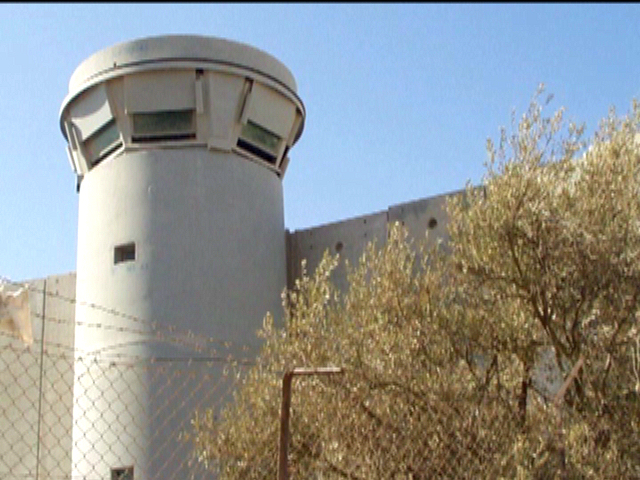
He also made the ceremonial stop at the Western Wall to pray and stuff a private prayer in a crack in the wall. (The prayer was quickly stolen, apparently by a Jewish seminary student. It was later printed in an Israeli newspaper, a serious invasion of the visitor’s privacy. ) Obama made no stops in the West Bank except for his meeting with Abbas and Fayad. He was not exposed to the numerous checkpoints on the ground, but he could hardly escape seeing the “security wall” that cuts into Palestinan territory and surrounds major Palestinian cities.  

No where on the trip was there the slightest acknowledgement of the burdensome military occupation of the West Bank and Gaza, except as a necessity for Israel’s security. Nor was any attention paid to the Hamas party which won control of the PA legislature in the elections of 2006. Once Hamas won that election, Israel branded Hamas as a “terrorist” group unworthy to govern; the US and the European Union dutifully fell into line.

The Obama campaign still labors under the conventional Washington wisdom that AIPAC speaks exclusively for all American Jewish voters. The campaign trip planners let the “AIPAC speech Obama” rather than the “racially-nuanced Philadelphia speech Obama” prevail in the 36 hours he spent in Israel and Palestine. This was a bad decision by the campaign, and presumably, by Obama as well. 

M.J. Rosenberg calls the manner in politicians relate to Israel, the “default position”.  It is easy and it is profitable. The candidate or the member of Congress does not even need to love Israel or even know how to find it on a map:

There is no political downside to simply going with the lobby on the Middle East. It’s like what Jackie Kennedy said: you can’t be too rich or too thin. In American politics, you can’t be “too pro-Israel.” A politician knows that all they have to do is say that they are for Israel, and against the Palestinians, and they will be deemed a “staunch supporter” of Israel and the campaign money will flow their way.

In short, supporting the status quo is a wonderfully lucrative path of least resistance. That is why it is the default position for every politician. It’s easy, risk-free, costs nothing but pays great returns. Of course, it also adds significantly to Israel’s security problems–and America’s declining strategic position in the Middle East.

Obama and his staff are unwisely ignoring the shift in the mood of the American public toward Israel among both Jews and non Jews. Richard Silverstein, writing in the London Guardian, reports on findings from a recent poll conducted among Jewish voters by the moderate Jewish lobby J Street, that suggest the mood on the US street is not what it was in the Bush-Clinton-Bush eras. 

One question in the poll asked if Israel played a “big role” in a particular voter’s decisions. More than half responded “yes”. But when compared to other issues, “Israel came out in the bottom tier of issues”. 

Only 8% listed Israel as one of their two top issues in determining their vote for president or Congress. To these voters,  Israel remains an important political issue. But other issues, including the economy and the Iraq war were seen as “far more important”. The J Street poll concludes that “support for the Israel lobby is actually quite shallow among the Jewish community.”

If this poll is correct, it should no longer be necessary for Candidate Obama to pander to the AIPAC version of American Jewish voters.  Instead he should offer our “staunch ally” Israel what New York Times columnist Nicholas D. Kristof calls “tough love”:

On his visit to the Middle East, Barack Obama gave ritual affirmations of his support for Israeli policy, but what Israel needs from America isn’t more love, but tougher love. Particularly at a time when Israel seems to be contemplating military strikes on Iranian nuclear sites, the United States would be a better friend if it said: “That’s crazy” — while also insisting on a 100 percent freeze on settlements in the West Bank and greater Jerusalem.

Friends and allies don’t pander to one another.  Friends and allies don’t “enable” the other to continue along a destructive path.  Tough love demands honesty and an appeal to what is best for all parties concerned.

Kristof offers other issues which could be a part of the “tough love” Israel needs to hear: If Israel has to build a fence for what it considers its security needs, let them do so, but “construct it on the 1967 borders, not Palestinian land — and especially not where it divides Palestinian farmers from their land.”

Kristof adds as a part of his “tough love” guidance the need for facing the imbalance of the price paid in human life on both sides of the conflict. He provides statistics from B’Tselem, the Israeli human rights organization, which “reports that a total of 123 Israeli minors have been killed by Palestinians since the second intifada began in 2000, compared with 951 Palestinian minors killed by Israeli security forces.”  That is the sort of factual reality which American voters need to face.

When the Israel Lobby launched its attack on Jimmy Carter’s book, Peace not Apartheid, Dennis Ross, the pro-Israel operative who managed Middle Eastern affairs for both the first George Bush and Bill Clinton, played the Good Cop to Alan Dershovitz’s Bad Cop in their well-orchestrated effort to discredit Carter. The campaign failed.

The attacks on Carter only increased the book’s sales and linked “apartheid” with Israel in Middle America. It may also have contributed to the growing resentment among Jewish voters that blind loyalty to Israel can be counter-productive.

With his track record, it was, therefore,  not encouraging to discover Dennis Ross traveling with Obama on his trip to Israel and the Occupied Territories as an “advisor”. This is the same Ross who continues to maintain that the 2000 Camp David discussions led to a “generous offer” from Clinton and Israel to Yasir Arafat, when it was neither an “offer”, and was anything but “generous”.  

Obama can display a “tough love” toward Israel as a signal to all parties involved that in his administration neither pro-Israeli nor pro-Palestinian diplomats will control his Middle East policy making.  What should and hopefully will, control his policy is his personal belief that justice, human rights and the well-being of all the citizens of the region will remain at the heart of his foreign policy agenda.

Posted in -Archive 2008, Middle East Politics, Politics and Elections | 1 Comment

Obama Needs Some Internet Virtual Reality On This Trip

Since this posting’s initial appearance it has been reproduced on many other locations in the internet world of virtual reality, a number of which serve the Occupied Palestinian Territories.  Visit that internet world by searching for this posting’s title at Google. You will find other blogs and sites that reproduced the posting, thereby extending its reach. We are grateful to the bloggers for this service.  Here is one appearance. 

By James M. Wall

When Paul Simon ran for the United States Senate in 1984, I was his primary campaign manager. Paul had many progressive ideas but I would cringe when he told Illinois voters that there would have been no cold war if a few Soviet leaders had spent time in the United States, where they would have experienced life in a democracy.

Paul was actually recalling the Native American wisdom that to know a man you must walk in his footsteps for at least a mile. It was an ideological perspective unrelated to the harsh political reality that any young Soviet official who traveled to the United States to get “educated” would no longer be a Soviet official.

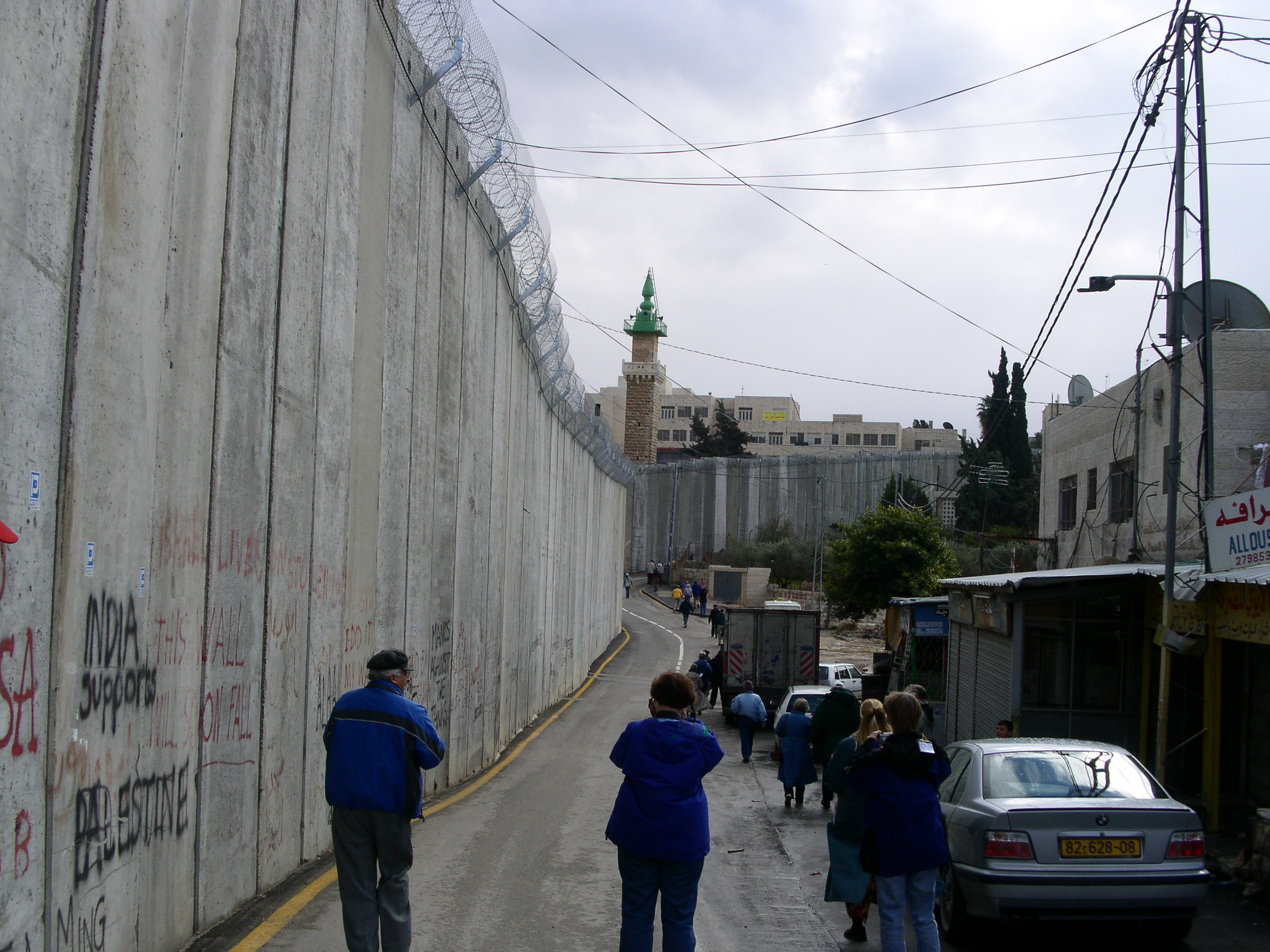
In retrospect, I now believe Paul had a point. Through the wisdom of this Simon logic it could be argued that if Obama had spent even one summer living in the West Bank he would have seen for himself Palestinian homes demolished to make way for Israel’s so called “security” wall, that hideous 24 foot high concrete barrier that snakes through Palestinian land, enclosing cities and villages in prisons from which the only escape is a checkpoint manned by Israeli soldiers.

The Democratic candidate will travel to Palestine in a cocoon of security and secret service police, protecting him from attacks from radicals of all sides. Because of this cocoon, he will talk only to Palestinians sanctioned and vetted by his Israeli hosts. It is too late in his political career for him to be “educated” in the existenial realities of occupation.

But it is not too late for him to “feel” that occupation through the internet. Obama needs an internet virtual reality staff person with him at all times, giving him visual, aural and print data, not on the grand scheme of Middle East politics, but on the reality of occupation.   This staff person could make sure, for example, that Obama sees footage of an Israel Defense Forces soldier shooting a bound and blindfolded Palestinian in the foot with a rubber-tipped bullet.  

B’Tselem (pronounced Beit Selem, with a sound similar to Beit Lehem, the birthplace of Jesus) is an Israeli human rights organization that documents occupation abuses by Israeli authorities. The organization posted the internet video on its site. The incident took place July 7. Two weeks after the shooting, and after the video appeared on the internet, the Israeli soldier was arrested.

In the video, the Palestinian, Ashraf Abu Rahma, 27, who was protesting the building of the Wall, is shown being led, handcuffed and blindfolded, to a Jeep by a high ranking officer of the Israeli Defence Forces (IDF). Rahma falls to the ground after he was shot in the foot. The London Times online reported the arrest July 21. The video was taken by a 14-year old Palestinian girl, who used one of the more than 100 video cameras B’Tselem has distributed to Palestinians in the West Bank.

Knowing how carefully Obama prepares for his every assignment, I believe that if he had that virtual internet reality staff person on his staff he would already have “felt” the occupation through videos like the one of the shooting of Ashraf Abu Rahma.

Obama will not be invited to talk with Khaled Amayreh, a veteran Palestinian journalist I first met in Hebron two decades ago. But Obama can read about current conditions on the ground in an internet column Amayreh wrote for the Cairo-based publication Al Ahram:

If you still think there are red lines that Israel has not crossed with regard to its treatment of Palestinians, don’t be too sure. In recent days and weeks, the Israeli army has been vandalising, ransacking and confiscating Palestinian civilian institutions in the West Bank’s largest towns and cities, including Ramallah, the seat of the so-called Palestinian government.

Frustrated eyewitnesses and tearful victims spoke of “unprecedented brutality” and “Gestapo-like behaviour” as Israeli occupation forces moved throughout the central and northern West Bank to destroy what was left of the Palestinian charity sector upon which thousands of impoverished Palestinian families depend for their livelihood.

Israel had been targeting orphanages and boarding schools as well as soup kitchens and sewing workshops serving orphans in the Hebron region. The campaign of terror, with many hair- raising scenes of cruelty and moral callousness, has seriously raised the level of hostility and hatred for Israel.

Obama will not read this information in his State Department briefings, nor will he read Amayrey’s column in his hometown Chicago Tribune nor in the Israeli-friendly New York Times. But I can vouch for the journalistic integrity of Khaled Amayreh. And if Obama wants further verification, I can refer him to a colleague of mine who teaches religion in a Middle Western college. This colleague spent two nights in June sleeping in a shuttered Hamas-run Hebron orphanage, one of a number of American volunteers who maintain a presence in the orphanage to prevent its destruction by Israeli occupation forces.

Obama will talk with Palestinian Authority Prime Minister Salam Fayyad during his trip to the OPT, and Fayyad will surely inform him of Israel’s systematic campaign against Palestinian commercial and charity organizations.  But will Obama realize that in the Arab populations of the Middle East, it is common knowledge that Israel is attacking all institutions even remotely related to Hamas? 

In Ramallah, Israeli soldiers stormed the municipal council building of Al-Bireh, Ramallah’s twin-town, located a few hundred metres from the headquarters of PA President Mahmoud Abbas and the office of his Prime Minister Salam Fayyad. The Israeli soldiers, with sledgehammers and welding equipment, forced open offices, confiscating computers and destroyed furniture.

Again, PA forces remained confined to their barracks “in honour of agreements and understandings” with Israel. PA officials, including Prime Minister Fayyad, have argued forcefully that all social, cultural, educational, athletic and commercial institutions targeted by Israel functioned according to the law and were involved in nothing of concern to Israel whatsoever.

“These are legitimate Palestinian institutions, and targeting them is aimed at weakening and humiliating the Palestinian Authority,” said Fayyad while inspecting the targeted buildings. He added that he would complain to the United States as well as to Tony Blair, the Quartet’s envoy to the Palestinian-Israeli peace process. Neither has uttered a word criticising the latest Israeli savagery.

The Israeli occupation authorities claimed the targeted institutions were owned or run by religious individuals who might be sympathetic to Hamas, the Palestinian Islamic resistance movement. However, the Israeli army, and its intelligence arm, Shin Bet, failed to produce any evidence whatsoever linking the institutions to acts of violence. 

Paul Simon never made his leap into “feeling” the occupation, the leap now possible for Obama. Simon made that clear to me during the primary race which he won. (By prior agreement I did not manage his general election campaign against Senator Charles Percy.) John L. Mearsheimer and Stephen M. Walt explain what kept Simon from making that leap in The Israel Lobby and U.S. Foreign Policy.  Simon owed his Senate career to the Lobby. 

As Tom Dine [AIPAC executive director] boasted after Percy’s narrow defeat , “all the Jews in America, from coast to coast, gathered to oust Percy. And the American politicians–those who hold public positions now, and those who aspire–got the message.” Dine’s hyperbole notwithstanding, the basis lesson of these cases is hard to miss. (pp. 158-159).

That was the politics of 1984. Barack Obama is the candidate of change 25 years later. AIPAC is still a powerful force in American politics. AIPAC still demands that candidates utter public pieties about Israel’s need for security. And on this trip, Israel will prevent Obama from “walking in the footsteps” of Palestinians under occupation.

But no one, no government and no Lobby, can prevent him from a virtual tour of those footsteps during and long after this trip. He will see the conditions on the ground through his own eyes, and he will hear details of those conditions through the internet. As a man of color, Obama brings a special perspective to the Palestinian occupation never before available to a presidential candidate.

Posted in -Archive 2008, Middle East Politics, Politics and Elections | 16 Comments

Cannes Festival: Reflections on Our Modern Chaotic World

                                                 Waltz with Bashir

by Ron Holloway

Guest columnist Ron Holloway, Chicago-born film critic and scholar, who now lives in Berlin, Germany, returns to these pages with this report on the 61st annual Cannes Film Festival.  

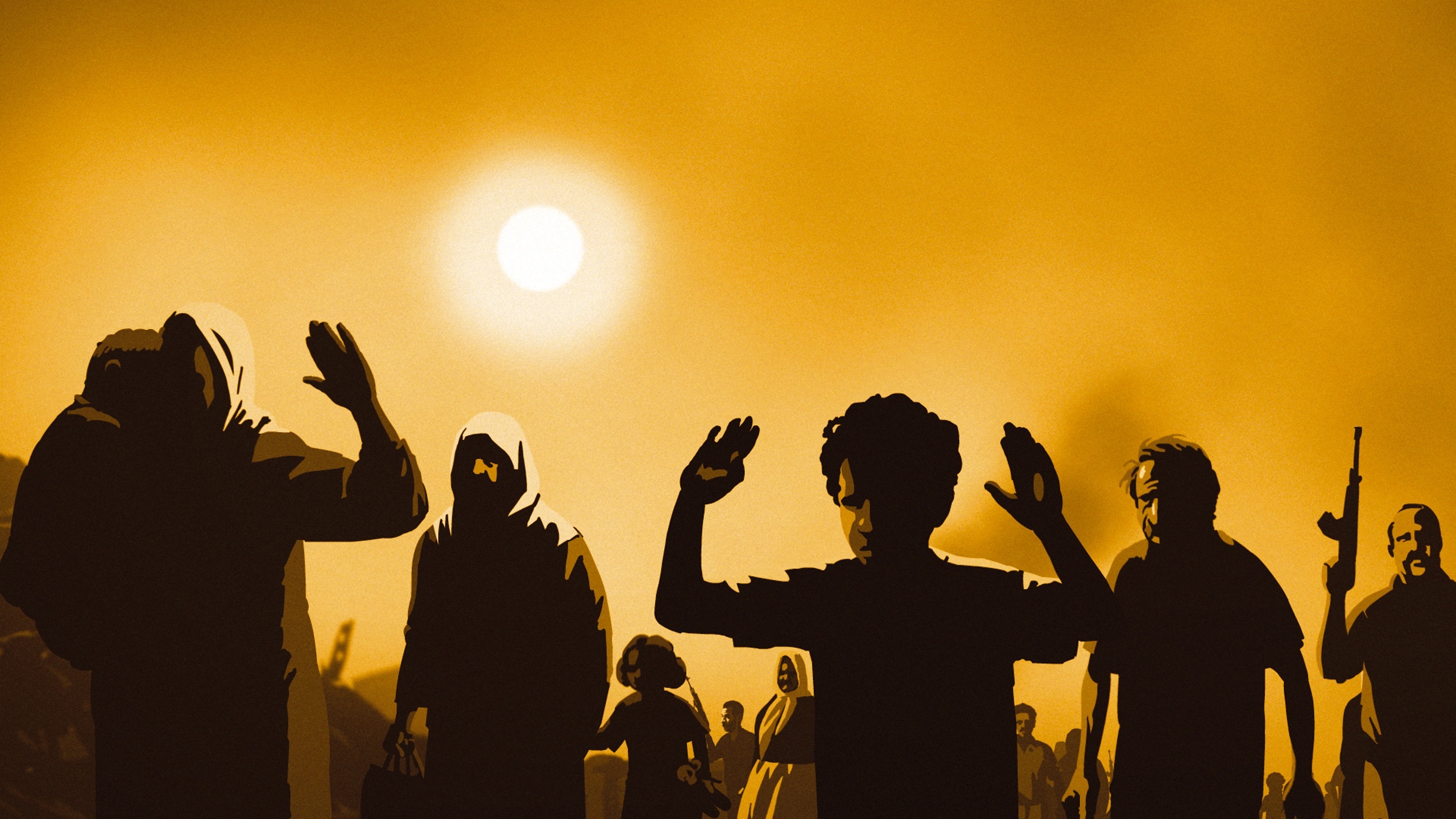
Ari Folman’s animation-documentary Waltz with Bashir (Israel/France/Germany/USA) is the one film in the 2008 Cannes competition that you cannot easily forget.  The traumatic journey of the filmmaker himself into his own past as a young soldier during the Lebanon Crisis, the story is told in hand-drawn comic-book fashion that spotlight confessional reports by eyewitnesses on what really happened in June of 1982, when Israeli forces invaded Lebanon.  

As though to underscore Israeli complicity in the massacre of hundreds (estimated as high as 3,000) Palestinian civilians by Lebanese Phalangists in the Beirut refugee camps of Sabra and Shatila, soldier-filmmaker Ari Folman shifts away from animation in the final scene to jarring actual documentary footage of the few survivors leaving the camps. As a statement of conscience and shame, guilt and expiation, Waltz with Bashir stands high on the list of the best antiwar films made. Was the international jury under Sean Penn sleeping?! Ari Folman certainly deserved some kind of citation.

The 2008 61st Cannes film festival, which ran from May 14 to 24, was Thierry Frémaux’s first as délégée general.  Last year he was the festival’s artistic director under the friendly aegis of président Gilles Jacob. Last year’s 60th anniversary festival was rated by critics and professionals alike as a banner year in Cannes history, a milestone in Cannes history, a tough act for Frémaux to follow.

Of course, a festival is only as good as the production year itself. But in world cinema there are other ways to smooth over the gaps in a lean season – like unveiling previously undiscovered vistas of cinema art that surface readily but need an astute scout to define talent and potential.  In this regard, Cannes has the best crew of scouts on record. So if nothing of interest is found in any given year in traditional filmlands, all Thierry Frémaux has to do is to search other continents for new talent and thematic material. 

In Frémaux’s first year as Cannes director, entries from auteur directors barely scored on the critics’ lists in trade publications, while films about  the mafia and prison life dominated. The documentary film found a permanent niche in the competition, including a first-time animated documentary. In general, Cannes 61 presented itself as a depressing mirror reflection of our present-day chaotic world. 

This year, the tone was set with the opening night film, Brazilian director Fernando Meireilles’s Blindness (Brazil/USA/Canada/Japan), a weary claustrophobic futuristic tale set in a Guantánamo-like prison for an urban population afflicted by a plague that appears to be contagious. Based on Portuguese Nobel Prize winning author José Saramago’s bestselling allegorical Essay on Blindness, the book is one of those high-water-marks in literature that proved too much for a movie straightjacket by an aspiring auteur reaching for the moon.

It was followed on the next day by Pablo Trapero’s impressive but rather heavy-handed Leonera (Lion’s Den) (Argentina/Brazil/South Korea), a murder caper that finds an innocent pregnant woman sentenced to prison for apparently killing her lover. The compelling element in this rather familiar account is that actress Martina Gusman, the film’s coproducer, was in fact pregnant, thus adding to the realism of a story that ends some years later with a contrived escape across the border with her infant son.

Two more Latin American entries by name directors drew mixed reactions from critics. Walter Salles and Daniela Thomas’s Linha de passé (Passing Line – a soccer expression) (Brazil), a four-son family drama set in the teaming slums of Sao Paulo, reminded this reviewer of Visconti’s masterful Rocco and His Brothers (Italy, 1960). A wandering episodic drama directed with an uncontrolled hand, it won a Best Actress Award for Sandra Corveloni, the long-suffering mother whose trouble-making brood stem partially from being offspring by different fathers. 

These disappointing Latino entries, however, did manage to whet the appetite for Steven Soderbergh’s Che (USA/Spain/France), a two-part, long awaited, four-and-a-half-hour epic on the life and times of Che Guevara, starring Benicio Del Toro in role of the legendary revolutionary.  Unfortunately, the film as it now stands has to be reedited to guarantee the success with audience and aficionados that the producers intended.

One would hope that this “hottest ticket in Cannes” would offer something new on the asthmatic revolutionary who had helped Castro defeat Batista in Cuba (Part One, 1956-59) and then lost his way in the jungles of Bolivia (Part Two, 1966-67). But we are barely able to experience the real man behind Del Toro’s acting façade. Even more puzzling for history buffs was why the reenacted visit of Che to the United Nations in 1964 had been included as a tie-together segment between the historical halves. Probably, suggests an Argentinean colleague, it was there to underscore his intellectual acumen, particularly when Cold War journalists tried to bait him with loaded questions and “commy” accusations.

As always at Cannes, expectations were high for auteur directors, but the auteurs failed to deliver. For many in the press corps, Nuri Bilge Ceylan’s Üç Maymun (Three Monkeys) (Turkey/France) was the leading contenter for the festival’s top prize, the Palme d’Or. Programmed early in the festival, Three Monkeys prompted dozens of flattering interviews with the shy director (who seldom strays far from his home base in Istanbul) and his actress wife, Ebru Ceylan.

On the surface, Three Monkeys– the title comes from the “monkey metaphor” of hear-no-evil, see-no-evil, speak-no-evil–is little more than a family kammerspiel about human failings. But below the surface it also raises the philosophical question about how extravagant lies designed to cover up the truth can lead to tragic consequences.  As strong as the direction is – Ceylan was awarded the Best Director at Cannes – what’s lacking is his patented aching indictment of human failings that characterized his earlier films: Uzak (Distant) (2003), Grand Jury Prize at 2003 Cannes, and Iklimler (Climates), FIPRESCI Critics Prize at 2006 Cannes. Maybe, next time.

The same fate awaited Jean-Pierre and Luc Dardenne’s Le Silence de Lorna (Lorna’s Silence) (Belgium/France/Italy/Germany), an engaging film which lacks the persuasive power of the Belgian brothers’ previous Palme d’Or winners: Rosetta (1999) and L’Enfant (The Child) (2005). For Lorna’s Silence, the directors return to an environment they know only too well from childhood:  Liège. Here, an illegal Albanian immigrant – played by talented Kosovo actress Arta Dobroshi, who learned French to get the part – falls into the hands of a slick taxi-driver with mafia contacts in order to obtain Belgian citizenship.

The marriage scheme begins with a junkie, who is expected to die of an overdose, so that Lorna can then marry a Russian mafia boss to enable the latter to obtain Belgian citizenship. When her own unexpected pregnancy changes things,  Lorna finds herself without a passport, the game becomes dangerous.The film ends in a no man’s land. Lorna’s Silence was awarded the consolation Special 60th Anniversary Prize.

Atom Egoyan’s Adoration (Canada/France) was a major disappointment at Cannes. Considering that this is the Armenian-Canadian director’s tenth appearance at Cannes (including a stint as a member of the international jury), one would expect more maturity in his choice of thematic material. Instead, Adoration, a discourse on the chat phenomenon of the internet age, is drowned at the outset in film and video technology at its most fundamental high-school level.

Wim Wenders’s The Palermo Shooting (Germany/UK) is not much better – indeed, its negative reception at Cannes might signal the demise of auteur cinema as a reliable festival ethic in the years to come. What made matters particularly embarrassing was his specious dedication of the film “to the memory of Ingmar and Antonioni” – as though Bergman and Antonioni might deign to shower their blessings upon the German director’s fiasco.

The problem with Wenders’s lackadaisical road movie, about a chic-fashion photographer (German rock star Campino) just a few steps ahead of “Death” (Dennis Hopper) on a trip from Germany to Sicily, is Wim’s bullheaded, all-out commitment to creative improvisation. This time around – on his ninth visit to the Cannes competition that included a Palme d’Or for Paris, Texas (1984) – he has completely sabotaged his ingrained penchant for “free-wheeling film art.” “Most stories are quite self-centered and have a tendency to push everything else aside,” he once said in an interview in which he criticized narrative cinema. Now Wim is the victim of his own Wenders hubris.

For some critics, the apparent new wave of Italian mafia films heralded a revival of neorealist cinema. Programmed towards the middle of the festival, the most talked about film at Cannes was suddenly Matteo Garrone’s Gomorrah (Gomorra) (Italy), awarded the runnerup Grand Jury Prize. Based on the non-fiction bestseller with the same title by Roberto Saviano, it deals with the inner workings of the Camorra mafia in Naples.

The intertwining stories in Gamorra feature some bravura acting performances. The story of how a young delivery boy, longing to join the mafia, sets up a woman for execution at the hands of rival toughs is chilling in its authenticity.  Paolo Sorrentino’s Il Divo (Italy/France), a portrait of former Christian Democrat Prime Minister Giulio Andreotti (brilliantly interpreted by Toni Servillo) is peppered with such delightful moments of outrageous wit and humor that Andreotti comes across as a real-life, modern-day, double-dealing Machiavellian Prince – one who will stop at nothing to retain power, cost what it may. Il Divo was awarded the Special Jury Prize.

Programmed in the final slot on the last day of competition, Laurent Cantet’s Entre les murs (The Class) (France) was unanimously awarded the Palme d’Or. Based on an autobiographical bestseller by François Begaudeau, who plays the lead in this finely sketched story about 13- and 14-year-old students at a multi-cultural school in a tough Parisian neighborhood, The Class covers one year in a teacher’s ordeal to instill a love for learning – along with a tolerance for discipline that makes learning possible in the first place.

The Class could be called fiction-documentary or docu-fiction, but the film is entirely fictional from start to finish. Cantet and Begaudeau collaborated with screenwriter Robin Campillo to make the film, which was shot during a full school year. It offers a rare, and authentic look at a modern urban school. 

Posted in Movies | 3 Comments

We Like Obama But Early Signs are Not Promising


by James M. Wall

You have to like Barack Obama.  He is young, intelligent, progressive, and has a terrific wife. He is the future. He defeated the last remant of the Clinton dynasty in a superbly run (and lucky) primary battle.   But as Maureen Dowd recently noted in a column on marriage, when looking for an “ideal husband”, look carefully at his friends. The revised list of Barack’s foreign policy advisors is not promising.  We sit down at our first big banquet for the future and what do we find? Warmed over dishes prepared by chefs from the Clinton era.

The list is depressing. It starts with former Clinton Secretary of State Madeleine Albright, who is famously quoted as supporting Bill Clinton’s policy of a decades long sanction on the Iraqi civilian population which led to the deaths of 500,000 Iraqi children, with her callous remark: “We think the price is worth it”.  The Obama list also includes Dr. Susan Rice, former Clinton Assistant Secretary of State, who told NPR in 2003:

I think he [Bush] has proved that Iraq has these weapons and is hiding them, and I don’t think many informed people doubted that. …The Iraqis have threatened to unleash a rein of suicide bombers on US and allied targets around the world. And I think that’s one of the real risks, as well as the use of chemical and biological weapons, that we face. 

The list has some encouraging exceptions, including Dr. Tony Lake, former Clinton National Security Advisor and Georgia Senator Sam Nunn, former Chairman of the Senate Armed Services Committee, both of whom are recognized experts in foreign policy without having supported policies that killed a multitiude of Iraqis and US military personnel over non-existent weapons of mass destruction.

The complete list comes from an Obama campaign news release which Alexander Cockburn eviscerates on his Common Dreams website. The list is obviously politically motivated, designed to spin Obama,  just a few years out of the Illinois State Senate, as a national leader with tough advisors.  It is, however, a depressing prediction of an Obama presidency.  If Obama’s friends include Albright and Susan Rice, in what way will an Obama White House improve on 16 years of Clinton and Bush?

Sam Nunn as vice president would make sense.  That is a political choice. Nunn would help in a General Election campaign in the South. He also has credentials of years of experience in foreign policy and military decision making. Anthony Lake is one of those nerdy types who would stand his ground in the administration. But the others?  Depressing.  Who might come next? Former AIPAC staffer Martin Indyk, one of Bill Clinton’s first appointments as National Security Council Middle East adviser?  

Indyk began his career as Middle East adviser to the prime minister of Australia, and as an international media and communications adviser to former Israeli Prime Minister Yitzhak Shamir in Israel. He later served as ambassador to Israel for Clinton. With Indyk at his right hand, during eight years in the White House, Clinton pretended to be an “honest broker” in the Palestinian-Israeli conflict, a blatant hyprocrisy that raised few complaints from the national media, certainly none that equaled the outrage over Monica.

Dennis Ross, who kept his “neutrality” intact through Republican and Democratic administrations?  God forbid. But their names are out there, and unless Obama realizes that politics leads to policy, they could still surface in the young candidate’s desperate need to curry favor with the foreign policy establishment. 

It does not have to  be this way. Obama has had foreign policy colleagues who share his realism and compassion, people like Zbigniew Brzezinski, Anthony Lake, Samatha Powers, and Robert O. Malley, all of whom were identified as Obama advisors early in his campaign. Only Lake remains within the Obama inner circle, thanks in large measure to Obama’s response to right wing Zionist criticism.

Powers is a prolific author who does not fall within the Zionist target area. She has solid and progressive academic credentials in other fields, including extensive research in Bosnia and Iraq, which led to honored books. She is profiled on the Harvard Kennedy School website:

Samantha Power is the Anna Lindh Professor of Practice of Global Leadership and Public Policy, based at the Carr Center for Human Rights Policy, where she was the founding executive director [1998-2002]. She is the recent author of Chasing the Flame: Sergio Vieira de Mello and the Fight to Save the World (Penguin Press, 2008), a biography of the UN envoy killed by a suicide bomber in Iraq in 2003. Her book “A Problem from Hell”: America and the Age of Genocide (New Republic Books) was awarded the 2003 Pulitzer Prize for general nonfiction, the 2003 National Book Critics Circle Award for general nonfiction, and the Council on Foreign Relations’ Arthur Ross Prize for the best book in U.S. foreign policy. 

Zionist right wing bloggers like Ed Lasky, whose American Thinker website trolls for any sign that a public figure leans progressive or shows any criticism of Israeli policy, had earlier targeted Powers as bad for the country, along with his other “dangerous [for Israel]” advisors. But he was frustrated by Powers’ lack of Zionist-related history. 

The media-driven primary campaign solved the problem. While on a book tour unrelated to the campaign, Powers referred to Hillary Clinton as a “monster” in an offhand comment to an Irish interviewer. She quickly apologized for her intemperate term, and resigned from the campaign, another victim of a valued Obama ally whose public comments, like those of Jerimiah Wright, forced Obama to jettison supporters who had previously served him well. Two down, but still four remained to be pushed aside.

In February, 2008 Lasky reported that Martin Peretz — an Obama supporter [and strongly pro-Israel]– wrote at the end of December that “he got the ‘shudders’ when thinking about the foreign policy influence of ‘Zbigniew Brzezinski, Anthony Lake, Susan Rice and Robert O. Malley’.

Peretz touched upon some of the reasons to be concerned about Malley, whom he characterized as “the most horrific name on the list”.  He was particularly concerned about the impact on America-Israel relations given Brzezinski’s and Malley’s involvement. Brzezinski, of course, steered Jimmy Carter’s foreign policy efforts during Carter’s successful peace talks at Camp David, during which Egypt and Israel signed an historic peace agreement. But to Peretz, “Brzezinski’s lack of concern for the safety and security of Israel is well known”.  By whom, one is forced to ask? By the right wing Zionist bloggers, of course, and alas, it now appears, by the Obama team.

As for Robert Malley, the national media has made little of Malley’s family background. But American Thinker’s Ed Lasky has made sure his minions in the Zionist right wing blogosphere are aware that, as Lasky wrote in January, 2007, “Robert Malley, clearly warrants attention, as does the reasoning that led him to being chosen by Barack Obama.”

Lasky’s character assassination of Malley–remember this is right wing propaganda that shapes facts to fit Zionist rhetoric–reveals the ugliness of the American political dialogue which continues to be dominated by the work of people like Lasky. There is much more in Lasky’s description of Malley’s father, all written from the vantage point of one who assumes that progressive politics represents the devil incarnate. But for just a taste, start with Lasky’s hypocritical “reluctance” to discuss Malley’s “interesting father”. 

A little family history may be in order to understand the genesis of Robert Malley’s views. Normally, one should be reluctant in exploring a person’s family background — after all, who would want to be held responsible for the sins of one’s father? However, when close relatives share a strong current of ideological affinity, and when a father has a commanding persona, it behooves a researcher to inquire a bit into the role of family in forming views. That said, Robert Malley has a very interesting father.

His father Simon Malley was born to a Syrian family in Cairo and at an early age found his métier in political journalism. He participated in the wave of anti-imperialist and nationalist ideology that was sweeping the Third World. He wrote thousands of words in support of struggle against Western nations. In Paris, he founded the journal Afrique Asie; he and his magazine became advocates for “liberation” struggles throughout the world, particularly for the Palestinians.

Simon Malley loathed Israel and anti-Israel activism became a crusade for him-as an internet search would easily show. He spent countless hours with Yasser Arafat and became a close friend of Arafat.   He was, according to Daniel Pipes, a sympathizer of the Palestinian Liberation Organization — and this was when it was at the height of its terrorism wave against the West.

Brzezinski and Malley are no longer advising Obama, at least not openly.  Rice and Lake have just barely made the Zionist cut, in spite of the fact that they gave Peretz’ the “shudders”. Someone must have reminded AIPAC of Rice’s NPR statement on WMD. Downright decent of the Zionists to allow Obama some leeway.  But he must stay away from folks like Brezinski and Malley and hold on to the past with Albright. That way the nation avoids a third Bush term.  

If Obama is as smart as we think he is, once safe within the White House, he could still turn to younger experts who know a continuation of Zionist dictation of American foreign policy will be a disaster.  After all, Obama is the candidate of audacious hope, the kind of hope that stares reality in the face and says, we still believe, I don’t care what you think.

Posted in Middle East Politics, Politics and Elections | Leave a comment

The Other Jewish Lobby: Sixty Years after the Nakba

Shopping in the Jerusalem Market

by James M. Wall

Remember Dennis Kucinich (D., Ohio), the Democratic presidential candidate who brought a refreshing note of reality to the early primary debates? You don’t remember him? In the memorable words of John Wayne: “Think back, Pilgrim.” It was Kucinich who reminded primary and caucus audiences that Palestinians live under an oppressive Israeli military occupation.

Kucinich is back. House speaker Nancy Pelosi (D., Calif.) set aside a special time for House members to praise Israel this spring, and to add their names to a resolution celebrating Israel’s 60th anniversary. Kucinich was not about to miss the occasion. He took his turn in the House well and told the members that 2008 is also the 60th anniversary of the Nakba, the catastrophe that struck the Palestinian people when Israel was established as a state.

I join my colleagues in Congress in celebrating Israel’s accomplishments over the past 60 years. I am happy to be cosponsor of this congratulatory resolution. However, like many Israelis and Palestinians, I have concerns about Israel’s future, its stability, its security and the prospect for peaceful coexistence for both Palestinians and Israelis. . . . [After Israeli] independence . . . about 700,000 Palestinians became exiled . . . 500 Arab villages were destroyed.

Barack Obama seemed to agree that we must turn away from past failures on June 3 when he had won enough delegates to guarantee the Democratic party nomination. He told a cheering Minneapolis crowd: “Tonight we mark the end of one historic journey with the beginning of another. This is our time. Our time to turn the page on the policies of the past.”

The next day, however, Obama reversed himself. He embraced the past, assuring the pro-Israel lobby, the American Israel Public Affairs Committee, that “Jerusalem will remain the capital of Israel, and it must remain undivided.” It was blatant pandering. Obama knows that Jerusalem’s future is one of six “core issues” still being negotiated between Israel and the Palestinian Authority.

The Independent’s Robert Fisk was dismayed: “So they are at it again, the great and the good of American democracy, groveling and fawning to the Israeli lobbyists of American Israel Public Affairs Committee (AIPAC), repeatedly allying themselves to the cause of another country and one that is continuing to steal Arab land” (June 7).

Ian Williams, a Washington-based journalist for the Guardian, recognized the incongruity between Obama’s nomination and his words on Jerusalem: “So there we were, thinking that the country had come of age at last [with Obama’s nomination], finally putting truth in the rumors about liberty and equality first spread by a group of slave-owners some ten-score and thirty years ago.”

Williams goes on to respond to Obama’s promise to support an undivided Jerusalem:

Not a single country recognizes the Israeli annexation of East Jerusalem. Indeed, the last few banana-ish republics that maintained embassies in West Jerusalem have removed them, since no country, including the U.S., is prepared to override the UN partition resolution which designated the city as international territory.

Williams has a better grasp of American political dynamics than do most American journalists, who continue to assume that AIPAC is the only American Jewish game in town. Instead of promising Jerusalem to AIPAC, Williams advised Obama, he should develop “ties to J-street, the new Peace-Nowish lobby whose views seem to represent far more American Jews than AIPAC, which more and more looks like a Likudnik-Neocon lobby, prepared to fight to the last Israeli—and indeed the last GI—for their eschatological visions.”

The newly organized lobby, which appeals to more moderate and younger Jewish voters, has already begun to reach out to Democratic congressional candidates weary of total subservience to AIPAC’s Zionist demands.

Obama waited three days before backtracking on his Jerusalem pander. He told CNN, “Obviously, it is going to be up to the parties to negotiate a range of these issues. And Jerusalem will be part of those negotiations.” It was obvious to everyone but Obama, who qualified his Jerusalem promise only after he had enjoyed thunderous AIPAC applause.

Senator Obama, remember the historic significance of your nomination. Dennis Kucinich and the J Street lobby certainly do. Give them a call. They understand the Israeli-Palestinian issue far better than the advisers whom you relied on for your AIPAC speech. 

Copyright by the Christian Century Foundation from the July 15, 2008 issue of the Christian Century magazine, as “The Other Jewish Lobby”. It is used here by permission. 

Posted in Politics and Elections | Leave a comment